Tag Archives: FEATURED

A Mandate for Art

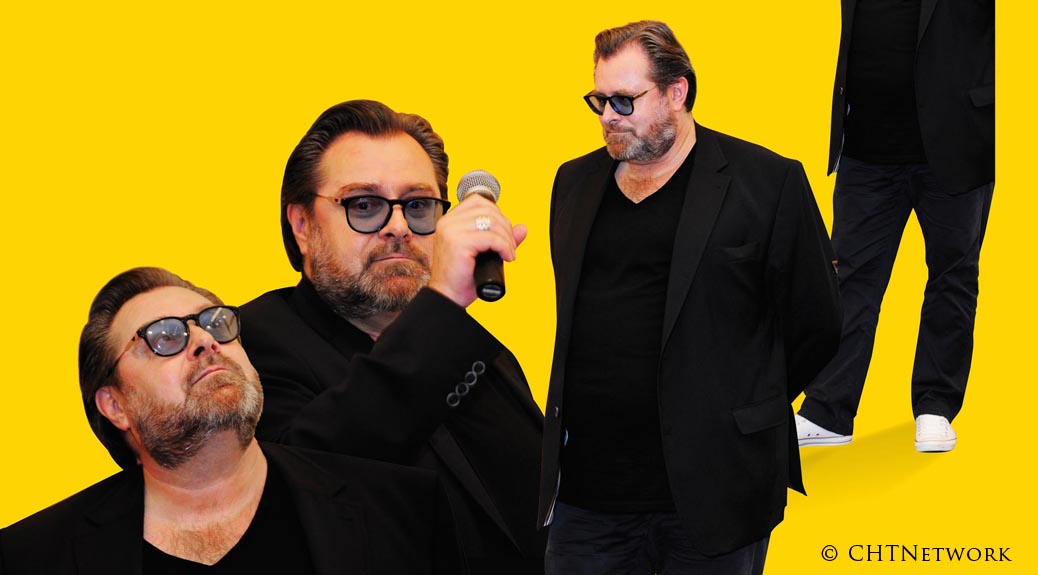
For many years, Dato’ Mahadzir Lokman spoke to the people of Malaysia from their television sets. As a television presenter and host of numerous Malaysian events, his deep and booming voice became accompanied some of the nation’s most high-profile events including the successful 1998 Commonwealth Games, the launching of Malaysia’s space mission in Russia and Kazakhstan, and the annual Merdeka Parades.

Affectionately known as Dale, this multi-talented impresario spent the last few years acting as an ambassador of sorts, promoting Malaysia on the international platform such as the Malaysia Week celebrations in London and the World’s Fair in Seville. However, 2013/2014 sees Dale take on a different role as the ambassador of Malaysian art through his appointment as the Chairman of the National Visual Arts Development Board (NVADP) and the National Visual Arts Gallery Malaysia (NVAG).

The National Visual Arts Gallery, formerly known as the National Art Gallery was established in 1958. It was established to promote awareness and appreciation for the arts among Malaysians. The Gallery holds exhibits of local and international artists as well as organizes seminars, workshops, art competitions and other art-related activities. In its permanent collection, the Gallery holds over 2,500 artworks.

‘I was appointed on the 1st of November 2013, and the Minister of Tourism and Culture, the Honourable Dato’ Seri Mohamed Nazri Bin Abdul Aziz, gave me the mandate of heading this 55-year-old establishment, the former National Art Gallery. I thank him for his trust in me, to head this prestigious organisation and also to upkeep and the preservation of our rich cultural heritage and national treasure. My job is to maintain these mandates and so here I am, heading this organization,’ said the personable Dale when interviewed by EZ.

Dale, the son of the late Dato’ Lokman Musa, former Malaysian ambassador to France, has always had a penchant for art even though he confesses to not being an artist or a collector, for that matter. ‘Art was something that I appreciated very much, and with all my travels when I was small,’ said Dale, adding that his stint in France gave him ‘a real, big exposure to all the wonderful, magnificent art galleries.’

In retrospect, Dale confesses to not ever for once thinking he would one day end up holding a prominent role in the Malaysian art scene. Not even through his passion for music, which he has not pursued professionally. Dale, who has at times serenaded his audience with his singing, is an avid classical music lover. ‘I play the cello, the piano and the trombone, and I was not at all forced by my parents as it was my choice,’ he said on his musical inclinations.

Moreover, during his undergraduate days in the US, this International Business Administration graduate from Ohio University in Athens, Ohio, had a formal introduction to the fine arts through the elective course he took. ‘In university, being an American graduate, we had little activities so I did a lot of art history and comparative art courses,’ he said. He considers his appointment as the chairman of NVAD a blessing, adding that he wants ‘to do well and visit more art museums and galleries around the world and improve our art industry because now, art is not just art, but art economy and art tourism.’

Just as every project that he has attached his name to, the responsibility of leading NVADB is something that he takes seriously and he hopes to bring the board as well as the overall Malaysian art scene to another level. Over the past 55 years since the establishment of NVADB, Malaysian art has made some important strides. ‘We have our names including Datuk Syed Ahmad Jamal, Abdul Latiff Mohidin, Datuk Ibrahim Hussein and many more. But it’s not as well-known,’ said Dale when asked to comment on the state of Malaysian art in general, ‘I don’t understand why our artists never manage to be in the fold of many other international artists.’

However, he does make concession for the latest developments on the local art front, especially in terms of government support. ‘Art is very lucrative, but I think now since the advent of 1Malaysia Contemporary Art Tourism, that art, especially in these last ten years to be exact, has become very ‘lucrative’ because art was supposed to be elitist at one time but now, art can be appreciated by anyone in the social structure.’

Expounding on the economics of art in terms of its value, this head of the nation’s foremost art institution thinks the recent developments in the local art scene is healthy. One development in particular bodes good news for the Malaysian art scene that is the setting up of auction houses in the country. In the last four years, four auction houses have been established here, namely Henry Butcher Art Auctioneer, KL Lifestyle Art Space Art Auction, Masterpiece Auction and The Edge Auction.

‘The presence of auction houses is good for Malaysia, for the region and for the local artists. I think Malaysian artists can go very far because their work is now being recognized with the advent of all the auction houses now as compared to before,’ said Dale.

In the past, art in Malaysia was considered as the anak yatim, or orphan, not receiving much support from outside the art circle and been relegated to the lower rungs of the government’s priorities. Yet, the tide has changed with the active participation of the government in promoting art on a larger platform. ‘This anak yatim will completely go forward and be accepted in the main line in the family. He cannot be tersingkir anymore. He cannot be left alone, and live his ‘own little life’ in the corner, and be cocooned because art now is not like art before,’ explained Dale, adding that this is all the more true now since Malaysian art has shown the potential of being very lucrative.

‘Art in Malaysia has to go for a complete turnaround. It was once upon a time something that was very strong, (Malaysia was) a hub for Southeast Asia. Now maybe we have to lead in our own way,’ said Dale. Indeed, at one point in time, Malaysian art enjoyed prominence in the region, but over time, it fizzled down. Neighbouring countries, especially Indonesia, emerged as the new leaders in Southeast Asian art, leading many to claim that Malaysia is a jaguh kampong when it comes to art.

In regards to this matter, Dale said ‘That was maybe so, but during that time we never had to push. The Ministry of Culture then was subtly going away with art as it was very conservative then. But now, I think, with the present ministerial support, we hope that his strong interest in art and also my strong interest in art would see a complete turnaround. We have to work. There’s no such thing as it’s too late to achieve what we have not achieved until now, which is just 55 years of the establishment of the National Art Gallery.’

The way forward, he added, is to ‘have continued dialogues with the local artists and hear their ideas. Either we accept it or we could compromise and go towards the middle of the road and try to improve. We cannot be selfish in our approach of appreciating art and also our approach to make sure that the art will get developed as it should be at 55 years.’

One way, he said, to create a conducive environment for the propagation of the national arts is by getting the people involved. ‘I have asked the National Visual Arts Gallery people to start formulating symposiums, bookshops and also conferences to involve all the artists from Southeast Asia, to make sure that our voices are being heard as compared to all the other artists from the world. If we do not have this unity-in-diversity approach to the whole thing, we would always be left behind and Malaysia will be always in tertiary or secondary compared to the other ASEAN brothers.’

To get to that level, the entire artistic community of Malaysia needs to get on board with the agenda to advance Malaysian art. ‘I want the art industry to grow, and I need help from a lot of people, from all the artist groups in the country present in the country,’ emphasized Dale. Concerted effort is vital for the growth or anything, more so a national art agenda, and the artistic community in Malaysia are quite fragmented. This might pose a threat should NVADB want to work towards increasing the Malaysian art profile internationally and also for Malaysian art to be a strong and have an identity of its own. So how can a united artistic community working for towards a common goal be cultivated?

‘We have to do a deep study that is why dialogues, symposiums and workshops are a must. It’s a need for the young breeds. We have a lot of artists, developing now from so many schools, from the art schools, from the colleges coming up – so many artists but what kind of artists that you like them to be? Are they creators or are they doing art for the money? Or are they doing art themselves and beautify the walls? Are they just graffiti artists? So, we need different kinds of dialogues to understand the whole thing, and how to improve our system. We have 55 years in this business and yet, we are not at par with the people practicing art around the world,’ he explained.

Meanwhile, for the immediate future, Dale said that it is important to bridge the gap between the people and NVAG, mainly to cultivate the interest for the arts. ‘For NVAG, my aim is to increase the accessibility of the Gallery and also to encourage more visitors as far as we can,’ he said. As for the long term, Dale said he hopes ‘to encourage more rapport and cooperation with other international art galleries around the world – for them to have their shows here.’

With the success of the 1Malaysia Contemporary Tourism Festival and the rise of the local art and auction markets, the future of Malaysian art is looking bright. And hearing Dale’s plans for NVADB and NVAG to systematically strengthen the local art community and to raise the standards of Malaysian art is heartening. His closing remarks to EZ captured his zeal for the mandate that has been bestowed upon him; ‘We hope to do a fantastic biennale, triennials organised properly in Malaysia, and I hope we can all fly together to achieve greater heights for everybody. Not just for art lovers, for ‘lovers’ of the Gallery and lovers of anything to do with it because in art, there is beauty and beauty is art.’

A MATTER OF PRECISION

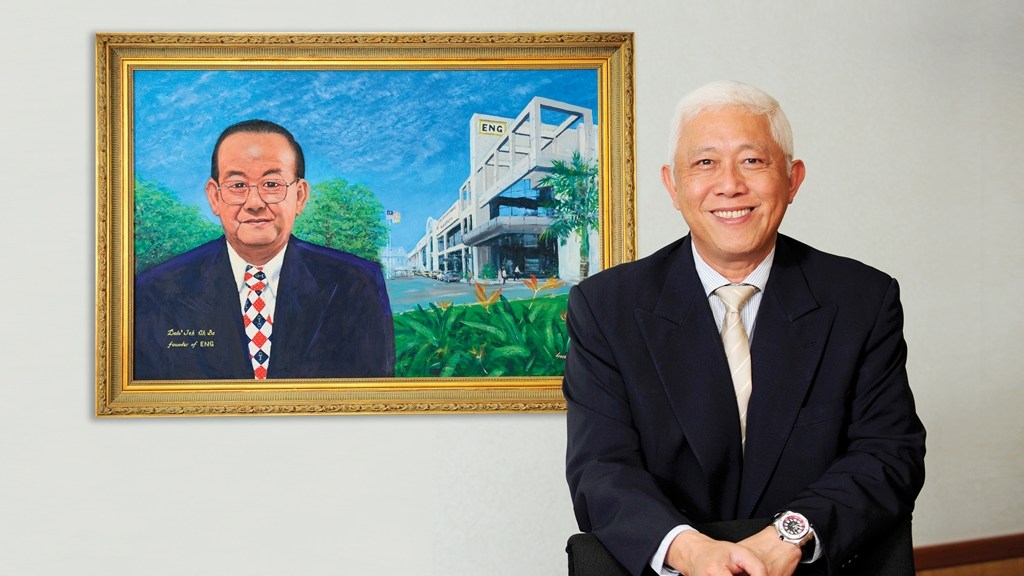
Over 30 years ago in the idyllic Penang town of Air Itam, a Chinese physician who loved to tinker with his toolbox came up with a brilliant idea. With a passion for mechanical inventions and a fascination with machinery, the late Dato’ Teh Ah Ba did the unconventional; he opened a workshop, Eng Hardware Electrical, behind his clinic in 1974. The workshop produced jigs and fixtures. Today, that workshop has grown to become of Malaysia’s leading homegrown producer of precision tooling for the semiconductor industry – the ENGTEK Group.

A journey that is as remarkable as it is inspiring; the evolution of Eng Hardware Electrical to ENGTEK Group is one of calculated precision. The late 1980’s saw the company opening a 40,000 sq ft plant in the Bayan Lepas Industrial Zone and venturing into actuator production for the hard disk drive industry. It was also during this time that ENGTEK’s investment holding company, Eng Teknologi Holdings Bhd (ETHB), was set up.

In 1993, ETHB debuted on the Bursa Malaysia Second Board. Since then, ENGTEK has set spread its reach to outside of Malaysia, setting up plants in the Philippines and Thailand, as well as forging strategic alliances with Singapore’s Altum Precision, making it the Group’s first regional acquisition. ENGTEK celebrated its 30th anniversary in 2004 and is today the leading manufacturer and supplier of electrical components in South East Asia.

Despite its rapid expansion, ENGTEK has remained a family business, run by the core members of the late Dato’ Teh’s family. At the helm of the group is Dato’ Teh Yong Khoon (YK Teh), the late Dato’ Teh’s son, who is the CEO of ENGTEK. In an interview with EZ, YK Teh said that he growing up under his father’s tutelage prepared him to lead the company in the direction that his father would have been proud of. ‘I would say that I have enjoyed the life growing up with him. I really respect him in many, many ways and he brought me up as a good technical man. It also gave me a lot of opportunity to learn together from him,’ said YK Teh.

YK Teh’s proclivity towards the engineering and mechanical field was clearly one that was in part cultivated from young and the other matched by an interest that was sparked by being exposed to his father’s business. ‘I have always been very involved in the technical aspect of the business, rather than corporate planning or anything else – it is the technical part like research into process improvement and research in new product development to fulfill the customer’s needs. It always triggers me, you know, like a really huge hobby, trying to perfect or improve a product,’ he said.

ENGTEK, which was transferred to the Main Board of Bursa Malaysia Securities Berhad in 1999, recently underwent the process of privatization. The move to privatize, said YK Teh, is one of the best decisions the Group has made thus far. ‘Having it listed, I guess we had the ego of trying to expand, and then going into listed status 20 years ago which is in 1993. We did a good job, I must say, for the last 20 years. We did not have any funds or sourcing from the listed market, so in actual fact we’ve been putting in quite of a lot of dividends public after the listing process.’

‘At the same time, the last thing that we do see here is that we are in an industry that needs a huge transformation. We do believe that we need a change and the change could be dangerous or risky for our shareholders. So we see which change is best and do it ourselves. If it’s going to be positive, we can have the company listed again in the future. If it’s negative, then we’ll shoulder all the risk. Now, will this be better for the family? I must say that it will definitely be better for the family because we are all committed for this change that we want. So long-term wise, I think it is still very good for us to go in and to take the company private, which has already been one year. We are setting the footprint on going forward into other industries which are still focused in precision engineering,’ said YK Teh.

ENGTEK’s success in not only growing to become a multinational but also to withstand the downturn in Penang’s electronic sector and thrive is remarkable. Some may even say that Penang’s electronic industry is a sunset industry. To this, YK Teh said, ‘Well if you take Penang as a sunset industry for electronic sectors, I won’t say that it is 100 percent true statement. If you look at it in terms of labour cost or the ‘Made in China’ or the greater China side of it or if you talk about Thailand, Malaysia has still been one of the best in terms of engineering and the talent supply versus others, although we cannot be like same as China, because of the huge gap between our and their labour force.’

Penang, he said, has continued to support a sizable electronic industry with some of the businesses growing bigger and some graduating from manufacturing low-cost products to developing high value products. There are electronic manufacturing services companies in Penang that manufacture components for diverse high-tech fields such as aerospace, compute  ‘They’re getting products that are much higher value, products that need a lot more talent as compared to before, and I think that you can see that there are a lot more engineers that are involved at this particular point. So, about the electronics industry actually being a sunset industry and going away, I don’t believe so,’ commented YK Teh.

For ENGTEK to have weathered the storm and expand its business beyond the borders of Malaysia, the level of commitment from the leadership of the company to the unity of the management had been strong. This must have been particularly tricky seeing that YK Teh was dealing with family members, which can be stressful. There is even a saying in this part of the world that family businesses normally cannot survive past the second or third generation, and in response to this, he shared, ‘I think it is mainly dependent on the support from other family members and their involvements, be it in terms of conflicts or not, whether are they really supportive. So if the family is supportive, then I would say that it is not hard to run the company at all.’

With ENGTEK, he said the company does hire professionals to fill certain posts seeing that the Teh family is not big enough to fill all the seats within the company. This practice, he said, is prevalent in many other Chinese family businesses in this region. ‘I don’t think they will go with the tradition where every member of the family has to come to work in the company, or the son or whomever has to be at the helmship of the CEO, or the No. 1 post,’ he added.

Being entrusted with the responsibility of continuing his father’s legacy, we asked YK Teh if being in such a position was hard. ‘No, not hard at all,’ he answered, adding that his family is very supportive of one another and him. Besides the support system provided by his family, YK Teh said that having a right balance in life and time management was key to stability. ‘You have to have the time; you got to have your own time to do activities other than work. To me, time is how you decide, how you allocate. So if you just work, I would say, even if you work 24 hours, seven days a week, it will still be the same as when you work 8-to-5, go home, enjoy life and then come back. In fact, you will be even more effective when you take a break. Activities with family and activities by yourself, I believe, there always needs to be a balance in terms of life and not work alone.’

But then again, being a CEO of a thriving group such as ENGTEK is bound to have a toll, which YK Teh agreed. ‘You are still at the higher end in terms of stress as compared to others,’ he said, ‘But that doesn’t mean that you can totally de-stress.’ De-stressing, for YK Teh involves personal time and time with family and friends. An avid golfer, he enjoys playing golf with his golfing buddies. As for family time, he is just like every other Malaysian who loves food. ‘Going on trips with my family, it’s always a good thing to do for family bonding. One of the things to like to do together is eat. Sometimes we take trips, ‘makan’ trips,’ he said, with a twinkle in his eyes.

Mandarin Oriental Hong Kong Turns 50

Once hailed as ‘one of the eleven great hotels in the world’, Mandarin Oriental, Hong Kong evokes the grandeur and class of an era long past. Today, the iconic hotel is a sterling example of the world-renowned Oriental heritage and hospitality and it stands at the epitome of contemporary luxury.

Interesting facts about Mandarin Oriental, Hong Kong

• It was the very first hotel in Asia to have a bath in every guestroom

• It was the tallest building in Hong Kong upon its completion in 1963

• The hotel almost always makes an appearance in international best hotels lists

Celebrating its 50th anniversary in October 2013, Mandarin Oriental, Hong Kong saw the likes of international superstars, dignitaries and society guests come together to toast the grand dame. Among the VIPs at the glamorous gala were Dame Helen Mirren, Maggie Cheung, Bryan Ferry, Vivienne Tam, and Karen Mok.

‘This iconic hotel has long been in the heart and hearts of the Hong Kong people, and we are delighted that so many guests could join us to celebrate this momentous occasion,’ said Jonas Schuermann, Mandarin Oriental, Hong Kong’s General Manager and Area Vice President of Operations.

The Pearls of Hodel

Pearls of Fire

Hodel’s Fire Line Sizzles

While diamond is a lady’s best friend, the pearl is her soul mate. Luscious, exquisite and magical, pearls make for dramatic jewellery when paired with diamonds.

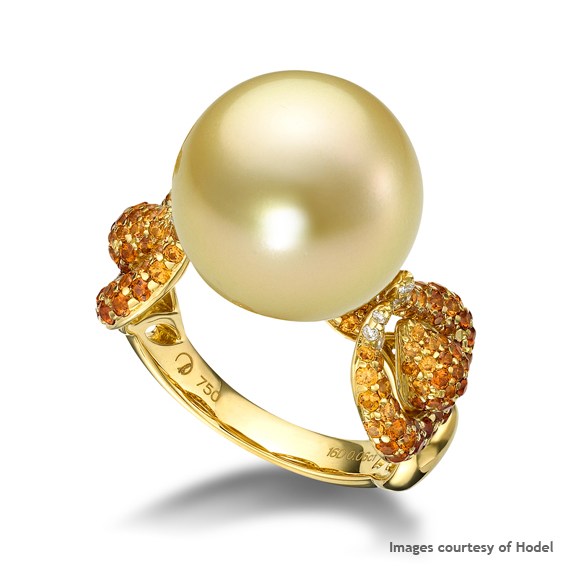
Celebrating the breath-taking natural form of the pearl, luxury pearl jeweller Hodel Switzerland, has created some truly divine pieces in which pearls take centre stage. As part of its Fire line under the Elements collection, these pieces blend fine pearls with other elements, and combines artistic vision with precision craftsmanship.

Hodel’s Fire line makes for an arresting work of art that can be worn, admired and cherished.

Pearly Perfection

Beauty of the South Sea
Luscious. Exquisite. Magical. These are a few words to describe Hodel’s new collection, which features an exotic combination of South Sea baroque pearl, keshi pearls, blue sapphires, white sapphires and diamonds in white gold. When worn together, the necklace and earrings make for arresting and admiring works of art.

Fungi: Another human threat alert!

Fungi make for one of the three major microorganisms behind human diseases. They are not commonly tested in this part of the world merely because this region is not a fungi disease-endemic area. When we are sick, the common tests to go for over here are either for viral or bacterial diseases.

With increasingly attractive travel deals and cheaper airlines, international travelling has become a common leisure in today’s contemporary living. If you are a frequent traveller, has it ever crossed your mind that you could possible be the unlucky one to acquire something alien from a foreign country like fungi, especially if you feel sick after travelling? And if you are a physician, have you ever considered those diseases that are endemic in regions where your patients have travelled to as the most probable cause of a disease?

There are many common diseases contained to selected regions in the world that are not commonly known to other parts of the world. Some are not fatal, but the illness can take a long time to get diagnosed and treated just because it is not something common outside the country of its origin. There are many such cases that are being misdiagnosed and mistreated, with the patients failing to get better under the name of having an unknown disease. It may start with harmless symptoms like a common cold or flu in the early stage.

There are many common diseases contained to selected regions in the world that are not commonly known to other parts of the world.

Valley Fever is one of those diseases haunting Southwestern United States and parts of Mexico, Central America and South America. Coccidiodes is a fungus in the soil that causes Valley Fever. Inhaling in one spore can cause lifelong infection, turning your life upside down. It is often mis-diagnosed as bacterial pneumonia, tuberculosis or cancer.

You could acquire one or more of these conditions when the spores disseminate in your body; hydrocephalus (having harmful spinal fluid pressure on the brain), verrucose ulcers (wart like outgrowths on the surface of organs and skin), arthralgias (joint pains), myalgias (muscle pain), otomycosis (fungal infection of the external ear canal), hypercalcemia (extra calcium in the blood that can be fatal) and other terrible conditions.

Anyone can get Valley Fever, including children. It is most common among elderly above 60. Other high risk groups include Asians, African Americans, women in their third trimester of pregnancy and people with weak immune systems.

If you love travelling and especially love to explore exotic places like Arizona, be warned. Get to know their exotic threats and be prepared.

Up, Up and Away!

Gliding through the clouds is not novel, but venturing beyond the stratosphere is.

Imagine watching the ground fall away at your feet as you climb higher and higher into the azure blue sky, protected by a luxurious capsule with five other passengers and two crewmembers. Above you is an enormous helium balloon, expanded to the size of a football field that pulls you further and further away from the ground, until the blue sky dissolves into the blackness of space. Behold, the marvelous curved expanse of planet Earth greets your eyes.

Such a scene could soon be a reality as a start-up company of Tucson, Arizona commercialises high-altitude ballooning, an activity normally restricted to astronauts. World View Enterprises offers an accessible and affordable way to take passengers into space for an experience similar to human spaceflight through suborbital quests. No special training is required; all you need is USD75,000 for a reservation. The sum is quite reasonable when compared to Virgin Galactic’s USD250,000 price tag for a trip to space. Moreover, it is safer than space exploration ventures such as those by Virgin Galactic because participants of high-altitude ballooning experience far less cosmic radiation which has been documented to cause cataracts in astronauts.

A World View Venture lasts for approximately six hours from lift-off to landing. The journey from launch pad to the zenith is a gentle ride in the pressurised gondola suspended by a helium balloon which gradually expands as it floats further away from Earth. For the next two hours as the balloon hovers over the stratosphere, passengers can see the curved horizon of the planet framed against the backdrop of the cosmos. The magnificent view can spark off the ‘overview effect’, a concept coined by space philosopher Frank White to describe the inexplicable euphoria one has when seeing the world from space.

The NASA veterans and Biosphere 2 designers who lead World View Venture’s expeditions are experts in high-altitude ballooning, human spaceflight as well as environmental control and life support systems. The company’s partner and vehicle developer, Paragon Space Development Corporation is reputed for the manufacture of life support equipment designed for hazardous and extreme environments. If you are part of the voyage, be at ease knowing that dire situations depicted in the film Gravity are unlikely to unfold as their projects have been successful for decades. Just relax at the refreshment bar and share the magnificent view of your home planet on social media in real time through the gondola’s built-in internet access, documenting the memories of a lifetime.

Image courtesy of World View Enterprises, Inc. 

Eclectic Charm

A touch of modern, a hint of retro and a whole lot of character

Penang’s beach district of Tanjung Bungah is home to some of Malaysia’s most luxurious super-condominiums. With rumours of well-known Asian movie and pop stars having holiday homes here, clearly having a Tanjung Bungah address is glamorous to say the least.

It is not just enough to own a super-condominium. It is the manner in which one chooses to accentuate the confines of such a place that make the distinction of style, class and luxury. One of the hottest super-condominiums in Tanjung Bungah is the Infinity Beachfront Condominium. With a built up area of 4,000 sf on average, it poses quite the challenge to home owners who wish to bring out the best of the space.

One such homeowner at Infinity Beachfront Condominium reached out to Splendid Interior Décor to turn the empty shell into a space that reflected their personal style and living comforts. Splendid Interior Décor (Splendid), a reputable and award-winning interior decorating firm based in Penang is no stranger when it comes to working on high-end, luxury properties.

After discussing with the homeowners about their likes, dislikes, expectations and budget, the team from Splendid, led by Darren Tan, took to the task of creating a unique concept that would perfectly match the homeowners. The condo should not only serve as a space to live in, but also to be a sanctuary where the residents can retreat to and relax; it should also be a space that is functional, interesting and appealing for the homeowners to entertain their guests.

Employing various colours to create the mood for different spaces, what is created is a distinct home with lots of personality. To enhance the each area’s theme, arresting artworks and furniture were used to create a distinguished style. The artworks and furniture used were mostly purchased by Darren around the world specifically for the project to complement items from the homeowner’s personal collection.

Artworks and sculptures are casually displayed around the condo, creating conversation spaces which draw in attention unconsciously, perfect for entertaining guests as these spots are a seamless conversation space. The private areas of the condo are cleverly concealed and are cosy, while the public spaces are open and airy, creating a wonderful juxtaposition of the inner and outer spectrums of a home.

The end result is a space that is charming, eclectic and, most importantly, inviting. Despite its size, the condo exudes an intimate feel as the Splendid team had masterfully created private spaces within the relatively open layout of the unit.

Diamonds are Forever

’30 years of framing excellence’ – so reads the tagline of WinSon Loh’s exquisite art book. Loh, who founded the famed PINKGUY® Malaysia Art & Frame, is no stranger in the regional art world. He has framed some of most legendary artworks, from those of Dato’ Chuah Thean Theng and Khalil Ibrahim and Latiff Mohidin to Salvador Dali!

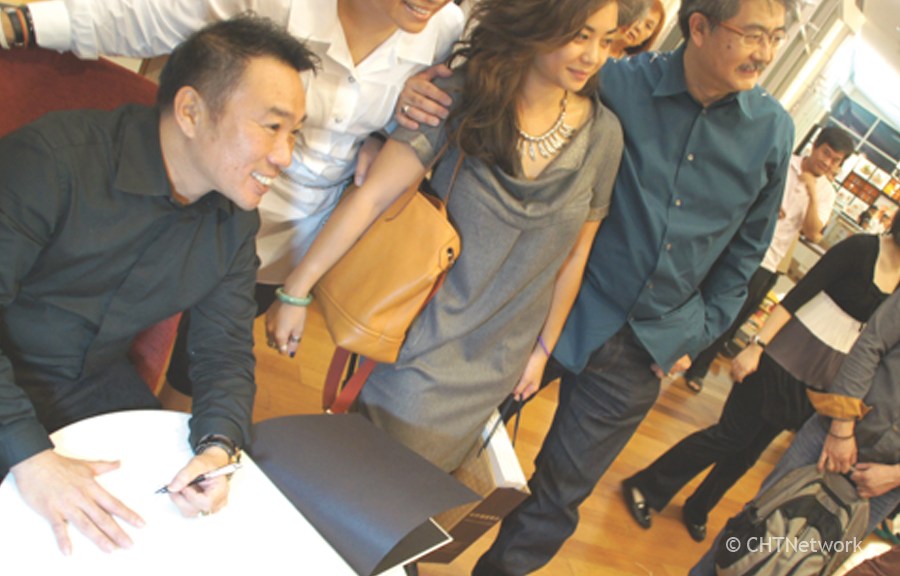
In conjunction with his 30th anniversary in the art and frame scene, Loh has published a coffee table book chronicling his journey, his masterpieces and some of the artworks in the PINKGUY® collection. Launched at Kinokuniya KLCC on 15 November 2013, ‘Diamonds are Forever’ in-of-it-self is a work of art. As with his signature diamond frames, this all-white book has an elegant diamond detail on its spine.

The Malaysian Art Industry

The Asian art market is currently one of the fastest growing business markets in the world, with China, Indonesia and India leading the charge followed by emerging countries such as Vietnam, Philippines, Singapore and even Myanmar. Auction houses are consistently hammering art pieces into record prices, making it hard to believe that some still consider art as nothing but a beautiful object that one should only acquire when spare cash is available. This primitive perception has long been overturned in the West where art is not only considered an important part of a growing civilisation, but is also a lucrative and exciting investment. Art in the West do not only to adorn walls, but are also regarded as assets that are kept in the accounting books.

Malaysian contemporary art scene has been relatively slow in entering the international arena. There are artists who have been struggling throughout the years on their own, trying to make a name in the West without the backing of their motherland and it is an uphill task.

The establishment of the National Art Gallery (now known as National Visual Arts Gallery or NVAG) in 1958 by Malaysia’s first Prime Minister, Tunku Abdul Rahman, was the most important milestone in the Malaysian art history. However, as it happens in almost every other developing country, art came to be considered the ‘adopted child’ in terms of priorities. Fortunately there have been some collectors and institutions collecting Malaysian art since its early days. Bank Negara Malaysia (Central Bank of Malaysia) was one of the early institutions that, through the leadership of its second governor, Tun Ismail Ali, started collecting and supporting Malaysian art since 1962. It was indeed an important step towards recognizing art talents and helping the art industry but the influence then was very much limited.

Many art groups and art societies were formed in the name of art between the 1940s and the 1960s, but most did not survive as art was a tough profession then to be associated with. Remarkably, the oldest registered art society in Malaysia, the Penang Art Society, has not only survived, it has thrived and celebrated its 60th anniversary in 2013 and boasts a national membership of more than 400.

Furthermore, the support from senior art promoters is invaluable. One of them, Dato’ Dr Tan Chee Khuan, is probably one of the heavyweights in promoting Malaysian pioneer artists since the early 1980s. He has published more than thirty books about Malaysian art and has also donated millions worth of art works to both the national and state art galleries. A person of such vision and patriotism is a rare breed.

Other art related figures are Ooi Kok Chuen and Dr Zakaria Ali, both art writers that have been consistently contributing to local art happenings and its progress through their pens for the past twenty odd years. The setting up of Petronas Gallery in 1993 provided extra avenues in the art market, and together with NVAG, both organisations have consistently collected, exhibited and supported Malaysian contemporary art. Another important Malaysian art movement was the art residency projects by both public institutions and private organisations that provided a platform for artists to excel.

In 2008, art entrepreneur and collector Datuk Vincent Sim pulled his resources together and created another milestone in the Malaysian art industry by conceiving Malaysia’s very own international art exposition – Art Expo Malaysia. It was a move that initially many had thought off as another white elephant, but Datuk Sim and son Sim Pojinn have proved the critics wrong as the show has gone from strength to strength through years of hard work.

Another instrumental development in the Malaysian art front was the Malaysian government’s helping hand in making this art expo even more successful. The 1MCAT (1Malaysia Contemporary Art Tourism) programme that was initiated in 2010 was the brainchild of the Ministry of Tourism (now known as Ministry of Tourism and Culture) with the intention to promote contemporary Malaysian art as a tourism product catering to the tourists visiting the country.

The Ministry of International Trade and Industry, through its external promotion arm, MATRADE, also joined in providing certain tax claimable incentive for local exhibitors, making it more attractive to join in and promote Malaysian art in local and international expositions. Furthermore, it has provided special rates on the space rentals in MATRADE Exhibition & Convention Centre where the Art Expo Malaysia has been holding its expositions for the last few years.

In 2009, prominent Malaysian real estate consultancy, Henry Butcher (HB), teamed up with Vincent Sim and started the HB Art Auction. The arrival of the first proper art auction house in Malaysia was a major boost to the art industry, eliminating the taboo of Malaysian contemporary art having an almost non-existence secondary market. KL Lifestyle Art Space (KLAS) Art Auction was the second one to join the party in 2012, followed by the Indonesian-owned Masterpiece Auction and the Edge Auction in 2013, making an unprecedented yet impressive record of four auction houses conducting more than 10 auctions annually!

With positive anticipation from local art patrons and collectors, the domestic market for Malaysian contemporary art is heading for a bull run. For example, top framer Pinkguy’s gallery reported sold out exhibitions in 2013 of two artists – Suzlee Ibrahim and Ch’ng Huck Theng – less than half an hour after the exhibitions’ openings.

On the other hand, important commercial art galleries, such as Valentine Willie Fine Arts, Wei Ling Gallery, Galeri Chandan and Richard Koh Fine Art, are among the Malaysian galleries that frequent regional art exhibitions, including Hong Kong and Singapore, to further promote their resident artists. The consistency of these galleries’ participations is highly dependent on the commercial return or simply how profitable, but it nonetheless is an applaudable move.

Back in 2009, the NVAG, then led by Director General Datuk Dr Mohamed Najib and its Board, decided to seek MATRADE’s expertise to assist in promoting Malaysian contemporary art overseas. It was not an easy task as art was never considered a product of trade by the ministry. The move was necessary and important as NVAG was of the opinion that there was no proper department in the government sector designated to promote Malaysian art professionally and efficiently in the international stage.

The first meeting was held in MATRADE with Zanita Anuar and Ch’ng Huck Theng representing NVAG and Mustafa Aziz representing MATRADE Centre. As Malaysian contemporary art was at its very early stages in international recognition and without the backing of the government, it was obviously a very difficult journey to pursue. It was akin to a new Malaysian brand or product with a lot of potential trying to penetrate the international market with limited funds and experience.

The big breakthrough was in 2011 for Malaysian contemporary art when it was considered by MATRADE as a product in the soft export category. In mid-2013 MATRADE CEO Datuk Dr. Wong decided to take up the challenge and assist the Malaysian contemporary art, promoting it as a brand and product of Malaysia. This collaboration with NVAG will see Malaysian art promotions in London, Melbourne and Miami. Arts Kuala Lumpur, or Arts KL, is the brainchild of MATRADE, spearheading Malaysian contemporary art into the international business of art by providing a vital connection between local Malaysian art talents and international art players. This is a move that will eventually prosper the Malaysian art business internationally and benefit generations to come.

London

With a population soon hitting the 10,000,000 mark, London is a city that has everything to offer when it comes to visiting this city that was founded 2000 years ago by the Romans. EZ has selected 10 things one should not miss when visiting the City of London in 2014.