Fujifilm is an institution as much as it is a brand that has made a connection with countless people all over the world. Its constant innovation and high quality products that cross multiple fields are highly regarded in the business world; and so is the prominence of Fujifilm as a brand that is reliant. EZ talks to Paul Ho, the Senior Executive Director of Fujifilm Malaysia to find how Fujifilm has managed to diversify its products through the digitalization era and how the company has managed to conquer the global market
Photography, over the past century, has experienced quite a change. Combining principles of science with the aesthetics of art, photography has progressed from the days of creating images chemically through light-sensitive material such as photographic film to digitally capturing images electronically. Along the way, elements of photography have been used in diverse fields like medicine, sciences, art and so on. In its revolutionisation, the field of photography has seen many developers and brands rise to great heights and it has also seen the demise of many such great names. Among those who have not only survived the dawn of the digital era in photography but also to go on to become one of the biggest names in the industry is none other than Fujifilm.
Fujifilm, which started as Fuji Photo Film Co, Ltd, was established in 1934 in Japan. It was the first Japanese producer of photographic films. The first decade of the company saw the production of produced photographic films, motion-picture films and X-ray films, after which it expanded to produce optical glasses, lenses and equipment. The decades that followed saw Fujifilm diversify into medical (X-ray diagnosis), printing, electronic imaging and magnetic materials fields. Driven by original research and development, the Fujifilm name boldly entered and conquered the digital revolution with its continuous innovation and leading-edge products. Today, Fujifilm is a world leader in the fields of electronic imaging, photofinishing equipment, medical systems, life sciences, flat panel display materials, and office products, based on a vast portfolio of digital, optical, fine chemical and thin film coating technologies.
Just as it is a prominent brand internationally, Fujifilm has been the leading name in Malaysia for a wide range of products such as photo and electronic imaging, data storage media, graphic arts, medical, information systems and life science products for over 20 years. Its marketing and sales operations include a service centre, warehousing, and technical back-up services with branches in key markets across Malaysia. For the company to have grown in Malaysia in the way it has, as much credit goes to the steering of the growth as it is with the quality and likeability of the products. Competent leaders would be able to recognise the tide of change and to lead the company along with the waves, not against them, which is clearly how Fujifilm – be it worldwide or here in Malaysia – has been managed.
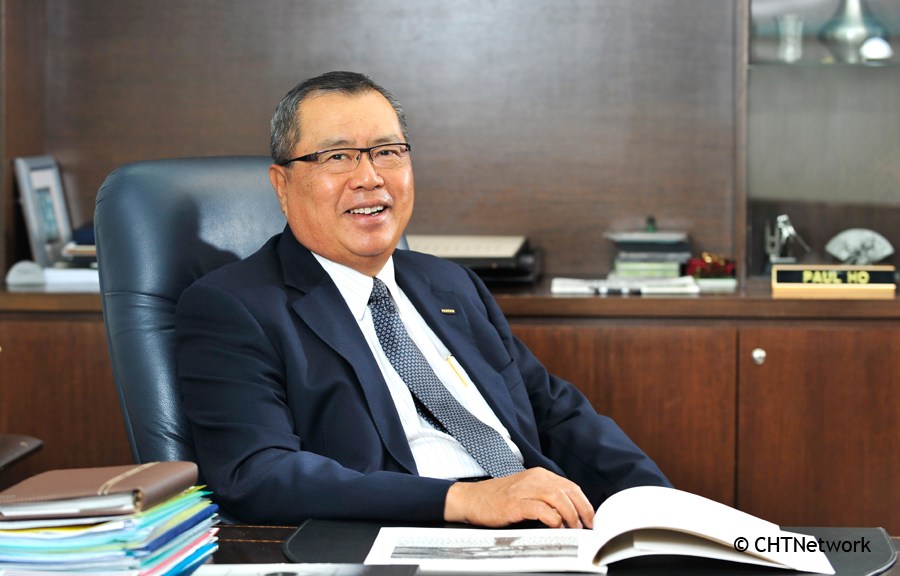
Fujifilm Malaysia’s Senior Executive Director, Paul Ho, has been with the company for over 2 decades. He has seen the company grow exponentially in the heyday of film and is now steadily steering the Malaysian branch of this global powerhouse towards a digital future that looks only looks bright for Fujifilm. The key to excelling in the digital world is to be innovative, which Ho says is the fundamental principle behind Fujifilm’s success.
‘I think the whole principle is that you must continue to be very innovative. For Fujifilm, our R&D programme is consistently coming up with new products, no matter in which business domain. This keeps the company going; you cannot stay at one product. Every product that Fujifilm looks into, we invest in its R&D. That is how we move along,’ said Ho before adding, ‘You cannot be satisfied at one product and say ‘oh, this is the one that will give us our next hundred years.’ You can always predict what the changes will be in three to five years, and you keep innovating.’
To be innovative and to come up with good products that will sell well, it is important to invest in research and development. More than just a buzz word, R&D, as it is more popularly known, is the hallmark of every successful company. ‘That’s why Fujifilm is very successful in entering the digitalization era; we’re continuing to move out across the region because of R&D,’ he explained. Recognising the need for a strong R&D department, Fujifilm reportedly spends over a billion dollars a year on R&D for the various fields it is involved in.
For instance, from its medical branch, the brand will soon see its new pharmaceutical product – the endoscopy – launched, and in the printing side, not only is Fujifilm content with providing digital printing services, it also produces digital printers, printer plates and even the ink used for printing. The direction to progress in this path comes from the top, in Fujifilm Tokyo, said Ho. ‘This is how they think – if you just stick to one good product, say film paper and you do not progress, you just stick to it for the next hundred years, today you would surely be gone.’
This change was most prevalent in the area of printing, which was a ‘cash cow’ for Fujifilm during the days of analogue photography and film printing. According to Ho, the future of printing is moving in two directions – a personalized form for consumers and the wide-format for businesses. Consumer printing has become much personalised. ‘People now have the option to either go to our shops to print their photos or buy their own equipment for printing,’ said Ho. It has become people-centric with a demand for variety in printing, such as calendars, event posters, photo cards and so on. This, in return, has led to the demand for big prints, which Fujifilm is able to meet. As for the business category of printing, Ho explained, ‘Outdoor advertising and images, this is where the future of printing is heading … into wide format. It has become very prominent. Fujifilm has developed equipment that can print very big, outdoor images that can get to 60-feet by 100-feet in high-resolution.’
It is important, said Ho, for the sales and marketing leg to follow in line with the direction of the company. Regardless how the advancements in product development, if the products are not marketed and sold well, any company would flounder. So when Fujifilm started moving away from film photography and more towards its wide range of products in the consumer and business segments such as digital photography, printing and medical imaging (Computed and Digital Radiography, Endoscopy, etc.), it was of utmost importance that the sales and marketing leg widen its focus and to recognize the areas of target or market.
The concept of diversification that Ho said needed to be understood from the ground up. ‘If we don’t accept the change in concept, we would have problems because this concept is very important for the company. As the leader there, if you see any changes happening, you have to really change, not just in terms of sales, but also in the timing. Let’s say after you have had good years with the sales of film, you wait until the very last year when you see the downturn which is not good – only then you start doing the changing, it is too late,’ explained Ho. ‘It took me three to four years to change the mind-set of our people.’
Human resources, Ho said is another key aspect of ensuring the growth of a company. In his professional life, he has only worked with 2 companies, one of course being Fujifilm, so to him loyalty is not only a principle he holds on to, but also how he leads his life. However, with the younger and newer crop of employees entering the workforce, Ho said that he has noticed a shift in attitude. Ho, who joined Fujifilm as a salesperson has worked his way up the management ladder and today handles the running of the company in Malaysia.
‘I started at the company as a salesman. I’ve gone through all the low and troubling times, but because of my attitude I continued to stay at one company,’ he said, adding that the current generation of employees ‘don’t believe in staying in one company. Like a tree, you grow roots and you become stronger. The young ones, they come in and then they go. That’s because they want to see a quick improvement in their career within a short period of time. If they don’t see it, then they leave it to look for another green pasture to progress. However, they will finally find that all the grass in the world is the same colour.’
The difference, Ho said, lies within them. ‘The only thing is their attitude – the attitude of working. Everything boils down to the attitude – how a person works. If someone is not a team player and they want to have a fast progress without putting in the hard work, then it won’t work anywhere,’ Ho elaborated further.
To tackle this human resources problem, Ho said the key was to recognize those who show the potential and those who were loyal. ‘For every ten workers, you can find three good ones – the three good ones will prosper faster than the rest. You continue to train up the new people, because they’ll still be good out of the group there. The majority of them won’t receive the training well, but there will be some good ones that we can groom,’ Ho revealed.
From the manner in which he conducts his life and the way he leads, it is clear that Ho is a person who is rooted in loyalty with clear ambition for the innovative aspects of business. It is through loyalty, diversification, innovation and pure calculated progression that both Ho and Fujifilm have sailed into the era of digitalization successfully.







 EZ MALAYSIA.NEWS