
Tag Archives: Penang

 A Flair for flavour

In a land where spicy street food and Hokkien cuisine rule supreme, there is one heavyweight champion that is slowly turning the tide by introducing impeccable Cantonese Szechuan cuisine in a classy setting that is fit for a king. Set in Maple Gold Club, a grand heritage mansion tucked in the millionaire’s row of Penang’s swanky Northam Road (or Jalan Sultan Ahmad Shah), is Maple Palace Restaurant. The restaurant has made a name for being one of the top places frequented by the well-heeled millionaires and socialites of Malaysia’s high society.

The proprietor and head-chef of Maple Palace, Tan Loy Sin, or Loy as he goes by, recently hosted celebrated food critic and writer, C.K. Lam, and EZ to sample the restaurant’s new menu. Lam, who runs one of the most visited food websites in Malaysia is widely regarded as an authority on the Penang food scene and has written for numerous publications in Malaysia and beyond.
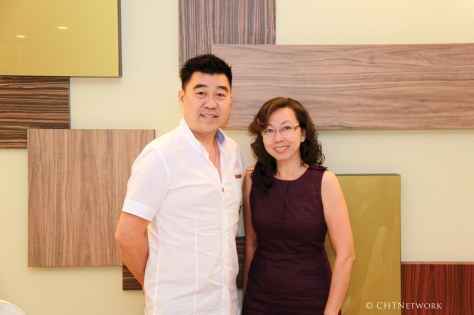
Tan Loy Sin and CK Lam

Joined by Loy and his partner Vivien Teoh, we were treated to a sumptuous spread that included Double Boiled Watercress Soup with Pork Ribs, Braised Abalone with Sea Cucumber & Black Mushroom, Fresh Water Prawn Curry with Mantou, Steamed Marble Goby with Superior Soya Sauce, Steamed Chicken, and finished with a sweet note with the Sweetened Ginger Tea with Glutinous Rice Ball.

As the tantalising aroma of the food wafted, the conversation around the table naturally turned around to food. Lam, who originally hails from Kuala Lumpur, was soon sharing her insights on the restaurant industry with Loy. ‘Most important is the food, and so is the word of mouth,’ she said, explaining that when customers like the food and service in a particular restaurant, they spread the word to their friends and family, which everyone at the table agreed that it works even better than any advertisement.

Echoing Lam’s sentiments, Loy in turn shared with the table his attitude on running a successful restaurant. He said that customers’ feedback was very important to him as he strives to maintain the type of service and quality that has come to be accepted of Maple Palace. ‘We need to be in tune with our customers’ preferences, and so, much thought is put into deciding what goes in our menu,’ said Loy, who personally creates the course set menu.

Lam chimed in, saying ‘There is much competition these days and Maple Gold is one of the Chinese restaurants that is on top of the game. Loy works closely with his kitchen staff in maintaining the standard for the food and keeping the menu fresh and exciting. Dishes are prepared with bold and exciting flavours using quality and fresh ingredients.’

‘Many know the restaurant for its comfort fish steamboat. Among the large selection of delectable dishes, the fish steamboat is one dish that I will order time and again. The aromatic soup boiled for hours has lots of flavour and depth,’ she said, ‘Maple Palace is also a must go destination for waxed meat claypot rice (Lap Mei Fun). This fragrant dish which is available during the festive Chinese New Year period is prepared with preserved Chinese sausage, waxed duck thigh, goose liver sausage and Chinese wine.’

On what was being served that afternoon, Lam said, ‘The curry udang galah (fresh water prawn), which is part of the new exciting menu, is a huge winner. The fresh prawns stand up beautifully to the divine combination of Indian spices and the ladies’ fingers made a perfect accompaniment to this spicy dish. You can have it with deep-fried mantou or white rice.’

The other dish that stood out for her was the beautifully steamed marble goby dish. ‘The steamed fish in soy sauce is a simple dish and it is put together with a dazzling sauce – the chef uses the high quality Kikkoman soy sauce.’  As for the dessert, the self-professed sweet tooth had this to say about the desserts at Maple Palace; ‘A must-try dessert is the black sesame glutinous rice balls done two ways – served in warm ginger tea or rolled in grinded peanuts. I particularly like the ones in ginger tea.’ As each one of us polished off the hot aromatic bowl of Sweetened Ginger Tea with Black Sesame Glutinous Rice Ball, we had to agree with Lam.

For more information or to make reservations, please call +604 227 9690 / +604 227 4542 or visit http://www.maplepalace.com.

A Belle and Her Dreams

It is a story right out of a fairy tale; a girl dreams of making it big, chases her dreams and builds a fantasyland that makes other girls’ dreams come true! In a journey of self-realisation and exploration, one Penang-lass makes it to the big league with her large dreams and bold ideas. For this issue of EZ, we talked to Anne Lee, the bridal industry maverick and fairy godmother to a host of brides and brides-to-be.

When Malaysian king of badminton and world champion Datuk Lee Chong Wei decided to tie the knot with his sweetheart, former Malaysian badminton singles player, Datin Wong Mew Choo, only the best would do for the special occasion. He and his now-wife turned to Anovia Bridal, more specifically Anne to capture and immortalise the couple’s love.

To Anne, this celebrity wedding was the most outstanding one that she has been involved in and goes down as one of her most memorable projects. ‘There are a lot of celebrity weddings, but there’s only one Datuk Lee Chong Wei, and I’m proud to have had the opportunity and ability to handle his wedding,’ said Anne when met at her latest bridal boutique, Obsidian in Penang.

‘He is one of the world’s top badminton players and he makes Malaysia proud. He even asked to visit Anovia and have a look at the chapel. That made me feel very proud because before that, he already had his wedding photos taken at Sepang. He was training there, and therefore he couldn’t come to my place in Penang. But at the very last minute, Datuk Lee suddenly said that he wanted to come to Penang. ‘I want to go to Penang to take photos, your shop is very nice,’ he said.’

‘There are a lot of celebrity weddings, but there’s only one Datuk Lee Chong Wei, and I’m proud to have the opportunity and ability to handle his wedding.’

– Anne Lee, Managing Director of Anovia Bridal and Obsidian Production Studio

Long before Anne’s Anovia Bridal captured the attention of Malaysia’s golden boy, the bridal house was already generating positive buzz not only within Malaysia, but also overseas. Housed in a sprawling heritage mansion with an immaculate garden adorned with angelic sculptures, Anovia Bridal has a celestial wedding chapel built on its grounds where love-struck couples can pledge their love and seal their marriage.

The idea for Anovia Bridal came at a time when Anne had decided to take a break from the bridal industry, which she was involved in for almost two decades as a wedding gown designer, a sales person, a bridal house supervisor and then as a bridal house manager. Knowing the ins-and-outs of the industry and having worked with top bridal houses in Singapore, Kuala Lumpur and Penang had prepared her to build and run her own business in the bridal industry.

Invited by her friend to view a property, which used to house the famous Penang establishment, Bagan Bar, Anne was reluctant at first. This would however change the moment she entered the mansion. ‘When I reached Bagan, I don’t know why but I immediately felt a connection to the place. I could visualize so many changes to the place; this is where I could have my reception, and there would be the gown department, and I kept talking and talking about my ideas,’ recalled Anne, saying that it was almost akin to a ‘love at first sight’ with the mansion.

That deliberate maneuver by her friend was successful in reigniting within Anne the passion for the bridal industry. ‘From then on, my dream started once more. I wanted this, I wanted that, I wanted a chapel; I didn’t want this tree… I talked a lot with the designers to create and realize my own dream bridal house. When I first entered this area, the premises were derelict and unkempt. It was like a jungle, with trees here and there. But it had such a big compound that I could make a dream wedding house of my own,’ she said.

Any visitors to Anovia would feel like they are entering a surreal world, one that is magical and serene. The concept of this bridal house is very clear and tactical, and it is all credited to Anne’s vision. ‘Last time, my dreams and ideas were restricted by my superiors. But now that I had a place of my own, I could let my creativity run loose. I could have what I wanted at Anovia, like the statue, decorations, everything which was from my heart. I created a feeling that was welcoming, and with every step you take in Anovia, a story unfolds in your mind. We can feel it inside, in ourselves. That’s what I visualized, that every step is a moment of its own with a different scenery and perspective playing out in the mind of every visitor,’ explained Anne on her concept.

Having established Anovia Bridal in 2011 and receiving rave reviews and accolades for her celestial bridal concept, Anne has unveiled another exciting concept this year. Obsidian, which is right next door to Anovia Bridal, is like the hip, younger sister complete with its exposed brick walls, obsidian black ceilings and glam wedding gowns.

‘Obsidian’s concept is completely different from Anovia’s. It is urban, contemporary and bold – a different way to present a wedding. It appeals more to the young generation. Another thing is I think that in the whole of Malaysia, you’ve never seen a bridal house with a black or grey ceiling. It’s a very strong colour, and it’s such a bold concept that I had to spend a few months mulling it over,’ said Anne.

Introducing such a novel concept to an already saturated industry could be daunting, something that was certainly not lost on Anne. She had to ensure that the concept was not just a superficial one that was contemporary in its aesthetics but one that was daring to create new trends within the bridal industry. ‘One of the main products we offer here in Obsidian is short film productions. Out of the whole of Malaysia, this is the only bridal house with its own screening theatre. We create short bridal videos, and hold previews as well as screenings for the customers to present the finished product to their family and friends,’ said Anne.

‘In my opinion, photos capture memories without sound and movement. Many years after the photos are taken, they still evoke nostalgia but we can only make simple statements while looking at them. However, videos and short films are different. We create short bridal films because a marriage doesn’t concern just two people; it involves the joining of two families and their worlds. Only a short film can capture the worlds of the bride and the groom. So, one day, when the customer watches the short film of their wedding, he or she can listen to the voices of loved ones and relive the moment.’

Another key aspect of Obsidian’s short film concept is its technical and creative crew, which Anne assures are all professionals – both from the bridal industry and international film industry. ‘When a customer signs up for the short film package with us, we create a story for them. We prepare a script, a director, art director, producer … basically everything for the customer. Obsidian has invested in an overseas movie crew, and so we have a team of specialists whose expertise lies in making short-film movies,’ she said, ‘You can make a short film with your girlfriend, or a short movie with your friends. That means this service is not restricted to just newlyweds or engaged couples. This is Obsidian’s new challenge for the market. This is our new plan for the millennium.’

With Anne realizing her own dreams and ideas, what she has done is give this generation a channel to make their own dreams come true and to capture it for all eternity.

A MATTER OF PRECISION

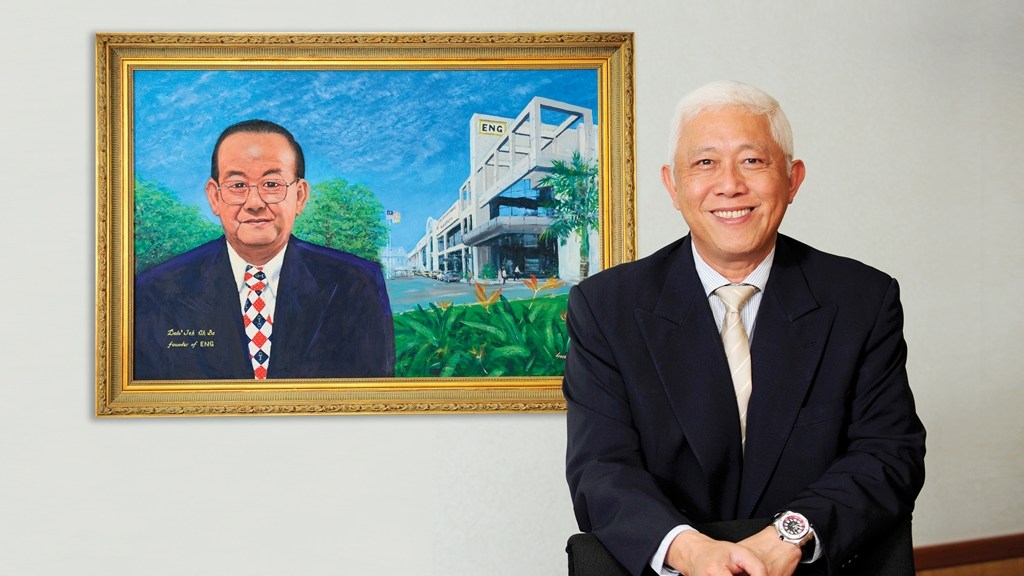
Over 30 years ago in the idyllic Penang town of Air Itam, a Chinese physician who loved to tinker with his toolbox came up with a brilliant idea. With a passion for mechanical inventions and a fascination with machinery, the late Dato’ Teh Ah Ba did the unconventional; he opened a workshop, Eng Hardware Electrical, behind his clinic in 1974. The workshop produced jigs and fixtures. Today, that workshop has grown to become of Malaysia’s leading homegrown producer of precision tooling for the semiconductor industry – the ENGTEK Group.

A journey that is as remarkable as it is inspiring; the evolution of Eng Hardware Electrical to ENGTEK Group is one of calculated precision. The late 1980’s saw the company opening a 40,000 sq ft plant in the Bayan Lepas Industrial Zone and venturing into actuator production for the hard disk drive industry. It was also during this time that ENGTEK’s investment holding company, Eng Teknologi Holdings Bhd (ETHB), was set up.

In 1993, ETHB debuted on the Bursa Malaysia Second Board. Since then, ENGTEK has set spread its reach to outside of Malaysia, setting up plants in the Philippines and Thailand, as well as forging strategic alliances with Singapore’s Altum Precision, making it the Group’s first regional acquisition. ENGTEK celebrated its 30th anniversary in 2004 and is today the leading manufacturer and supplier of electrical components in South East Asia.

Despite its rapid expansion, ENGTEK has remained a family business, run by the core members of the late Dato’ Teh’s family. At the helm of the group is Dato’ Teh Yong Khoon (YK Teh), the late Dato’ Teh’s son, who is the CEO of ENGTEK. In an interview with EZ, YK Teh said that he growing up under his father’s tutelage prepared him to lead the company in the direction that his father would have been proud of. ‘I would say that I have enjoyed the life growing up with him. I really respect him in many, many ways and he brought me up as a good technical man. It also gave me a lot of opportunity to learn together from him,’ said YK Teh.

YK Teh’s proclivity towards the engineering and mechanical field was clearly one that was in part cultivated from young and the other matched by an interest that was sparked by being exposed to his father’s business. ‘I have always been very involved in the technical aspect of the business, rather than corporate planning or anything else – it is the technical part like research into process improvement and research in new product development to fulfill the customer’s needs. It always triggers me, you know, like a really huge hobby, trying to perfect or improve a product,’ he said.

ENGTEK, which was transferred to the Main Board of Bursa Malaysia Securities Berhad in 1999, recently underwent the process of privatization. The move to privatize, said YK Teh, is one of the best decisions the Group has made thus far. ‘Having it listed, I guess we had the ego of trying to expand, and then going into listed status 20 years ago which is in 1993. We did a good job, I must say, for the last 20 years. We did not have any funds or sourcing from the listed market, so in actual fact we’ve been putting in quite of a lot of dividends public after the listing process.’

‘At the same time, the last thing that we do see here is that we are in an industry that needs a huge transformation. We do believe that we need a change and the change could be dangerous or risky for our shareholders. So we see which change is best and do it ourselves. If it’s going to be positive, we can have the company listed again in the future. If it’s negative, then we’ll shoulder all the risk. Now, will this be better for the family? I must say that it will definitely be better for the family because we are all committed for this change that we want. So long-term wise, I think it is still very good for us to go in and to take the company private, which has already been one year. We are setting the footprint on going forward into other industries which are still focused in precision engineering,’ said YK Teh.

ENGTEK’s success in not only growing to become a multinational but also to withstand the downturn in Penang’s electronic sector and thrive is remarkable. Some may even say that Penang’s electronic industry is a sunset industry. To this, YK Teh said, ‘Well if you take Penang as a sunset industry for electronic sectors, I won’t say that it is 100 percent true statement. If you look at it in terms of labour cost or the ‘Made in China’ or the greater China side of it or if you talk about Thailand, Malaysia has still been one of the best in terms of engineering and the talent supply versus others, although we cannot be like same as China, because of the huge gap between our and their labour force.’

Penang, he said, has continued to support a sizable electronic industry with some of the businesses growing bigger and some graduating from manufacturing low-cost products to developing high value products. There are electronic manufacturing services companies in Penang that manufacture components for diverse high-tech fields such as aerospace, compute  ‘They’re getting products that are much higher value, products that need a lot more talent as compared to before, and I think that you can see that there are a lot more engineers that are involved at this particular point. So, about the electronics industry actually being a sunset industry and going away, I don’t believe so,’ commented YK Teh.

For ENGTEK to have weathered the storm and expand its business beyond the borders of Malaysia, the level of commitment from the leadership of the company to the unity of the management had been strong. This must have been particularly tricky seeing that YK Teh was dealing with family members, which can be stressful. There is even a saying in this part of the world that family businesses normally cannot survive past the second or third generation, and in response to this, he shared, ‘I think it is mainly dependent on the support from other family members and their involvements, be it in terms of conflicts or not, whether are they really supportive. So if the family is supportive, then I would say that it is not hard to run the company at all.’

With ENGTEK, he said the company does hire professionals to fill certain posts seeing that the Teh family is not big enough to fill all the seats within the company. This practice, he said, is prevalent in many other Chinese family businesses in this region. ‘I don’t think they will go with the tradition where every member of the family has to come to work in the company, or the son or whomever has to be at the helmship of the CEO, or the No. 1 post,’ he added.

Being entrusted with the responsibility of continuing his father’s legacy, we asked YK Teh if being in such a position was hard. ‘No, not hard at all,’ he answered, adding that his family is very supportive of one another and him. Besides the support system provided by his family, YK Teh said that having a right balance in life and time management was key to stability. ‘You have to have the time; you got to have your own time to do activities other than work. To me, time is how you decide, how you allocate. So if you just work, I would say, even if you work 24 hours, seven days a week, it will still be the same as when you work 8-to-5, go home, enjoy life and then come back. In fact, you will be even more effective when you take a break. Activities with family and activities by yourself, I believe, there always needs to be a balance in terms of life and not work alone.’

But then again, being a CEO of a thriving group such as ENGTEK is bound to have a toll, which YK Teh agreed. ‘You are still at the higher end in terms of stress as compared to others,’ he said, ‘But that doesn’t mean that you can totally de-stress.’ De-stressing, for YK Teh involves personal time and time with family and friends. An avid golfer, he enjoys playing golf with his golfing buddies. As for family time, he is just like every other Malaysian who loves food. ‘Going on trips with my family, it’s always a good thing to do for family bonding. One of the things to like to do together is eat. Sometimes we take trips, ‘makan’ trips,’ he said, with a twinkle in his eyes.

Heels to Hills

EZ goes up the tranquil hills of Balik Pulau in Penang in search of one heritage gem – the Balik Pulau Lodge. A traditional Hakka settlement that is more than 200 years old, today it is a vibrant relaxation spot thanks to one enterprising and history-loving Maggie Fong.

Like the migration stories of many cultures, the story of the Hakka people in Malaysia follows in the same vein. Well before the reign of the British Empire in the Malay Peninsula, the first Hakkas to set foot on this soil arrived during the earlier part of the 18th century. It is said that they first set foot not in the East Coast of the Malay Peninsula, but on the shores of what is known to us today as Balik Pulau, on the island of Penang.

Later on, as the demand for workers in the tin mines grew, the British brought in labourers from the southern provinces of China, many of them being Hakkas. These early Hakka migrants not only brought their language – Hakka – to this new land, but also their own culture, traditions, cuisine and way of living. This wave of migrants made their wealth in tin mining, with the most famous Hakka in Malaysian history rising to prominence and developing Kuala Lumpur as Malaya’s economic and mining centre. Yes, the legendary Chinese Capitan Yap Ah Loy was a Hakka.

Today, almost a quarter of the Malaysian Chinese population is Hakka. Even in Penang, which is better known for its Hokkien community, it is home to a sizeable Hakka community. However, through the centuries, Hakkas have slowly lost their language and the culture is not as visible as the Chinese community at large has adopted Mandarin as their language. But there is an exception to the rule: among the many Hakkas living in Malaysia, is one feisty lady who has taken a bold step in the preservation of a part of the Malaysian Hakka story.

Maggie Fong, a proud Hakka, runs the Balik Pulau Lodge – a Hakka-themed homestay. Setting the Lodge apart from other ‘themed’ homestays and hotels, this place is actually a Hakka settlement that was built by migrants who came to cultivate the hillside of Balik Pulau hundreds of years ago. Right in the middle of the Lodge is what Fong calls the Hakka Big House, around which most of the activities of the homestay are centred.

Built on a rocky slope, the Hakka Big House is a testament to the resilience of the early settlers. As one enters the perimeters of the Lodge and go up the driveway, they will be met by huge boulders lined against the steep cliffs, a barricade of sorts. Not a barricade of the outside forces, but a barricade to contain the hilly slope and to prevent erosion. These acted as terraces for farming, and on which today remains a fruit orchard that produces tropical fruits in the plentiful.

‘The centuries old stone walls with 200 years of history are evidences of the Hakka ancestors who travelled here, leaving their motherland behind. They are also a reminder of how the early Hakka settlers had a hardworking and resilient spirit. Balik Pulau was undeveloped in that period and the valley was too steep, without much flat land for farming and growing crops. They worked together very hard to develop the place, and finally after years of hard work, the Hakka hill farming land was developed,’ quipped Fong.

Fong who grew up in Johor in a typical Hakka home loves to relate stories of her childhood – the stories of her people and the way they live. ‘Hakka people are very hardworking, their food is different and their home is different from the homes of other Chinese communities,’ she said, adding that the typical Hakka home is built on stilts. ‘The first generation of Hakkas lived on the hills, so, to prevent from animals entering their homes, they built their homes a few feet above the ground. So if someone knocks on their door, they could look down to see if it was their friend or enemies.’

‘After 20 years of staying in Penang, I wanted to find a place that I could do up like my kampong in Johor. So I started looking for a piece of land to build a Hakka house like the one in my hometown.’ It was in Balik Pulau that Fong found her piece of heaven. ‘I thought I can have it for my private use, and on Saturdays and Sundays, I could invite my friends to come and eat durian, to have a barbecue, to hold functions and home parties. So I bought the house and the land,’ said Fong of the 12-acre land on which the Hakka Big House stands.

She had purchased the land and the house some years ago, but it was only towards the end of October 2012 that Fong got the idea of opening the place for public. This is how the Lodge came to be established. The inspiration came to her when she went on a safari trip in Africa. Seeing the African tents and how everyone was one with nature sparked the idea to bring this concept to start the Lodge at her Hakka Big House.

‘I just wanted to retain the place’s history, to keep its heritage and to have a green place. I wanted to have a Hakka lodge on the hill, to serve Hakka food and to serve durian,’ said Fong. The Hakka Big House can house up to 30 guests. Next to it is a camp site that is fitted with 10 African-style tents and 20 mobile tents, six mosquito net hammocks, and a field camouflage yurt.

‘We have 12 acres of orchards with durian trees and cardamom trees and 40 local tropical fruits in the Hakka traditional old house. Visitors get to enjoy the cool mountain climate, the air is fresh and surrounded by greeneries, spectacular mountains and sea view,’ she said. And the Hakka Big House, it is the very same house that was lived in by the settlers, giving the visitors more than just a unique experience but also to see a slice of local history.

‘You know, we Penangites, when it come to holidays, there is nowhere to go, only shopping. I wanted a place where they can go to relax, where they can experience the fruit farm. So in October of 2012, I decided to open it to the public. After a few months of preparation, we opened to public in December 2012,’ she explained. The Lodge has been attracting numerous visitors and has been featured in many travel sites.

In the vein of her other business ventures, this one is also a resounding success. Fong, a journalism graduate who briefly flirted with the world of reporting, has always had a passion for business. ‘A business person can attain financial freedom. Even when I was a little girl, I had always wanted to be a businessman. I don’t want to be a worker – a worker has a fixed salary but not fixed expenses. But a business person has fixed expenses but not fixed income, you could have more income in one month if you wanted it,’ said Fong.

Fong is best known for the flyer distribution empire she founded with her late-husband. Flyer King was, and still is, the largest professional flyer distributor in Malaysia. While still managing the flyer distribution business  – Fong is the CEO of Flyer King – and running a stellar tourist and heritage attraction, Fong finds the time to seek adventures around the world as she backpacks to exciting locales off the beaten track. After all, the lady has kicked her heels for the hills.