Tag Archives: FEATURED

Majestic Pavilions that Speak

A World fair that gather over 145 participant countries under the theme of ‘‘Feeding the Planet, Energy for Life’’, Expo Milano 2015 is a thrill round-the-world trip brimming with surprises. After the World Expo in Shanghai in 2010, Malaysia is proud to join the exhibition again to celebrate this grand occasion with other worldwide exhibitors including a number of International Companies, Civil Society Organizations and Sponsors. Let’s take a tour through this impressive ground to explore each Pavilion and you will be introduced to a lively journey of each country’s culture, traditions and latest technology.

Mind Philo-Grown in Britain & Northem ireland

Grown in Britain & Northern Ireland

Designed by British artist Wolfgang Buttress, the huge structure is inspired by a bee’s journey. The unique beehive is built from 169,300 individual aluminum parts and is assembled following the Fibonacci sequence. From an orchid to a flowery meadow and then returning to its hive, all companied by real-time audio sounds and visuals which has made UK Pavilion stand out among others.

Mind Philo-The Land of Hope

The Land of Hope

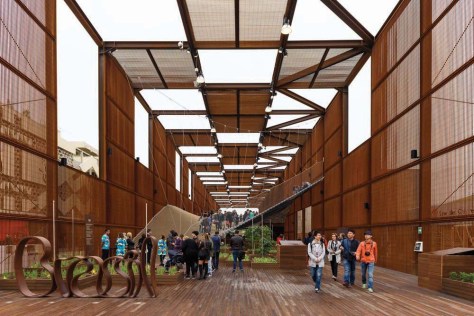
This is the first time China has been involved in the World Expo. Designed by New-York based architect Yichen Lu, the 49,000-square-foot Pavilion features an undulating timber frame roof covered with bamboo and aluminum panels. Matching with its evocative theme, China transmits its reflection on the theme of gratitude and respect for our mother earth, based on the concept that man is an integral part of nature.

Foto: FTfoto | www.ftfoto.it

Feeding the World with Solutions

In a massive exhibition space of 4,133 square meters, the Brazilian Pavilion is the work by award-winning designers from Studio Arthur Casas and Atelier Marko Brajovic. The concept of the Pavilion derived from the metaphor of the network – flexibility, fluidity and decentralization. To highlight the country’s commitment to global access to food, the stunning Pavilion is filled with giant trampoline nets.

Mind Philo-Different Way of Producing and Providing food

Different Ways of Producing and Providing Food

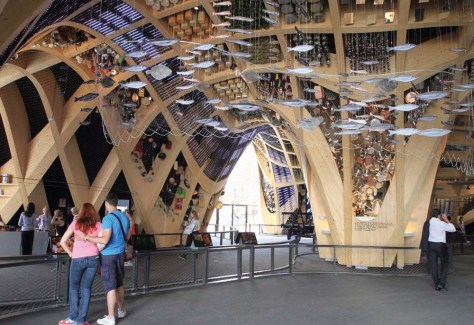
Spread over 3,592 square-meter space, the building is made up from laminated wood and is designed to look like a covered market that is the mainstay of French food culture.

inquadrare riducendo il bordo rosso sopra e a destra

The Coca-Cola Pavilion

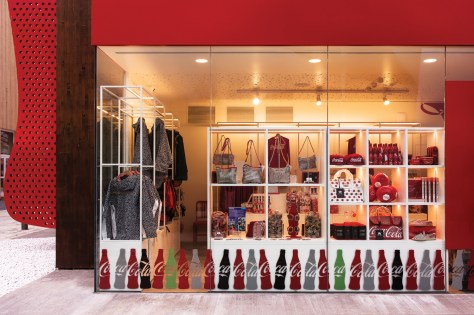
The building makes ample use of highly sustainable materials, reusable and recyclable. Wood, glass and water give life to a Pavilion that is completely demountable and reusable, after the Expo, in its new destination that will benefit the community; after the Exhibition the Pavilion will be disassembled and rebuilt as a sports hall for sports and physical activities.

Waving Malaysian Flag in Milan

This year marked Malaysia’s year as the Chair of ASEAN, which is the seventh largest economy in the world and home to a consumer market of over 600 million people. Flying the Malaysian flag high with the theme ‘‘Towards a Sustainable Food Ecosystem’’, the Malaysia Pavilion launched at Expo Milano, showcases the best of Asia to drive regional growth.

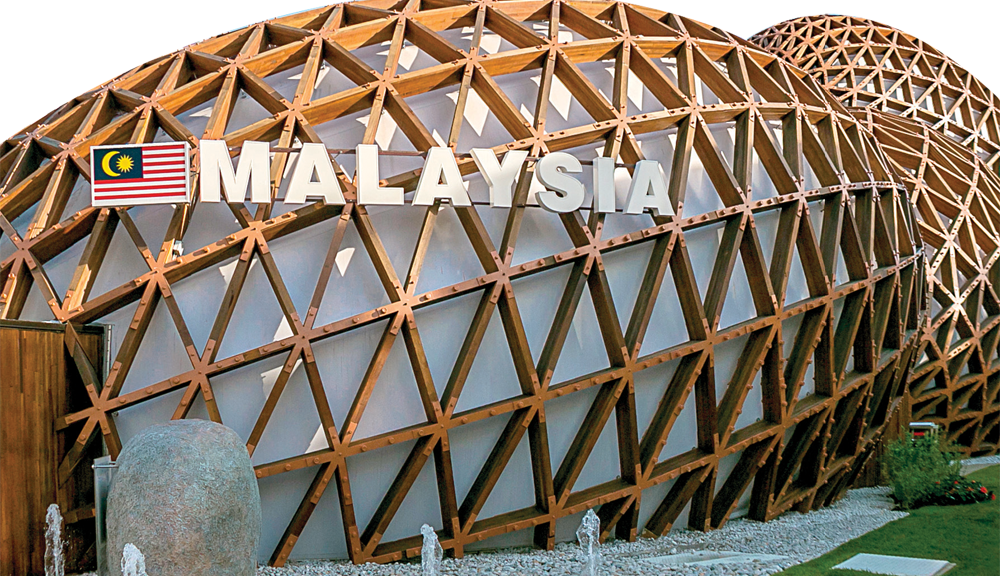
The Pavilion represents the nation’s strong economic fundamentals, underpinned by comfortable levels of external reserves, low external debt, low unemployment and healthy inflows of foreign direct investment. Proudly Malaysian-made, the architectural design of the Pavilion is made up from four seeds which emblematic the Rainforest Seeds; also explained the kaleidoscope journey of Malaysia. The seed-shaped Pavilion is constructed with ‘‘Glulam’’, or a glued laminated wood made from tropical timber. The ‘‘Glulam’’ combined with the structurally complex design of the pavilion, is a testament of Malaysia’s capabilities in both innovative design and use of sustainable materials. In addition, this is the first appearance of ‘‘Glulam’’ in the European Market after having satisfied Europe’s stringent entry requirement.

The Malaysia adventure begins in the first seed, where the nation’s diversity is explored. Continues in the second seed, where it represents its natural food ingredients used in local gastronomic specialties that found in Malaysia’s rainforests.  Recognising that the rainforest are the country’s primary resource, the third seed showcase the country’s commitment to protect and safeguard the forests as a source of health and wellbeing for the future generation. To conclude this enlightening journey, the fourth seed delves into Malaysia’s rich heritage, offering the best of its music, arts and culture.

Malaysia’s presence at the Expo has enhanced the nation’s relationship with the European Union, and yet the Expo has created a platform for Malaysia to promote trade and investment. There are over 140 participating countries in the expo this year showcasing the best of their technology, creativity and innovation as the countries’ efforts for sustainable future.  The six-month Expo carries the theme ‘‘Feeding the Planet, Energy for Life’’, is currently running until 31st October 2015; and is expected to attract about 20 million visitors.

Penang Art Society@Melbourne, the Inaugural Overseas Arts Exhibition

Fostering Ties through Arts

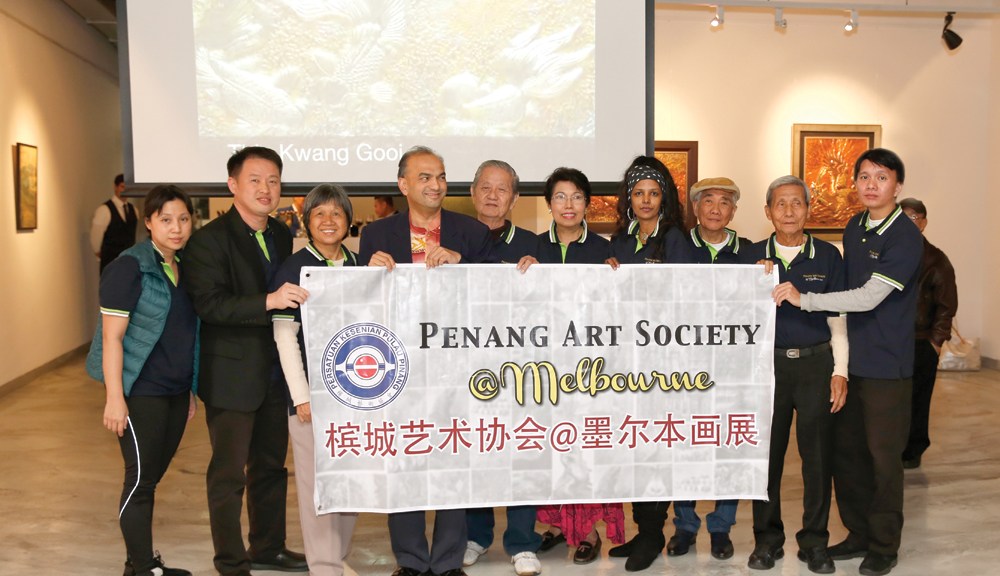
From 1 to 30 June, Australian art lovers, collectors and the public had the privilege of personally getting acquainted with Malaysia arts at a special exhibition titled ‘Penang Art Society @ Melbourne’ that took place at the astonishing gallery at SpACE@Collins, Collins St, Melbourne, Victoria. Organised by Penang Art Society (PAS) Malaysia and curated by the society’s President, Ch’ng Huck Theng emphasized that this first of its kind exhibition is a cross cultural exchange event to encourage cultural immersion, to promote international understanding and goodwill between Malaysia and Australia. The PAS@Melbourne marked an important milestone for the Society as it is the first ever art exhibition down under.

The exhibition was officiated by the Consul General of Malaysia to Australia in Melbourne, Dato Dr Mohammad Rameez Yahaya. ‘‘PAS has provided an important platform to nourishing and promoting the Malaysian art and culture scene. As we all know that people nowadays are emphasizing more towards the quality of life, arts and culture play important roles in enabling people from different background and different races to understand each other hence making this a better and peaceful planet to live in. The Malaysian government is proud of PAS’s effort in bringing Malaysia arts and culture to Australia and I would like to congratulate its President, Mr Ch’ng Huck Theng for taking this initiative to make possible this exhibition,’’ said Dato Dr Rameez in his speech. He further added that this is an important step to not only provide an exposure for the Malaysian artists but more important sharing and bridging the bond between two great countries.

‘PAS@Melbourne’ featured a collection of artworks from 20 renowned Malaysian artists, whose works have been exhibited at various international biennales and art shows, ranging from the Malaysian modern to contemporary art. President Ch’ng said in his statement, ‘‘having celebrated its 60th anniversary in 2013, the PAS is the oldest registered art society in Malaysia with over 500 members and still growing. Established in the 1950’s, it was set up with the objective of consolidating various artworks from the region including paintings, photography, Chinese calligraphy, poetry, music, dance performances, bonsai, feng shui and others, to preserve and further promote these cultures. ’’

Among the VIPs that attended this colourful event were Turkish Consulate General, Ersel Ozdemir, Felix Wong Director from Echo3 Media, Colin Abbot from AMBC, Ita Puspitasari Consulate for Social Cultural Affairs Indonesia and Councillor Ken Ong.

Stop, Reverse, Prevent…

by Dr Mecherl Lim MD (MA) Naturopath (ND) , Holistic Kinesiology

Two things have become increasingly apparent:

  1. We are exposed to a more complex array of toxic compounds in our air, water, and food than ever before.
  2. It has been recognized that an individual’s ability to detoxify or bio-transform and excrete toxic substances is of critical importance to overall health.

Detoxification (Detox) in the context of alternative medicine consists of the approach to rid the body of accumulated harmful substances that allegedly exert undesirable effects on health in the short and long term.

Medicine & science-Stop reverse prevent

The Massive Effects Texting Has On Our Necks

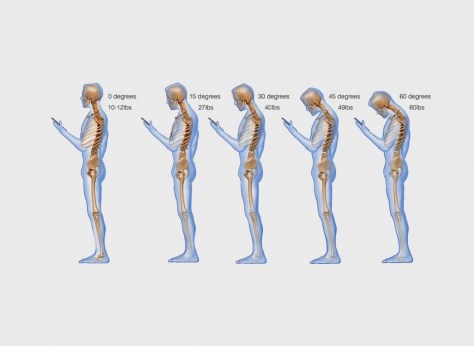
Smartphone users spend an average of two to four hours per day hunched over, reading e-mails, sending texts or checking social media sites. That’s 700 to 1,400 hours per year people are putting stress on their spines, according to the research. High-schoolers might be at the worst risk. They could conceivably spend an additional 5,000 hours in this position.

Recent research, done by Dr. Kenneth Hansraj, chief of spine surgery at New York Spine Surgery and Rehabilitation Medicine, suggests that when you have continuous and aggressive strain on the neck, you get wear and tear on the spine, straightening the natural curve of the neck and placing the discs under abnormal pressure.  This increased pressure can create tears within the disc, resulting in a herniation of the disc itself and subsequent pain and neurological symptoms, like neck, upper back and arm pain, pins and needles and numbness. Some people may call this a “slipped disc” or a “pinched nerve”.

If you suspect that you have a pinched nerve in your neck, it is important to consult with your chiropractor. Some pinched nerves can lead to other, more serious conditions so it is a good idea to have a chiropractor evaluate you and monitor your recovery.

Some of the worse culprits of “text neck” are young people. With this excessive stress in the neck, we are starting to see young people needing spine care from a really early age. It is very important that parents start showing guidance and leading by example.

While it is nearly impossible to avoid the technologies that cause these issues, individuals should make an effort to look at their phones with a neutral spine and to avoid spending hours each day hunched over.  Here are a few tips on how to better manage your neck and your smart phone use:

• Hold your phone at a proper reading angle, rather than looking down. Your phone should be held directly in front of your mouth, a few inches across from your chin. Your eyes should look down rather than having to bend your neck down. Your shoulders should feel relaxed while you’re typing. Download a Text Neck application for your smart device allowing you to monitor your head tilt whilst using your device.

• Use a text-dictation program if you have one. Hold the phone in front of your mouth.

• Set a timer and take breaks.

• If using your device in bed, avoid flexing your neck too far forward with pillows that are stacked too high, thereby decreasing the stress on your neck.

• Build strength and range of motion. In your workout routine, include exercises and stretches that strengthen your neck and upper back.

• Drink water and maintain hydration.

• Use other forms of communication. Try the “old school” method of calling your family and friends or seeing them in person to chat.

Medicine & Science-Tags

Cochlear implant – A gift of hearing…

By Poh Boon Fong
Audiologist, B. Audiology (Hons) UKM, MASH (M’sia), AAA (USA)

Prevalence of Hearing Loss

As many as 3 of every 1,000 babies are born with hearing loss and another 3 will acquire hearing impairment in early childhood due to illness, infection or accident. Babies can’t tell you if they can’t hear. Babies who do not hear our voices, a lullaby or a nursery rhyme may have problems learning to talk. As for the elderly population, about 1 in 3 individuals over the age of 65 years old have some degree of hearing loss.

What is Cochlear Implant Programme?

Cochlear implant is an alternative which provides greater access of hearing to those suffering from severe to profound hearing loss. A cochlear implant is an electronic device that restores partial hearing to the deaf. It is surgically implanted in the inner ear and activated by a device worn outside the ear. Unlike a hearing aid, it does not make sound louder or clearer. Instead, the device bypasses damaged parts of the auditory system and directly stimulates the hearing nerve, allowing individuals who are severely hearing impaired to receive sound. Cochlear Implant Programme involves the expertise of an Ear, Nose & Throat Surgeon, audiologist and speech-language therapist/auditory verbal therapist and other allied health professionals such as occupational therapist and psychologist.

Who can benefit from a cochlear implant?

Individuals who are

  • severely or profoundly deaf
  • who receive little or no benefit from hearing aids
  • who communicate through hearing and/or speech-reading
  • who want to be part of the hearing world
  • are the best candidates for cochlear implantation.
LSC Cochlear Implant programme

The Cochlear Implant programme was initiated by LohGuanLye SPECIALISTS CENTRE (LSC) in 2005. It was then, the only centre in the northern region providing cochlear implant surgery including the full rehabilitation programme.

Cochlear implant provides a sound beginning to the deaf children and new light of hope for the deaf adults. This programme entails a lot of planning, counselling, long rehabilitation process following the operation, hard work, dedication and commitment from the team.

Since then, the LSC cochlear implant programme has successfully helped 62 children and 4 adults to hear again. We have conducted 84 surgeries and rehabilitation programmes with 48 unilateral and 18 bilateral cochlear implant recipients.

Helen Keller once said,

“Deafness is worse than blindness.”

She felt she could compensate for her lack of eyesight by learning Braille, but there was no getting around her inability to hear. She found deafness to be a much greater handicap than blindness.

Our breakthroughs…
  • We have the first bilateral cochlear implant recipient in Malaysia.
  • We have the oldest cochlear implant recipient in Malaysia who was implanted when he was 78 years old.
  • Our youngest patient was implanted at the age of 13 months
LSC Cochlear Implant Parents’ Support Group

The LSC Cochlear Implant Parents’ Support Group was established in 2006, to serve as a platform for sharing information and experiences among parents and professionals. LSC is offering a comprehensive cochlear implant programme which focus on the success of the children by working closely with their family members. With this support group, we hope to bring involved parents together to share their experiences, success stories, and discuss concerns or problems with the team.

We have also conducted educational sessions and workshops for parents to learn about devices trouble-shooting, home practice, behavioural training, welfare card application and various parent-child development.

Current situation in the country
  1. There is a lack of awareness among the public that hearing impairment can be now surgically treated.
  2. Early diagnosis and intervention is crucial for the success of cochlear implant patients. Therefore, patients should not wait for too long without getting any help. For example, the golden age to learn language is from 0-3 years old. Children implanted after 3 years old might have developed behavioural problems, cognitive and speech language delayed.
  3. Adults who acquire hearing impairment due to accident, aging or medication were not aware that cochlear implant will be able to restore their hearing so that they can be functional in society again.

LohGuanLye SPECIALISTS CENTRE (LSC) will continue to provide more speech and hearing services to the needy community in the hope that those with hearing and speech problems will be detected early and receive appropriate intervention. Without appropriate opportunities to learn language, children who are hard of hearing or with speech disorders will fall behind their hearing and speaking peers in language, cognition, and social-emotional development. Such delays may result in academic under-achievement, lower educational level, unemployment or lower lifetime earning and thus they will be unable to contribute optimally to the socio-economy of the country. We hope the government and NGOs will consider funding the Cochlear Implant Programme and subsidise the cost  of hearing devices because the money needed to support a hearing impaired child in the long run, is much more expensive. We urge the government to revise our educational programme to help these children to learn better in the mainstream class. We also hope the society will help these children to grow and be successful in life. Together, we provide the gift of hearing to the community.

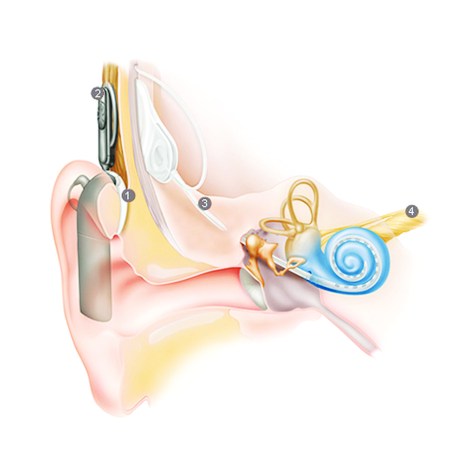
Cochlear Implant 1. The Sound Processor captures sounds and converts them into digital signals. 2. The Processor sends digital signals to Internal Implant. 3. The implant turns the signals to electrical impulses and sends them to an array inside the Cochlea. 4. The Electrodes stimulate hearing nerve, and the signal is sent to the brain.
Cochlear Implant
1. The Sound Processor captures sounds and converts them into digital signals.
2. The Processor sends digital signals to Internal Implant.
3. The implant turns the signals to electrical impulses and sends them to an array inside the Cochlea.
4. The Electrodes stimulate hearing nerve, and the signal is sent to the brain.

Art of Touch

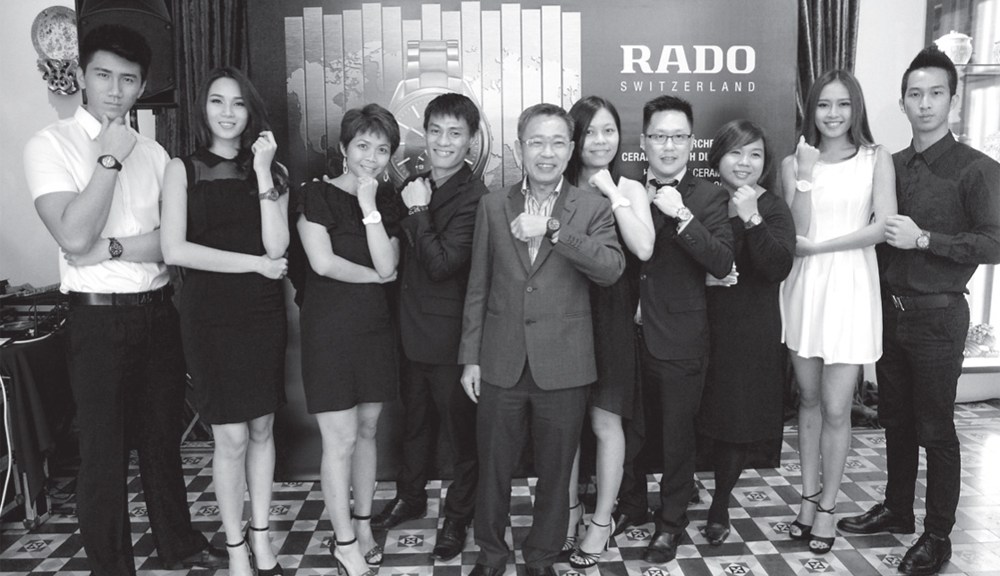
Kicking off a night to remember, the Rado’s new HyperChrome Ceramic Touch Dual Timer was unveiled in an exclusive occasion in the heart of George Town. Held in an eclectic setting at Kebaya Dining Room at Seven Terraces, guests were given the opportunity to ‘’travel at the touch of a finger’’ and to experience the ground-breaking timepiece. As the name suggests, the new HyperChrome Ceramic Touch Dual Timer features two time-zone dials. Expect the unexpected with the ceramic touch technology, with just a simple touch on the timepiece; you can swap the times displayed on each dial.

Creative Mind with Heart

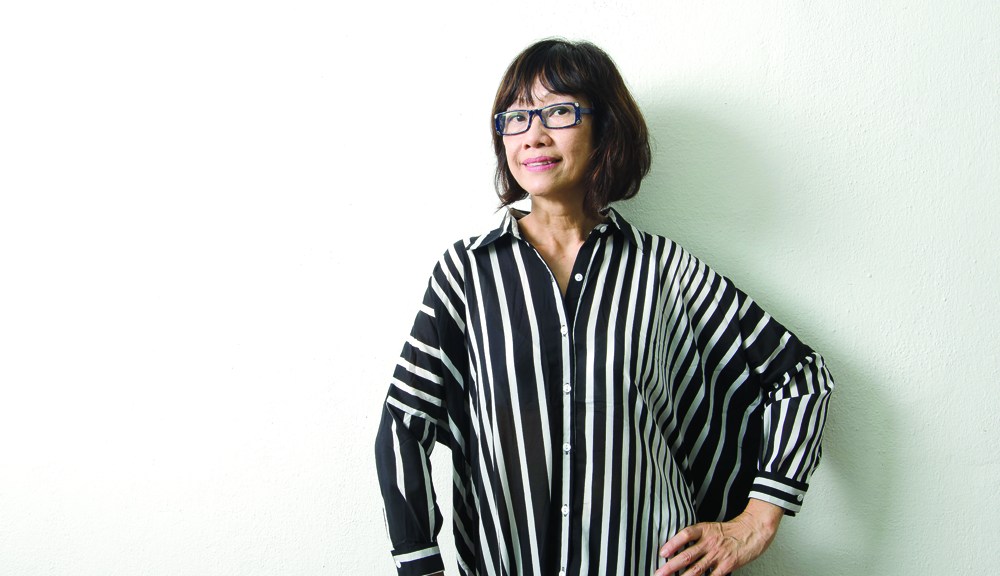
Melisa Wong

Octagon Creative Founder & Managing Director

“As a student, I found that the way of the heart mattered; one follows the heart when taking decisions and action.”

BORN BOOMER

Perhaps, it was a wildly vivid imagination which dared her to dream or an insatiable artistic streak bubbling on the inside that challenged her to innovate, but in having kept an unwavering eye on the prize, the notable entrepreneur lives to tell her tale, now that the fat lady has sung. That which countless others would have dubbed a wearisome plot, she has braved and overcome with absolute poise.

Raising a self-made business from the ground up, conceptualising cutting-edge client solutions, and leading the charge on ingenuity combined, is no walk in the park. Nonetheless, at her hands, these milestones speak to a celestial path upon which work has often felt like play. A design virtuoso with a remarkable background in advertising, the former Ogilvy & Mather (O&M) apprentice has been a loyal visitor of creativity’s lair.

MASTER PAINTER

Retracing her steps up the corporate ladder, Wong’s recollections instantly return to the start of the trail. “In the 80s, upon graduating from art school in the UK, I completed a one-and-a-half-year spell in the US whereupon I worked first at a summer camp teaching art and photography in Maine (North America), and later moved on to a ceramics and design company in San Francisco,” she shares with Essenze.

The aforementioned professional engagements were followed up with a five-year stint at Johan Advertising (1983) and subsequently two years at international creative house, O&M (1988). Finally in 1990, in rising as the captain of her own ship, she unveiled a promising start-up which the industry recognises to this day as Octagon Creative Group. Since its launch into the open waters, the brand has steered Wong across the seven seas and back.

DREAM BUILDER

Speaking of going the distance, her journey has taken the award-winning team to multiple international exhibitions, key locations among them, Korea and Paris, with prominent works displayed at several major expos such as the Malaysia Pavilion and Venice Biennale both in 2012 and 2014. Essentially, Octagon’s success is rooted in a philosophy which insists that design be used as a vehicle to preserve heritage and build a healthy creative economy.

The past Graphic Design Association Malaysia president further elucidates: “As a student, I found that the way of the heart mattered; one follows the heart when taking decisions and action. After some experience has been gained, the head takes over, allowing one to visualise things and put matters into context. It is a time when one begins to understand that form follows function; the functional aspect is when forming client solutions becomes essential.”

“After some experience has been gained, the head takes over, allowing one to visualise things and put matters into context. It is a time when one begins to understand that form follows function; the functional aspect is when forming client solutions becomes essential.”

INSPIRED TROTTER

A subscriber of unity, love, and divinity, the mother of three, with the ultimate companion and business partner for a husband as well as truly nurturing parents for support, attributes a key portion of her personal and professional conquests to her loved ones. “When my children were growing up, my parents were instrumental in their progress and provided each with a healthy, happy environment.”

Leisure-wise, Wong finds solace in the embrace of photography, reading, writing, drawing, and even a bit of cooking. But her obsession with adventure doesn’t end there; she also enjoys architectural trips with the family. “For the next five years, I see myself at the forefront of graphic design, producing corporate branding, publication, visiting interesting installations, and moving into more digital and interactive media,” Wong enlightens.

Taking the Lead in Banking

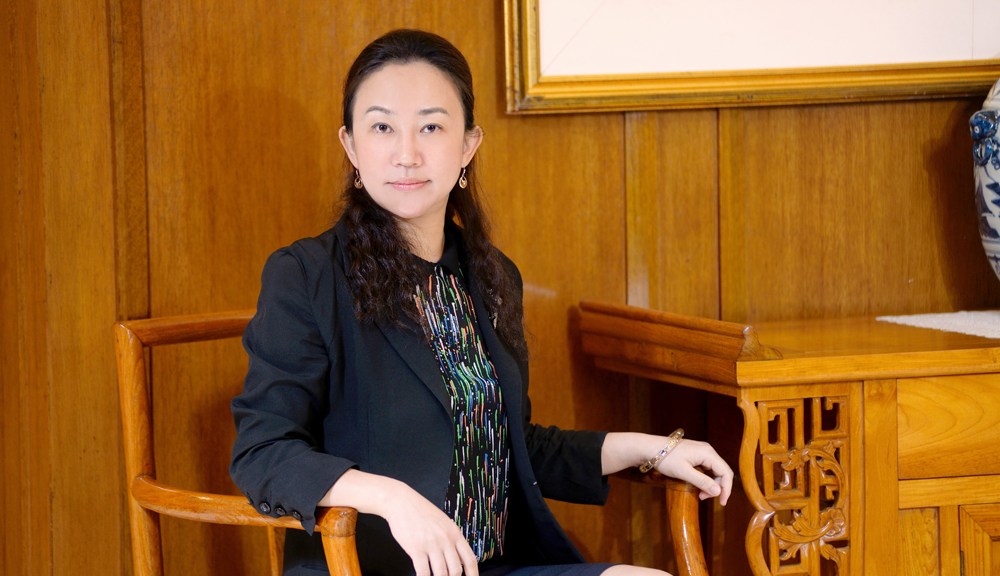
Jenny Xu Zanjun

Deputy Chief Executive of Bank of China

“I do not want to disappoint those who placed their trust in me so I will always look to the future and do my best to earn and deserve their trust.”

The year 2011 is a turning point in Jenny Xu Zanjun’s career in banking, after having worked in the industry for more than 14 years. That was the year that she was thrust into a position most in the industry coveted, that is, to lead the Bank of China in Malaysia as its Deputy Chief Executive. Being chosen to lead the bank in a foreign land far from home is no easy task, especially when very few others get this chance, particularly women. However, for this determined 43-year-old, being given this position is a challenge that she took in her stride.

Xu admits that though the banking industry is not exactly male-dominated as compared to other more masculine-inclined industries, it is no walk in the park for women to climb the corporate ladder within the industry. The fact that very few women of high ranking positions are posted overseas in the Bank of China is proof that it takes sheer determination to make it to the top. “If a woman wants to climb to the top in the banking industry, she must perform exceptionally and she must also put in a lot of effort, hard work and determination, even more than her male counterpart,” she shares.

Naturally, for most women, many would have to divide their time between their family, marriage and their career which makes it even more challenging for them to succeed in the career. Sometimes, sacrifices are required for one to succeed and unfornately for Xu, it meant losing out on marriage and family life as she is now single. Nonetheless, the career woman did not regret choosing to concentrate more on her career. Instead of dwelling on what she doesn’t have, this strong-willed woman always looks towards the future. “I do not want to disappoint those who placed their trust in me so I will always look to the future, do my best to earn and deserve their trust and in turn, this gave me the strength to push on for the bank and for my career,” she said.

Bank of China opened its very first branch in Malaysia back in 1939 but it ceased operations about 20 years later. However, that is not the last of the Chinese bank in Malaysia as it reopened as a full-fledged commercial bank here in 2001. In all these years, the Bank of China has always emphasized on a customer-centric approach so when Xu took over the helm more than 4 years ago, she was faced with the challenge of ensuring that the bank is able to meet the expectations of its loyal clientele. “Many of our loyal clients look towards our bank as a symbol of China so they have very high expectations of first-class service and utmost professionalism,” she said.

Today, the challenges the bank faced is much more diverse than merely meeting customer expectations. Xu said leading a bank back in China where its services and systems have been perfected over the years is vastly different from leading the very same bank far away from China, in a land where banking systems are different and its services have to be changed to suit the locality. “The banking system in Malaysia are different from what is practised in China,” she explained. This is a challenge that she has to overcome when she first arrived here and even now, her focus has always been improving the bank’s system to provide exemplary services to its clients.

“We need to continuously improve our systems, the quality of our products and services because we are not only looking at the end profit but also working towards our goal of becoming a first-class sustainable international bank,”she said. The Bank of China has indeed left its mark in Malaysia as it played a pivotal role in promoting stronger bilateral trade between China and Malaysia. The bank has also spread its presence here with branches in Kuala Lumpur, Muar, Penang, Klang, Johor Bahru and Puchong. Furthermore, Bank of China was also the authorised bank to offer real-time gross settlement services in Renminbi through the Real-time Electronic Transfer of Funds and Settlement System (RENTAS).

Xu said the banking industry in Malaysia is a mature one now, which is why Bank of China has the confidence in setting up roots here while encouraging bilateral trades between China and Malaysia. She believed that through constant communication with the Malaysian government, it could play an important role to continue building closer trade connections between both countries. “The financial prospects in Malaysia is still bright because despite the devaluation of the ringgit in recent times, I think it is strong enough to overcome and rise above it,” she said. She noted that with Tan Sri Dr Zeti Akhtar Aziz leading Bank Negara Malaysia as its governor, she is certain that Malaysia’s banking industry will stay stable and strong in years to come.

The Home Whisperer

Vincent Chew

Managing Director of Pensonic Group

“There’s no room for complacency. Keeping my head in the game is the realisation that a certain mindset needs to be proven through example. Therefore, everyone is afforded the opportunity to display greatness and be rewarded for it.”

Be it telling the time, balancing revenue sheets, flipping channels on the TV remote, or punching in an old flame’s digits to reconnect, people rely on figures as a navigational compass to determine directionality, more than they realise. Keeping tabs is second nature and perhaps, rightfully so. In the rat race, the formula isn’t any different. Mathematical equations, scientific algorithms, and basic score-setting each have their place in profit’s grand design. But sometimes, the ‘numbers game’ travels further when coupled with poetic justice.

LESS IS MORE

What might that mean? Many, by stroke of habit, tend to beat around the bush when spilling their best kept secret to triumph, as if it were the roadmap leading right to the Holy Grail. Amidst the corporate-cloaked clutter, one man has risen to the occasion-doing so almost 20 years ago-to rewrite the pages of success in his mental journal. Setting himself clearly apart, he operates on the premise that simplicity is the most profound of complexities to conquer.

Pensonic Holdings Berhad group managing director, Vincent Chew, is the sales savant referenced in these chronicles. Over a recent Essenze exclusive in his office, he took it upon himself to address his personal style of leadership and ideas on growth. Sealing the measure of his worth, the dialogue which ensued, went on to uncover an amalgamation of the seventh integer on the numerical chart with passionate words, a code which best sums up the managerial mogul and intrepid traveller.

HONEST ACE

Truthfully, it did not take long in the conversation for his underlying philosophy to come through. Twenty-five minutes in and seven key words later, Chew’s personal recipe to his special brew gushed out from inside the barrel. “In business, you have to be trustworthy,” the 43-year-old shares, eager to educate. Without context, the message reads as generic but when put into perspective based on the findings he has leveraged thus far to pave his path, the writing is literally on the wall-and spells ‘PENSONIC’ in bold red against white paint.

The golf and cigar enthusiast’s unrivalled sense of integrity and ingenuity has everything to do with the fact that the public-listed venture is now a full-blown empire, the very one his chairman father, Dato’ Sri Chew Weng Khak, founded in 1982 out of Balik Pulau, a dainty town in Penang known for its durian plantations. Starting out in the early 1960s as a specialist electronics repairer and then moving on to the frontlines as a home appliance retailer, senior proved to be good with his hands and junior has followed in his footsteps.

“I believe in comradeship and trust. Most of my sales general managers are with me in KL. Decision-making and brand building are a collective process and my team understands and applauds that.”

HOT HONCHO

However, in his aspirations to drive his dad’s vision, Chew flew to Michigan in the United States during 1992, spent four years pursuing a formal education in human resources, and returned to Malaysia, only to be inducted into the company’s fabric as a core member of its manufacturing arm. He was only 24 at the time, but already, he had colossal shoes to fill-which is why his university training and degree came in handy. Two years later, while his peers were out job-hunting most likely, he had bigger fish to fry.

Rather than goofing around with confetti on his twenty-sixth birthday, the young chap clocked his first promotion, celebrated his fresh appointment as executive director, and immediately dived into the marque’s books as head marketer. In the role, he was commissioned to further cultivate sales across both the northern and central regions, establish balance between the two, fine-tune in-house policies, and set up the business’s regional sales office in Kuala Lumpur, which he has managed to nurture from just 10 employees to 120-strong.

AHEAD OF THE GAME

Since his entrance into the consumer electronics arena, the company has seen numerous gargantuan upgrades. From a miniscule shop lot in Balik Pulau to a second outlet in Georgetown not long after to the close to RM400 million annual turn-over and 30% mark in international export it currently enjoys, Pensonic is just getting started. “I believe in comradeship and trust. Most of my sales general managers are with me in KL. Decision-making and brand building are a collective process and my team understands and applauds that.”

Part of the cohesion seen today is structured upon Chew’s ingenious multi-brand platform concept. Instead of diversification or fussing over price, Pensonic has conquered the home appliances sector by buying into partner brands and acquiring trademarks which cater to all segments of the local market. To date, it has 10 service centres and eight premium-range Kollektion Haus outlets nationwide with more on the way. It’s the move that has allowed the label to stay competitive without having to compete.

The strategic tackle also awarded Chew his step-up to group managing director in 2014. In fact, Kollektion Haus is the redefined retail business format incepted in 2012 by the man himself, to enable Pensonic to sell premium brands exclusively. Today, the brands under Pensonic’s multi-brand distribution network include Cornell, Princess, Gaggia (Milano), Indesit, and Lebensstil Kollektion. “All initial efforts are attributable to the hard work of the founder. My father was the chief architect with the blueprints,” Chew offers modestly.