Category Archives: EZ 61 (2)

Seamless Splendour

Designing Through Harmony

The picture-perfect district of Tanjung Bungah is one of the most glamourous addresses to have in Northern Malaysia. With plenty of sun, sand and sea, millionaires can’t resist to call this place home. Amongst Tanjung Bungah’s luxurious condominiums is Springtide Residences, where its units measuring between 4,000 and 5,000 sq ft allow for unlimited possibilities for exceptional interior design.

To bring out the best of its dimensions, one homeowner at Springtide Residences enlisted award-winning interior décor firm Splendid Interior Décor (Splendid) for this project, and they delivered. Within only two months, team leader Darren Tan transformed the empty space into a practical and elegant open-concept family home.

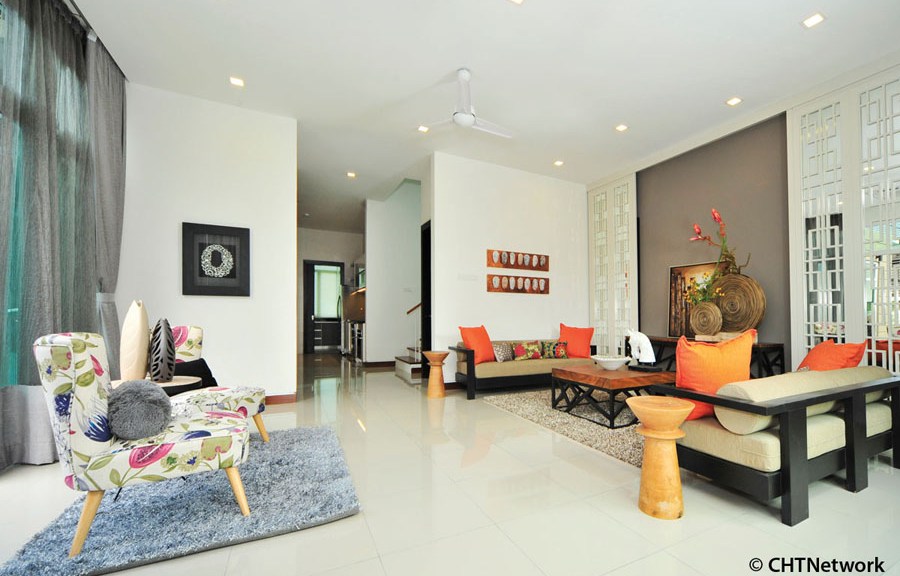
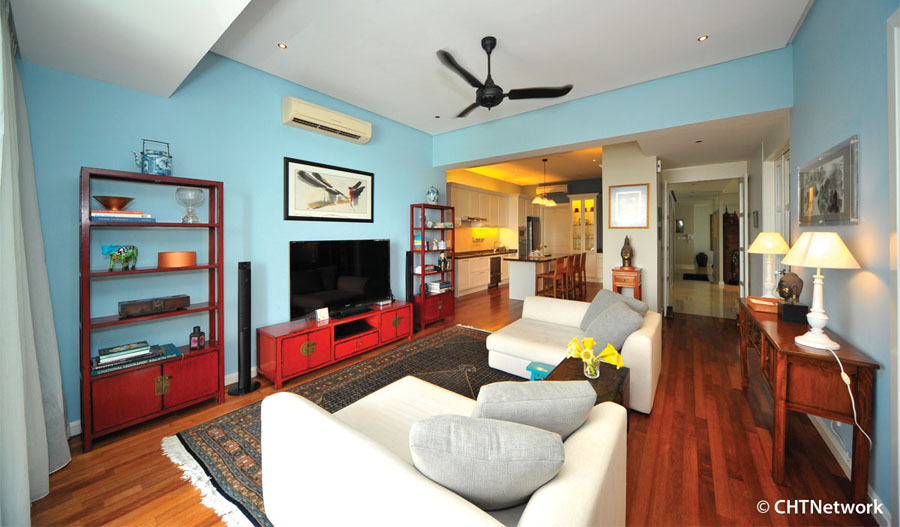
Seamless transitions between distinct areas such as the living room and kitchen, and the dining area with the lounge create an open and relaxed space that is casual and inviting. Each space blends with the next, with closed sections arranged within in a balance of privacy and airiness.

Eclectic Oriental antiques from the homeowner’s personal collection, which the Splendid team has displayed strategically, harmonise with the contemporary accents of the condo. These artefacts add intimacy to each space and reflect the client’s globetrotting pursuits. A grand Japanese console of dark red wood with Burmese and Thai lacquerware dominates the lounge, while a dining set from Chiang Mai complemented with French silverware is set against a large contemporary painting.

In the lounge, minimalist modern furniture is arranged around an ornately carved antique bed-turned-coffee table from Hong Kong. Adorning its cream-coloured walls are Burmese scriptures, Japanese paintings and bright modern artworks that intensify the warmth of the space. In contrast, the cool ultramarine tones of the kitchen and living area are paired with Chinese porcelain ware, French paintings and an antiquated chest resting upon a Persian carpet, taking the edge off the industrial vibe from high-tech appliances.

Bringing more nature into the room, Darren has introduced autumn hues and solid textures to meld this international feel together with the modern gadgets of the unit. Parquet and tan marble flooring, linen curtains and cotton fabrics create the middle ground that bring modern accents and oriental antiques together to create an air of intimacy and comfort. The result of the Splendid team’s artful coordination with spaces, colour and décor is this vision of a relaxed casual lifestyle.

A Noble Profession

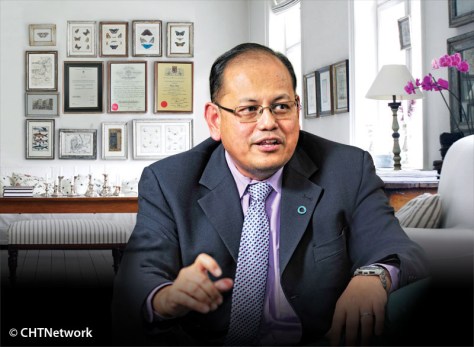
Prof Dato’ Dr Ikram Shah bin Ismail

Director of Universiti Malaya Medical Centre

‘Let the doctor do the worrying for your health,’ some may say. But there are times when the human body gives up on you without any forewarning, and this is when you do a fair share of the worrying as well. EZ seeks out Professor Dato’ Dr Ikram Shah bin Ismail, Director of Universiti Malaya Medical Centre, who provides his insight on what makes medicine the occupation of the compassionate and Malaysian conundrums with quality doctors.

1985 marked the induction of Professor Dato’ Dr Ikram Shah bin Ismail into the faculty of Universiti Malaya, Malaysia’s oldest and most prestigious university, where he first started out as a lecturer. Over the following decades, he was one of the men who built the foundations of Universiti Malaya Medical Centre (UMMC). At the time that he was promoted to the directorship of the Centre, the Director of UMMC also held the seat of the Dean of the Faculty of Medical Sciences at Universiti Malaya. ‘Three years ago the Board of Directors decided to split (the designations) so they had to appoint another person as the dean. Because I’ve been the Director before this and as the hospital became a bigger entity, they needed somebody with experience so the Vice-Chancellor at the time asked and I stayed on as the Director,’ said Dr Ikram.

But Dr Ikram did not embrace the medical profession by design. His heart lay with mathematics long before a career in medicine crossed his mind. ‘I’m very mathematically-oriented. Computer science has always been my childhood dream,’ Dr Ikram relished. An opportunity presented itself, but with an unlikely outcome. ‘I was given a scholarship by MARA to do my matriculation in Brisbane, Australia. When I was there, I did rather well in my senior exam, and my seniors told me that it’d be such a shame if I didn’t do medicine because of my good results. So I called my parents and they approved.’

That decision altered his life path forever. He completed a six-year programme in East Queensland, and during this time, medicine gradually grew to occupy a space in his heart. ‘The love of medicine begins because when you start seeing patients, you feel like you’re doing something. By the time I was in my fifth year, our final year, I realised that this is what I want to do because this is where I feel I can do most good to humanity – to help people who are suffering from illness,’ said Dr Ikram. ‘My aim in life has always been to help the sick. In my younger days as a doctor, and now as hospital administrator, I try to improve hospital conditions and environment so that our doctors can do a better job in healthcare.’

Ikram editI realised that this is what I want to do because this is where I feel I can do most good to humanity
– to help people who are suffering from illness…

As he worked his way into the medical profession, Dr Ikram had his fair share of distressing experiences. He described his first job as a medical officer at Hospital Kuala Lumpur (HKL), illustrating just one of the many the struggles he has faced. ‘I was posted to HKL and they put me in a third-class ward. At that time the third-class ward was really like a hospital in a third-world country; it was horrible and I had nightmares about that period. I spent about three months there and my consultant at that time felt that I probably learned enough medicine or suffered enough, so she took me in and asked me to look after the first-class ward patients and second-class,’ he related with a chuckle.

However, that wasn’t the end of it. Later during his training, he endured a medical officer’s nightmare. ‘I was sitting for my exam at night, but the night before I was asked to go on call and I had to work through the night and next day, and I had to go to my exam feeling very sleepy after being on call for 24 hours,’ he explained. However, being the doctor that he is, the lack of sleep and fatigue didn’t stop him from acing the examination.

Being the son of schoolteachers, the professional veteran in Universiti Malaya and UMMC reveals that, contrary to popular belief, teaching and practicing medicine do go hand-in-hand. ‘All doctors should teach,’ Dr Ikram asserted. ‘As a medical doctor, we’re also lecturers. A doctor is supposed to learn to do things and then once we learn how to do things, then we teach. So teaching is part and parcel of being a doctor.’

‘When you teach other people, you are actually strengthening your own knowledge, because to be able to teach you must know your subject very well. If you want to teach students, you just have to keep up with the latest in medicine. So if you teach, you actually become a better doctor,’ reasoned Dr Ikram. He added that research plays a similar role to teaching in improving medical skills. ‘When I was doing my PhD, it trained me to be an even better doctor because by doing research, you learn how to solve problems. You have a particular research problem, you learn the approach to use, scientific approach to solve a problem. You know the approach on how to solve that problem. So it is very useful for a doctor to be able to do research, even up to the PhD level.’

With a foreign education, it is puzzling why Dr Ikram chose to come back to Malaysia when there are greener pastures in fully-developed countries, such as Australia and the United Kingdom that he has been to. But he stands firm on this decision with several valid reasons. ‘I never looked to it. I rather like the environment here,’ he answered. ‘Here, we have everybody. All the specialists are here, so if you have any problems or need any advice, everybody’s here. And they’re the best in the country, so that’s why I like it here. I always tell people, if you go to see the doctor in a private hospital, you’re seeing our students. If you come here, you will see the mahaguru (great teacher). If you want the best, you come to UMMC,’ he said.

Recent international rankings of education institutions, however, have raised the ire of Malaysians who question the performance of Malaysian tertiary education providers. This provides fodder for the public perception that, perhaps, current Malaysian education standards are declining when compared to the previous generation. ‘In those days, everything is done by reputation. If they’re famous, people think that they’re good, but they may not. Maybe those lecturers that were considered to be good in the past – if they were to practice now – may not reach up to the standards that we expect them to do now. So it’s a perception. I don’t think that the standards are coming down, but of course we are always trying to improve,’ explained Dr Ikram.

There are even instances where Malaysian education standards actually exceed the quality of certain foreign education institutions around the world, which debunks another myth amongst common perceptions that foreign education makes a better-trained graduate. ‘It depends on where you come from,’ Dr Ikram reasoned, adding some countries, like UK and Australia, have reputable medical schools. ‘(If it’s from countries like) UK, Australia then you know that the schools are good. ‘But if you come from, say, some of these universities in Russia, Crimea, these are the ones where their students may not be as good as the local universities.’

UMMC puts its money where its mouth is in light of these international education rankings, for they are the testament to the quality of Universiti Malaya’s graduates. That standard continues to outstrip that of most other institutions in the country. ‘We are the top university and also the oldest. There are medical schools in UKM (National University of Malaysia) and USM (Science University of Malaysia), and these are also very good medical schools. But there are some of the newer ones, which are not as good,’ said Dr Ikram. ‘When it comes to choosing doctors I would prefer doctors who are graduating from this university.’

Come Home To Paradise

BOTANICA.CT unveils its fourth phase of resort-style Tropical Hillside Villas in Balik Pulau

Drawing inspiration from resort living architecture, BOTANICA.CT Garden Township is a unique residential development that combines modern amenities with the calming influences of nature. Developed by MTT Properties & Development Sdn Bhd, commonly known as MTT Group of Companies, BOTANICA.CT Garden Township boasts an exclusive sense of refinement, understated luxury and lush natural surroundings.

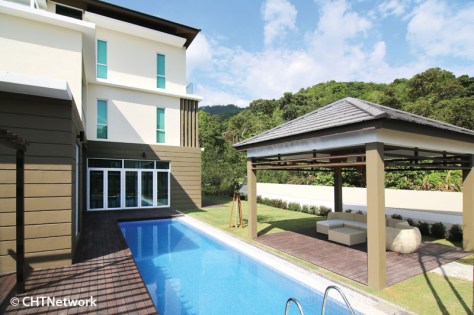
Villa2_4Located along the idyllic banks of Sungai Air Putih on the Penang Island district of Balik Pulau, the recent unveiling of the Township’s fourth residential phase, BOTANICA 4, offers 29 spacious, three-storey villas on a raised plateau. Each of the villas boasts individual built-up areas upwards of 6,000 sq ft and land areas between 9,000 to 16,000 sq ft.

Built for people with vision, the 300-acre BOTANICA.CT Garden Township began its journey to become an integrated and self-sustainable township in 2006. Continuing its purpose of becoming a holistic lifestyle sanctuary, BOTANICA.CT plans to launch at least five more residential phases with its heritage club house due to open by the end of the year. This is to be followed with a pedestrian mall named Botanica Walk, a private medical centre, health resort and retirement resort, thus achieving its status as a self-contained and self-sufficient township.

Available in seven contemporary designs to choose from, each unit in BOTANICA 4 comes complete with its own swimming pool, ensuite bathroom for all bedrooms and private home elevator, with some designs offering outdoor lanai, water features and verdant landscaping, creating a contemporary zen-like atmosphere.

The units are available from RM5.5 million onwards and the show villas are available for viewing, preferably by appointment. The BOTANICA.CT Sales Gallery in Balik Pulau is open from 9am to 5pm from Mondays to Saturdays and 11am to 5pm on Sundays and Public Holidays. For more information, contact +604-8662 399.

Regions of Art

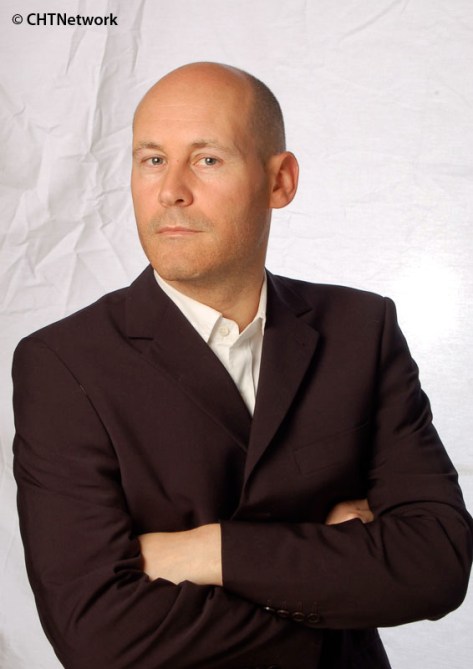
pascal Odille-®Vivian van BlerkPascal Odille

Artistic Director, Middle East & North Africa, Singapore Art Fair

The latest addition to the art extravaganzas in Southeast Asia is the Singapore Art Fair. Set to enthral the public for the very first time, Singapore Art Fair is an off-shoot of the Beirut Art Fair which is in its fifth year. To chart the progression of the Fair and its novel concept of ME.NA.SA, and what it hopes to accomplish, Yasmin Bathamanathan interviews Singapore Art Fair’s Artist Director of Middle East & North Africa, Pascal Odille.

It is no denying that Singapore is fast becoming the centre of art and culture of Southeast Asia. In fact, the island-country has always enjoyed a central location for trade and economics that stretches back to the days of the spice trade. When it was announced that Singapore would be home to yet another world-class art event, the news was not met without some amount of scepticism from the art world. However, what sets Singapore Art Fair (SAF) apart from the rest is its concept of ME.NA.SA.

For the uninitiated, ME.NA.SA. stands for Middle East, North Africa, Asia and Southeast Asia, and with that, SAF is positioning itself as a ‘platform for cultural and artistic exchange with the aim of widening interests and to explore the artistic development of the ME.NA.SA region through strategic curatorship and programmes, and selection of exciting representations of art from this region.’

Pascal Odille, who is also the artistic director of Beirut Art Fair (BAF), said that SAF’s desire is ‘to bring together all players of the art market of the ME.NA.SA regions, including the press, collectors, novices, public or private museums, auction houses and curators.’

‘Without these people coming together, there will never be true visibility of ME.NA.SA artists. A contemporary art fair is a meeting place for participants to gather to share common interests and ideas on how best to raise the profile of art in that particular market. This helps to create strong connections.’

Having worked with SAF Founder and Fair Director, Laure d’Hauteville on several projects over the past 15 years before joining BAF, Odille was interested in joining forces with d’Hauteville once again, this time in Singapore. ‘When we decided to embark on the adventure of SAF, we saw it as a continuation of the spirit of BAF. Therefore, it was natural that I took on the role of Artistic Director, Middle East & North Africa of SAF to achieve our goal of showcasing ME.NA.SA art in Singapore,’ said Odille.

Just as branching off to SAF from BAF was natural to Odille, one could say that the ME.NA.SA. connection in terms of art is also organic. The ties between the Middle East, North Africa and Asia started with the Silk Road, and there is shared history between these regions. ‘Archaeological excavations carried out by the Russians in the early 20th Century in Eastern Turkestan led to the discovery of Christian objects of worship that were brought ​​by Syrian merchants dating from the 8th Century. The first exchanges that took place between the traders were forged through artworks. As such, there is a common history.’


Without these people coming together, there will never be true visibility of ME.NA.SA artists. – Pascal Odille, Fair Director of Middle East & North Africa, SAF


‘Closer to our time, modern history, particularly that of decolonisation, seems to affect all of ME.NA.SA – for SA, in particular, this would be the period from early 1960s to early 1970s. All these countries have a common cultural and artistic past,’ Odille expounded on the history behind the ME.NA.SA concept.

Art and art history have always been subjects that fascinated Odille, interests that only deepened as he grew in age. ‘I discovered my love for art at a very young age. I started with a high school diploma focusing on literature with a specialisation in philosophy and art history,’ said Odille, who has taught at the Paris campuses of American institutions such as Center for University Programmes Abroad, Parson’s School of Design and University of Delaware.

‘While finishing my studies, I took a number of internships in institutions and galleries. It was after my stint as assistant of Claire Burrus (of the now-defunct Galerie Claire Burrus) in Paris that I decided to only work in contemporary art. It was at that time that I opened Gallery Pascal Odille in Paris, and applied to be an expert at C.N.E.S (National Chamber of Specialised Experts).’

‘After three years of study and supplementary internships under the direction of Armelle Baron, a specialist in Nordic painting, I finally obtained my title as an expert,’ explained Odille. He credits Baron for cultivating his ‘profound interest in art and determination to further artistic research.’

As the Artistic Director of ME.NA.SA., Odille does not only have the task of selecting the artworks that best represent the region, but also to foster an understanding among the galleries and artists on their presence in Singapore. ‘The potential for expression through art is fabulous. It is time that the ME.NA.SA regions are given the opportunity to showcase itself on the international artistic stage and for us to work together on this visibility.’ As for how he selects the artists and artworks, he employs a set selection criteria: ‘the intrinsic quality of the work and the relevance of the subject.’

For most in the SA side of ME.NA.SA., there might be a preconceived notion that the regions of Middle East and North Africa are one, and in that, their  art too are similar. In one part, this perception is not all that wrong. ‘The differences between the ME and NA are not found in their artistic practices. These regions have always used similar media such as video, installation and photography,’ commented Odille. The close proximity between the countries in the two regions and ties that date all the way back to the biblical days are sure to be reflected in art produced in these two regions.

In present day, the ME.NA. region is wrought with internal conflicts, and political unrest. Then there is the on-going Arab Spring, which in the course of four years has seen demonstrations, protests, riots, and civil wars. How the artists react to the turmoil is reflected in the art that they create.

On this note, Odille said, ‘What is also crucial is the question of identity and how it is part of contemporary society. Thirty years of civil war in Lebanon have inevitably pushed young Lebanese artists to try to understand how they got to where they are today. Therefore, I understand their quest to work on themes such as the memories of these painful moments.’

Moreover, the notion of identity in Algeria has always been very evident; the different political and social events that the country has suffered, along with a painful decolonisation, has given Algerian artists a compelling reason to tackle such themes. These themes are eventually reflected in their work,’ said Odille, drawing parallels between the North African nation of Algeria and the Middle Eastern nation of Lebanon.

This quest for identity and its expression is also found in the art of SA, a common thread in much of the contemporary art world. ‘I find the artists share the same reflection when it comes to the notion of identity. The social problems as well as the political involvement of certain artists, regardless of where they come from, are themes that are clearly illustrated in their work. They are the witnesses of their time, whether they are from ME, NA or SA, and so their reflections are similar,’ said Odille on the contemporary art of ME.NA.SA.

As SAF would be the official inaugural point of convergence for Middle Eastern and North African art in Southeast Asia, collectors who are not as familiar with the art of ME.NA. have a lot to look forward to. Like purchasing art from any other regions or periods, Odille said that collectors should ‘buy with their eyes and not with their ears’.

Personally, he finds the contemporary artworks from those two regions fascinating. ‘I am truly touched by the sensibility, intelligence and diversity displayed in them,’ said Odille, ‘From Algeria to Tunis, Lebanon to Egypt, even Iran and Iraq, an important artistic tradition and a strong sense of speaking out prevail throughout these countries.’

‘The significance of the artists from these regions would be of great interest to a number of art enthusiasts and collectors. Therefore, I believe in the importance of taking the time, as an art collector, to talk to gallery owners and asking the relevant questions about the artists they represent.’

Crown-ing Glory

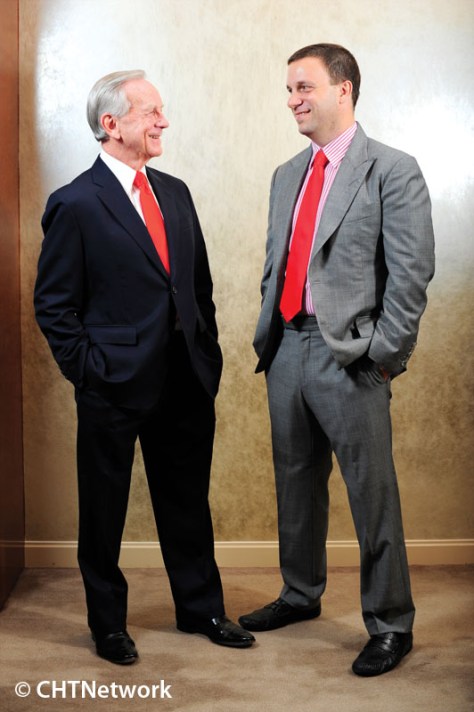
Jim Thompson &  Jimmy Thompson

Founder & Chairman, The Crown Worldwide Group & Managing Director, Crown Worldwide Group Sdn. Bhd.

After 50 years in business, Crown Worldwide has handled everything from alligators to the King of Tonga’s throne and even the priceless ‘Mona Lisa’ painting at the Louvre. With 250 offices in 50 countries and a global turnover of USD850 million, EZ speaks to the father-and-son team about their success story so far.

‘A rose by any other name would smell as sweet’ – so the old bard, (Shakespeare) believed but others are convinced there are advantages in sticking with a good name, be it recognition or influence. Perhaps that would account for three generations of James ‘Jim’ Thompson in this family of self-made men.  ‘In the Irish tradition, usually the name stays in the family – not directly one to another, but usually grandfather to grandchild. But for some reason my father gave me the same name he had, and I gave it to my son,’ laughs Jim Thompson.

‘My father was an amazing man,’ Jim, remembers. ‘He came from nothing – poverty, and made a success of his life. I felt that having done what he did and giving me the opportunity to get an education, I should build on that.’

Crown Worldwide was founded in 1965 when a young Jim Thompson who was residing in Japan recognised the need for a reputable international moving service. With only USD1,000 to his name, Jim established Transport Services International in Yokohama. Even here, the significance of a ‘good name’ would become apparent.

‘People used to forget that name; they couldn’t get it right. So when we opened in Hong Kong for a second operation, we wanted to name it something different, something we could associate with a symbol,’ explains Jim. ‘Crown emerged as a nice name of quality, royalty and all that. It became very popular in Hong Kong so we kept the name for all our operations.’

By 1975, Crown Pacific would expand into Singapore, Indonesia, Malaysia and other Asia Pacific regions, becoming the leading relocation company in Asia. The expansion was accompanied by a new name to reflect the company’s global presence; this time the name was to remain Crown Worldwide Group with Crown Relocations being one of its primary division. The other divisions include Crown Fine Art, Crown Logistics, Crown Records Management, Crown Wine Cellars and Crown World Mobility.

According to Jim, the phenomenal success of the company was not something he anticipated or expected. ‘People often ask about Asia and I can’t honestly say it was a vision. It was a startup like any startup company. There’s always this effort to just survive for the first few years. And then as you get going, you say, ‘maybe we can do this well,’ and we just kept expanding and that’s been successful.’ Timing also lent a helping hand as world globalisation was accelerating and Crown and its divisions were there to serve the mobile and logistic requirements.

‘That was our constant effort, to convince people that we are the best. We’ve always been fanatical about quality and I think that has paid off because people use our services and tell their friends about it. We developed over fifty years and became the only global company in our business,’ continues Jim.

Crown was only 10 years old when they opened here in Malaysia, four decades ago, but it has seen rapid growth, brand distinction and even acquired a sense of exclusivity. ‘We like people to think of us as high quality, top of the market. Most people in the industry require three quotations. So long as they call us even if they think we are expensive, they find that we are not. We’re quite competitive with the other good companies in town,’ explains Jim. ‘When they see that our quote is reasonable we stand a good chance of getting business.’

Though they may share the same name, the father and son team did not always share the same career ambitions. ‘I always hoped that my children would be in the company someday, I think most fathers would, but I think that, he knew when he graduated from university that if he wouldn’t join Crown, he would have to go and get his own job, which he did, in China.’

A request by one of the operating managers to assist with a project in China led to Jimmy joining the company officially and staying with Crown for 15 years. ‘My first thought was I needed to pay my rent,’ he chuckles. ‘Second thought was, well, I’ll get the project done and then I’ll look for something else. But I guess, I’m just that good and here I am!’

Having married and resided in China for almost 18 years, the opportunity to relocate to Malaysia was too good to miss. ‘It was a time of change for me and an opportunity came up in the organisation as well. I was very pleased to come to a place with cleaner air, a new environment and very friendly people.’Of course, there were some domestic arrangements to consider as well. ‘To be honest, my wife said this was the only place she would move to if she left China,’ he grins.

Nevertheless, the move would prove to be mutually beneficial for both, man and company. ‘I speak Chinese and I also have certain skills in different sectors of the business, that other employees don’t have in Malaysia − particularly on the logistics side of the business, which can be used to really build up the development of the business in Malaysia.’

Jim Thompson3‘Crown emerged as a nice name of quality, royalty and all that. It became very popular in Hong Kong so we kept the name for all our operations.’

– Jim Thompson

As for managing the operations of over 5,000 employees and contractors worldwide, it may not be an easy feat but the Thompsons have taken it well in their stride. ‘We have to really motivate them, centralize them with compensation, whether through salary or recognition for their good services,’ says Jim. ‘Frankly I think we have one of the best teams, certainly in our industry.’

Respect is a key ingredient in the management style at Crown. ‘I started the company and I’m still here, but it’s all these people who built the business for me. I really think about that all the time. Whether they’re driving a truck or cleaning the offices or someone in a management position, I try to respect these great men and I think this has sort of filtered down to our team.’

Working for his father’s company does not seem to affect Jimmy in any way. ‘Well, Crown is a pretty big company and there are different layers of management. We do work closely together sometimes but mostly with the management team within Crown.’

Jim agrees, ‘I think the important thing is that Jimmy doesn’t work directly for me. He’s my son so we talk a lot, but his boss is actually the head of the Asia Pacific region. I think that’s good because he’ll be mentored by that guy, who’s also quite experienced.’

But there is no denying Junior’s admiration for the man who built the company. ‘I always look at my dad, who has a very positive attitude. Even though times may be tough, he’s always got a positive outlook. He’s been in the business for so many years, that all the experience that I or anyone else can give is just a story.’

As for what the future holds for these enterprising men and their business, there is talk of a book and quite possibly a museum. ‘I’m hopeful that Crown as a company will be able to build an art collection as well. Many businesses do that and I thank this opportunity because in Asia, art is coming up so much, it’s fantastic. We’re in a position to buy pieces from time to time and build a Malaysian art collection,’ muses Jim, who is himself an art collector. ‘I love art, so I hope that my collection will be passed on and hopefully grow in the future.’

The passage of time has been a reflective time for this charismatic man who has achieved so much through hard work, determination and mutual respect. And it’s a life story he wishes to preserve for the next generation. ‘I realised when I saw a lot of people in the office today, that not one of them was 40 years old. So they weren’t here when the company started in Malaysia. And they and the ones coming after should know what Crown was in the beginning. I want it written down accurately, with old pictures … I want to tell my own story as well, about what it’s been like.’

Infinite Indulgence

QX70_17_2Infiniti’s QX70 5.0 is the quintessence of luxury
Every automobile that passes through Infiniti is a sophisticated marvel identified with the brand through a blend of raw power and distinct agility.

Bearing the hallmark synonymous with precision engineering and flawless design, Infiniti carries the legacy of the world’s second-largest carmaker through its attention to detail. Every automobile that passes through Infiniti is a sophisticated marvel identified with the brand through a blend of raw power and distinct agility. The depth of every car’s character grabs attention for its celebrated tenacity, responsiveness and mind-blowing torque.

The distinctive crossover QX70 5.0 AWD is Infiniti’s marque that promises all that and more. Feel the power course through its veins as you take one out for a spin and listen to the purr of its 5.0 litre V8 engine. Pumping out 390 hp at 6,500 rpm, the mean machine tears up the road effortlessly with an acceleration of 0 to 100 kmph in just 6.8 seconds and a top speed of 235 kmph. Now that is all raw muscle coming from this mighty metallic beast: hitting all the right notes with high performance, low emissions and maximum fuel efficiency.

Encased within the irresistible crossover is extravagant comfort in the seat of safety, for Infiniti has incorporated several systems into the QX70 5.0 AWD that will put your mind at ease, even in the midst of traffic jams. Let the intelligent cruise control embedded in the console automatically maintain a following distance, using a laser-based digital rangefinder to detect vehicles ahead. And maneuver into your parking bay smoothly while keeping an eye on the Around View Monitor, which maps out a birds-eye view of your surroundings through the the four cameras built into the crossover.

Complementing the design and innovative marvel of the QX70 5.0 AWD is its chic interior. After taking sides between either black quartz or maple wood trimmings, cozy up in the snug seats of quilted leather. Add that to the two-way lumbar support that’s built into the driver’s seat if you are taking the wheel, but what seals the deal is Infiniti’s Advanced Climate Control System (ACCS) so you’ll be reluctant to leave the comfort of your crossover. The glass moonroof slides open with a single touch, letting the elements in whenever you feel like it.

However, the crossover is not the only instrument of excess that you will enjoy. From gift services to reservations, the Infiniti Personal Assistant is a concierge service that comes with the moment you hold the keys of a QX70 5.0 AWD. This is the extent of Infiniti’s commitment to customer care; for luxury, by definition, is special and difficult to obtain. But once you own the QX70 5.0 AWD, luxury becomes a lifestyle that goes beyond the driving experience.

Rising To The Top

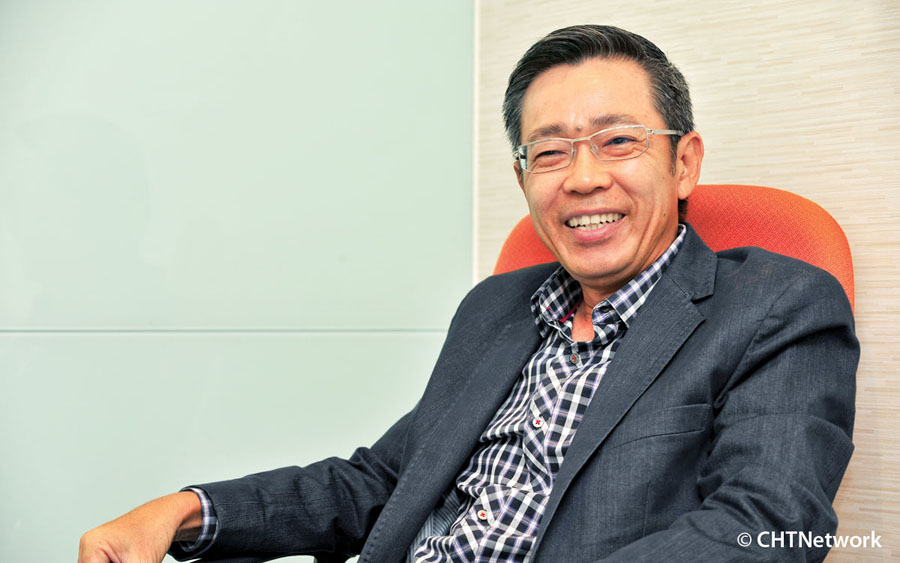
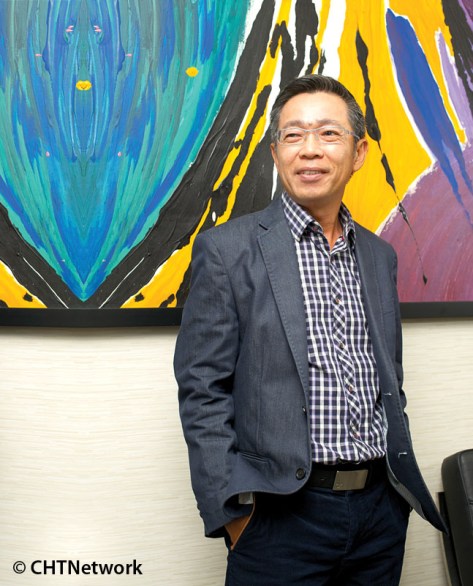
Bernard Yong2Bernard Yong
Vice President of Rado and General Manager of The Swatch Group Malaysia
Humble, pragmatic and personable, Bernard Yong shares his fascinating journey to the top during a tête-a-tête with EZ.

Born and educated in Penang, Bernard Yong received a head start  in the working world soon after completing his Form Five selling tableware at Oriental Emporium. This soon led to an apprenticeship at a factory making glass counters that were used to showcase timepieces in shops back then. Here, he did all sorts of tasks including sweeping the floor and assisting with the transportation of the products.

This however, was not to be the precursor to his involvement with Rado or the Swatch Group as Bernard, who has a penchant for art decided to join a former classmate’s interior design firm following his stint at the factory. He indulged his passion for two years but the call of duty beckoned when his father was promoted to head a new local wholesale agency distributing Rado in the entire West Malaysia.

Bernard’s father, clearly having quite an influence on his son, was the quintessential self-made man. ‘My father was illiterate; he left Hainan when he was 9 years old. He had only 2 years of primary schooling and had a very hard life. That was why he didn’t believe in education, but believed that as long as we work hard, we can learn everything that we need.’

‘Since he was illiterate, he needed someone to do the translations and the correspondences with the HQ in Switzerland, so I came quite handy to him. He convinced me to join him.’ Being the good son that he is, Bernard followed his father to Kuala Lumpur on his new posting, taking a job with his father at the new company.

The world then, said Bernard, was very much different from the world today. He recounted an epiphany he had during a visit to Switzerland last year. ‘I was checking in with my friends on Whatsapp, sharing photos and videos.’ He remembers when he was about to turn 21 and he made the move to Kuala Lumpur, which at that time was a big deal.

‘It was as though we were going overseas. You had to have a group of people, rent a van or a minibus and set out on a journey that would take at least 7 hours of driving, book a hotel,’ said Bernard, illustrating how the times have changed what with the ease of international travel and the infrastructure that has made Malaysians mobile and connected with the rest of the world. When in today’s international business, emails and texting services such as Whatsapp allow for real-time communication, things were quite different for the young Bernard who was starting out in the big city.  ‘Those days, I sent telexes to Switzerland,’ said Bernard.

Consumers nowadays want more than just a product; they want brands and products that are associated with a certain lifestyle.

A few years working with his father, the opportunity to branch out came knocking. Bernard joined the banking industry, working at the-then Southern Finance. It was while working here that he started taking evening classes, studying for a Higher Diploma in Banking and Finance at the Institute of Bankers Malaysia. Three and a half years later, he would be the first person from Southern Finance to complete the course.

Bernard, who was and still remains a computer buff, began taking as many IT courses as he could the moment Microsoft PC made an appearance in the bank. Due to his familiarity with the computer and the initiative that his superiors saw him take, Bernard got to be the person to work with the computer and was transferred to the statistics department.

During this time, he was exposed to the statistical aspect of banking. ‘The branch manager saw my potential, and when Southern Finance was about to be computerized and go online, they needed someone who understood computers and operations. So I was transferred to this project. It was not a big promotion, but there was a lot of exposure,’ he said.

‘There I learnt a lot of programming, which actually became very handy for my future career. Despite my Form 5 education and diploma in banking, it was my knowledge in computers that really helped me in my career. I was able to do a lot of reporting, presentations, even some programs to generate certain reports, things that none of my peers were able to do.’

After six years in the banking industry, Bernard returned to the watch trade to work with his father as the company was growing. Together, he brought with him the wealth of computing knowledge. ‘That year, 1989, I was very proud of myself. One whole year I did not stop working; no medical leave, no annual leave,’ said Bernard, who professes to being quite the workaholic.

‘My first task was to computerize the company, to develop a working system so that all the company information was easily accessible,’ explained Bernard, adding that in those days, since much of the sales were done on a credit basis, it was vital to have an effective system of tracking  payments. He worked on the existing computer system the whole of that year, sourcing for the software and modifying the chosen software to suit the requirements of the company.

In 1994, upon the acquisition of the Rado distribution rights by the Swatch Group, Bernard made the transition, officially joining the company, which he is still attached with today, albeit as the Vice President of Marketing of Rado Malaysia and General Manager of The Swatch Group Malaysia.

When he was younger, Bernard never expected to become a businessman. In fact, he claims that he hated business. ‘I wanted to be an artist. Or a teacher,’ he shared. Yet, life would have it that he did not have a say or choice in the way his life would turn out. Time and time again, throughout our tête-à-tête, Bernard would repeatedly refer to himself as ‘the obedient son’. Though one might strain to detect any hints of resentment, one thing that came across clearly was his respect for his father. After all, Yong Sr’s philosophy on life, hard work and determination has proven to be a blessing for his son.

Another thing that passed from father to son is the involvement in the watch trade association. Just like his father who was active in the Penang Watch Trade Association, Bernard serves as the Advisor and Honorary President of the Malaysia Watch Trade Association. In fact, he was the one who brought together the various regional watch trade associations in Malaysia under one banner, forming a strong and cohesive alliance of watch retailers and distributors in the nation. This year, the Association will be hosting the 20th Asian Horological Trade & Industry Promotion Conference (AHTIPC) with Bernard as the Organising Chairman.

The theme for this year’s edition of AHTIPC is ‘From Commodities, Goods and Services to Lifestyle Experience’, in reflection of the change in economic value that businesses can give to consumers. ‘Consumers nowadays want more than just a product; they want brands and products that are associated with a certain lifestyle,’ said Bernard, citing Starbucks coffee chains as a perfect example of the shift in consumer-mindset where it is no longer just about the coffee, but a certain type of experience that consumers get from visiting the stores. ‘With this year’s conference, we hope to communicate this to the members.’

When not busy with watch-related activities, Bernard can be found on the golf course, perfecting his swing. An avid golfer who only picked up the sport when he turned 50, he claimed that ‘golf is like life’ in the sense that it requires much discipline. Moreover, having worked hard all these years, being able to wind down and tee off is a luxury that he has earned. True, it is a form of exercise that Bernard credits to raising his stamina and keeping him fit, but golf is also a form of relaxation that he has come to be passionate about because of the various experiences golf has afforded him.

‘To me, luxury is playing golf in different courses in different cultures. Even the caddies in different countries speak different languages,’ said Bernard, who had recently visited Pattaya and got to golf at a Par 6 course on the picturesque Thai city. Up to today, Bernard has scored two holes-in-one, the first in his third year and the second in his fourth. Not bad for a relatively new golfer with mere four-and-a-half years of golfing history. Golf is, after all, a game where strategy and pragmatism play a big role, befitting the man who has strategically advanced in his career.

Gadgets

Tech for Travelers

As sea levels continue to rise, it’s time to think ahead and plan your next trip to work with these terrain-blending transporters. Flooded roads, clogged waterways and swamps are no longer a barrier to punctuality, and these über-rugged hybrids will see you through to your next meeting in style.

HeliCat

The forms of a helicopter and catamaran come together to form this futuristic vessel. Built for rough and tough waterplay, this watercraft takes on turbulent seas and wide rivers easily with its two independent motor systems. Take it for a spin between island-hopping and wet adventure tours at speeds of up to 64 kmph.

SEA PHANTOMSeaPhantom

A jetplane made for water? It certainly seems that way. The SeaPhantom uses its twin hydrofoils to raise the vessel out of the water, until the vessel is supported in mid-air like an aircraft. At this stage, the SeaPhantom cruises over wave crests at speeds reaching almost 200 kmph, while saving on fuel consumption as you fly on the seas.

Gibbs Humdinga

Never sit through a traffic jam again when you can exploit the waterways with this boat-car hybrid. Using High Speed Amphibian (HSA) technology, the Humdinga cruises up to 160 kmph on land and 65kmph on water. A turbo diesel engine powers this full-time 4WD amphitruck, which transitions into a jet-powered boat effortlessly within seconds.

Mercier-Jones Supercraft

Blending cutting-edge hovercraft innovation with luxury supercar technology, this first Supercraft of the world was born. Maneuverable and agile, this is another advanced amphibious vehicle that oozes style. Elements of the Bugatti Veyron, Maserati Gran Turismo and Audi R8 are the opulent automotive inspirations that blend with high-performance versatility in this Supercraft.


Dream Kitchen Helpers

Even if only a fleeting impression on the taste buds, there is a satisfaction to the art of gastronomy that lures many, from gourmet connoisseurs to greenhorns, to experiment with cuisine. For those with a grand sense of taste, these avant-garde machines are equally grand on design and concept.

CAMBUSAMeneghini La Cambúsa

Bring art into your kitchen with this majestic centerpiece. This three-door ice chest is no ordinary refrigerator, with a customizable layout. The Cambúsa can even accommodate a coffeemaker, icemaker, microwave oven, steam oven or a multifunction oven in its spacious compartments. Its wood frame and brass hinges lend a polished air to the food-lover’s favourite place in the house.

GKILO and CLOGK by Thingk

A cook’s best companions have to be this scale and clock, which weigh your ingredients, estimate the optimal cooking time for that amount of food and tell you when your food is done. In chic shades of fair wood, burnt wood, marble and aluminium, the GKILO and CLOGK interact with each other and notify the Thingk app installed in your smartphone via wireless modules incorporated into their build.

Whirlpool Interactive Cooktop

Are you reading this while cooking? If you own this unconventional induction stovetop, you probably are. Like a giant tablet complete with capacitive touchscreen and high-res display, there’s nothing to stop you from accessing social media, your email, check the weather or even see recipes without leaving the frying pan!

Ravi Wine Chiller

Even red wines need to be served slightly chilled for the perfect taste, but ice buckets tend to serve over-chilled wine after the third glass or so, and without it, wine eventually warms up to well above the optimum temperature for taste. This compact wine chiller solves the conundrum in seconds without the hassle of batteries, and works well for up to an hour.

SousVide Supreme Water Oven

The preferred method of cooking amongst fine-dining aficionados is sous-vide, where food retains its texture, moisture and all its original flavours that would have been lost if cooked using conventional methods. The SousVide Supreme keeps food in a water bath at precise temperatures for hours or even overnight, so you can explore fine-dining with ease.

Scanomat TopBrewer

Like beer, your next cup of java could come from a tap too. Stylish in its simplicity, the TopBrewer brews the perfect cup of fresh-bean coffee without fail. But this sophisticated gadget doesn’t just do coffee; it brews juice, fresh milk, hot water, chilled water and even steam to blanch your vegetables with. Connect it wirelessly to your mobile device and control every drop of milk and coffee that goes into your concoction.

3 Decades of Wedded Bliss

NCY_9530Datin Winnie Loo & Dato’ Richard Teo celebrate in style

Hairstylist extraordinaire and founder of A Cut Above, Datin Winnie Loo celebrated a personal milestone with her 30th wedding anniversary to Dato’ Richard Teo on 12 May 2014. The gala event was hosted at Hotel Vivatel and attended by 200 close friends and acquaintances, all dressed for the ‘1920s: A Tribute to Coco Chanel’ theme.

Marking their symbolic ‘pearl’ anniversary, Loo arrived at the dinner garlanded with a cascading pearl necklace over a delicate, vintage-style white gown and flapper inspired headband, with the dapper-looking Teo in a black tuxedo by her side.

Commencing with welcome speeches the event kicked off with a cake-cutting ceremony and traditional champagne fountain. The special occasion was made even more memorable with Teo’s birthday which was two days away and naturally called for another round of cake cutting. The beautifully decorated, multi-tiered cake was a gift from Le Cordon Bleu and arranged by Elizabeth Lee.

Emcee James Wong was creatively hilarious, inviting the obliging guests up on stage to dance and perform with him. Dinner was a scrumptious affair of Chinese fusion food served with a buffet spread of Western desserts.

Passing into the middle of the evening, the entertainment took a romantic turn with a musical incline by Josh Awang Lee, Dennis Lau and Crystal Lee.

Beatboxer Koujee and little beatboxer Sawyer Leong brought plenty of energy to the dance floor before Rachel Tan, with her flawless voice, ended the evening with songs like ‘The Prayer’, ‘I Dreamed A Dream’ and ‘Time To Say Goodbye’.