Category Archives: Captains & Legends

An in-depth personality profile of the elites and leaders across various industries from all over the world

Taking the Lead in Banking

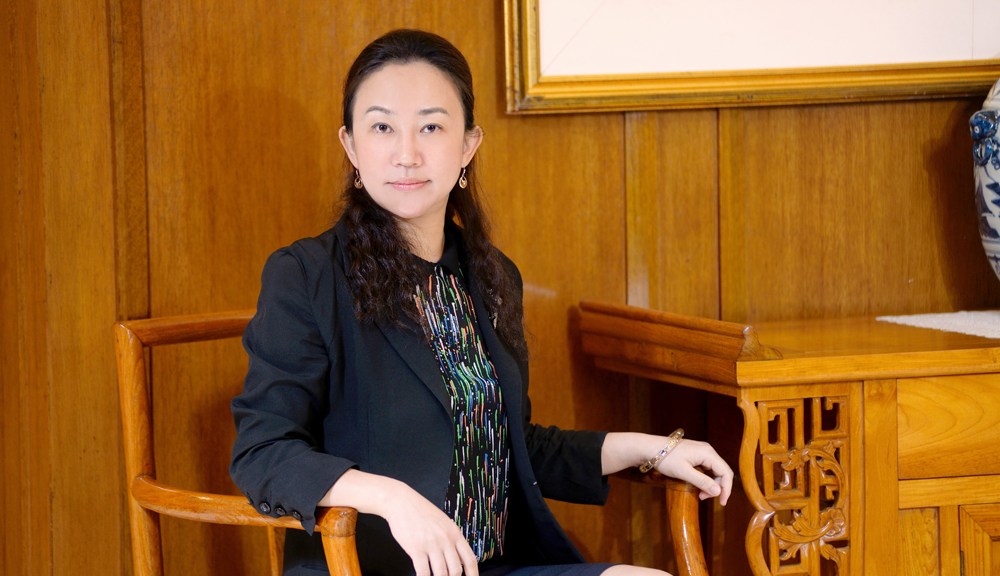
Jenny Xu Zanjun

Deputy Chief Executive of Bank of China

“I do not want to disappoint those who placed their trust in me so I will always look to the future and do my best to earn and deserve their trust.”

The year 2011 is a turning point in Jenny Xu Zanjun’s career in banking, after having worked in the industry for more than 14 years. That was the year that she was thrust into a position most in the industry coveted, that is, to lead the Bank of China in Malaysia as its Deputy Chief Executive. Being chosen to lead the bank in a foreign land far from home is no easy task, especially when very few others get this chance, particularly women. However, for this determined 43-year-old, being given this position is a challenge that she took in her stride.

Xu admits that though the banking industry is not exactly male-dominated as compared to other more masculine-inclined industries, it is no walk in the park for women to climb the corporate ladder within the industry. The fact that very few women of high ranking positions are posted overseas in the Bank of China is proof that it takes sheer determination to make it to the top. “If a woman wants to climb to the top in the banking industry, she must perform exceptionally and she must also put in a lot of effort, hard work and determination, even more than her male counterpart,” she shares.

Naturally, for most women, many would have to divide their time between their family, marriage and their career which makes it even more challenging for them to succeed in the career. Sometimes, sacrifices are required for one to succeed and unfornately for Xu, it meant losing out on marriage and family life as she is now single. Nonetheless, the career woman did not regret choosing to concentrate more on her career. Instead of dwelling on what she doesn’t have, this strong-willed woman always looks towards the future. “I do not want to disappoint those who placed their trust in me so I will always look to the future, do my best to earn and deserve their trust and in turn, this gave me the strength to push on for the bank and for my career,” she said.

Bank of China opened its very first branch in Malaysia back in 1939 but it ceased operations about 20 years later. However, that is not the last of the Chinese bank in Malaysia as it reopened as a full-fledged commercial bank here in 2001. In all these years, the Bank of China has always emphasized on a customer-centric approach so when Xu took over the helm more than 4 years ago, she was faced with the challenge of ensuring that the bank is able to meet the expectations of its loyal clientele. “Many of our loyal clients look towards our bank as a symbol of China so they have very high expectations of first-class service and utmost professionalism,” she said.

Today, the challenges the bank faced is much more diverse than merely meeting customer expectations. Xu said leading a bank back in China where its services and systems have been perfected over the years is vastly different from leading the very same bank far away from China, in a land where banking systems are different and its services have to be changed to suit the locality. “The banking system in Malaysia are different from what is practised in China,” she explained. This is a challenge that she has to overcome when she first arrived here and even now, her focus has always been improving the bank’s system to provide exemplary services to its clients.

“We need to continuously improve our systems, the quality of our products and services because we are not only looking at the end profit but also working towards our goal of becoming a first-class sustainable international bank,”she said. The Bank of China has indeed left its mark in Malaysia as it played a pivotal role in promoting stronger bilateral trade between China and Malaysia. The bank has also spread its presence here with branches in Kuala Lumpur, Muar, Penang, Klang, Johor Bahru and Puchong. Furthermore, Bank of China was also the authorised bank to offer real-time gross settlement services in Renminbi through the Real-time Electronic Transfer of Funds and Settlement System (RENTAS).

Xu said the banking industry in Malaysia is a mature one now, which is why Bank of China has the confidence in setting up roots here while encouraging bilateral trades between China and Malaysia. She believed that through constant communication with the Malaysian government, it could play an important role to continue building closer trade connections between both countries. “The financial prospects in Malaysia is still bright because despite the devaluation of the ringgit in recent times, I think it is strong enough to overcome and rise above it,” she said. She noted that with Tan Sri Dr Zeti Akhtar Aziz leading Bank Negara Malaysia as its governor, she is certain that Malaysia’s banking industry will stay stable and strong in years to come.

POWERHOUSE with PANACHE

Malaysia’s Pocket Dynamite, Prema Yin, is an entertainer with more passion and punch than a Flaming Lamborghini on New Year’s Eve. Deborah Joy Peter activates her all-access backstage pass for an exclusive tell-all with the spectacularly seasoned singing sensation.

At a time when her peers were either out chasing butterflies, having tea with Barbie or building towering sandcastles by the sea, then four-year-old songbird, Prema Yin, remembers laughing in the face of stage fright while belting out notes from a set of pipes whose origins often eluded many. Over two decades in, the wondering has stopped and the applause continues on in uproarious aplomb.

SELF-MADE SONGSTRESS

Then chasing the dream professionally at sixteen, the indie instrumentalist describes her immersion as an avenue for creative expression. Yin shares: “When I pour my emotions into the songs I sing, it feels like a weight is lifted off my shoulder, and more so when the lyrics hit home.” On a less sentimental note, her sense of fulfilment isn’t yet complete since career-wise, she insists the journey is only half-travelled. Still, she’s grateful to have been afforded the opportunity to develop as a musician.

DECORATED DIVA

One to keep the show going, as an artiste, she enjoys setting out in search of new landmarks to attain. It’s the very attitude which saw her go from snagging four prestigious nominations at the 17th Anugerah Industri Muzik showcase in 2010 to another at LA’s Hollywood Music in Media Awards under the Best Pop Song category only a year later. Following that, the rock diva was commissioned to perform at the 2013 Guinness Arthur’s Day Festival at the Sepang International Circuit.

Here, she opened for All American Rejects, The Wanted, and Five for Fighting. She’s also shared the stage with R&B icon Taio Cruz and done backup for soul sensation Colbie Caillat at least once. More than that, the effervescent entertainer made her mark taking on international tours across multiple countries including the US, Germany, China, Indonesia, Japan, and Singapore. Just as impressive are her vast airtime exposures on local and Indonesian radio as well as stellar chart successes across a period dating back to 2009.

EVOLVED EXECUTANT

“Besides luminaries like Sarah McLachlan, Aerosmith, and Janis Joplin, my inspiration comes from those who’ve left a mark on my life—past lovers, family, and friends.” Triumphs aside, Yin is constantly reminded of the debilitating hardships once endured. One such challenge was finance. “I invested my savings into my first EP hoping the investment would prove worthwhile. That pocket-emptying sacrifice coupled with not knowing where to start and what to do back then didn’t help.”

Rubbing salt into the wound, there were many who mocked her efforts and when put-downs were done in bad taste, the bitter pill became extremely hard to swallow. Luckily, with guidance and strength from a nurturing handful, her single Eyo Eyo went on to bag several noteworthy nominations and a feature in Hollywood film, A Novel Romance. Other originals such as Bleed, Superstar, and Prove It To Me, to name a few, still today serve as unforgettable markers of her mastery.

FUN-LOVING FEMME

Two years ago, in taking her crooning chronicles further, the star refined her stage identity from rolling rocker to cultural troubadour. The transformation allowed her to regain full autonomy of her creations and incorporate variety into her act by tapping into her Chinese and Indian cultural heritage. “It has helped me be me. I no longer feel the compulsion to fall into step with any particular persona or become someone I’m not, never mind turning into a mirror image of the symbol others want to see.”

The long-time singer-songwriter recently added to her repertoire video-making using stop motion animation and vocal coaching; she sees students weekly and makes house calls. Her first self-made lyric video was released in 2014 for Ring My Bell. More importantly, the 28-year-old visited Santorini in Greece last June—her dream destination. But when she isn’t away travelling, she has the age-old Chinese art of Wing Chun and the classical comfort of the veena to keep her occupied, both of which are her current top interests.

Fully Invested in Art

A successful artist …..”must be passionate about art, have some friends with the same interest, be familiar with the backgrounds of other artists and with the market value of their works.”

INTEREST in artworks as a form of investment is growing throughout the region, thanks to the wealth of indigenous talent, and the burgeoning ranks of eager collectors. But though many see it as having relatively low risk, it still helps to be knowledgeable about the industry.

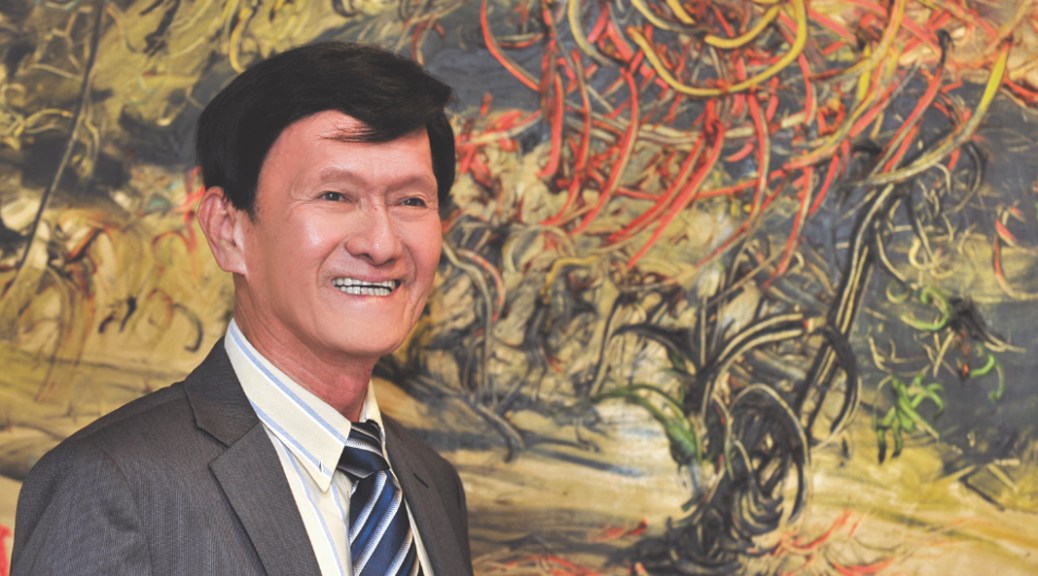
Masterpiece Auction House Managing Director Dato’ Oon Pheng Khoon believes it is vital that one is passionate about art, have some friends with the same interest, be familiar with the backgrounds of various artists, as well as the market value of their works.

Those eager to start collecting should also regularly attend art exhibitions, previews and auctions – as they provide ample lessons about the buying and selling of art, and which artists or artworks, are in demand or otherwise. And best of all, they are mostly free to attend.

“Prices of art are always fluctuating, so it helps to be familiar with the bidding process, and understand the value behind each piece. Serious collectors track artists’ backgrounds, career progression and standing within the art scene, as it influences the value of their works,” said Oon in a recent interview.

Senior artists tend to be in favour, as are those with positions in art-related fields and institutions, as they often end up painting for life. Some collectors also favour works done in certain mediums, for they last longer and degrade less over time, hence representing a more solid investment.

“Good works may be pricey, but its value appreciates. Artists who are regularly featured in auctions are a good bet, as it shows their works are constantly in demand. If you buy a piece today, and there’s someone else willing to acquire it from you immediately, then you know you’ve got a gem.

“Collecting art is as good a investment compared to traditional options like stocks, properties or commodities. It is mobile, and you can buy or sell it anywhere. Art is also a finite thing, each piece is truly one-of-a-kind, and their availability gets less and less over time.

“You hardly see the best works from prominent names on the market, because they have all been snapped up by collectors once they become available. But besides the monetary value, collecting art also means you have excellent treasures to look at everyday,” he added.

Oon, who was born in Alor Setar, Kedah, fell into art almost by chance. Educated at Keat Hwa Secondary School, he worked in the construction, shipping and transportation industries during the 1980s, followed by real estate in the 1990s.

Around that time, many in Kedah started collecting Chinese ink paintings as a hobby. Oon  followed suit and never looked back. After China opened its doors to the world in 1993, he would regularly venture there to meet renowned artists, and buy their works.

“We would read a lot of art magazines and find out who the good artists were, and then approach them. At that time it was hard for them to sell their works, so they very receptive towards our interest,” he recalled of the time when he developed a passion in buying and selling art.

Also in the 1990s, art auctions started in Singapore, and he would regularly attend to broaden his knowledge. Indonesian artists were all the rage back then, but once art auctions started in Malaysia in the 2000s, local artists soon found a great platform to promote their works and excel.

In 2005, Oon relinquished all his directorial positions at his former companies, to concentrate on the buying and selling of art. He was roped in by Masterpiece Auction House when it established its Kuala Lumpur branch in 2012, with the company holding its first auction a year later.

Five auctions later and the company had sold over 800 pieces of art worth approximately RM15million, with a take-up rate averaging close to 90%. Other auction houses are enjoying similar results, and Oon believes the industry can only get better and better.

“It has grown steadily, and the number of art collectors today has increased four or five-fold, compared to a decade ago. Many lesser known Malaysian artists have now become prominent names, as the buying power and interest amongst collectors increase.

“I feel it is my responsibility to help promote Malaysian artists, and I’m now enjoying my life doing just that,” he sums it up succinctly.

WUNDERKIND of IRON WILL

Responsible for spearheading the Victorian chapter of the Australia Malaysia Business Council and leading a landscape poised for change, Joe Perri is the face of the campaign championing bilateral trade and relations with Malaysia. Deborah Joy Peter tells his story.

The story begins over six decades ago. An obscure immigrant couple of Italian descent, whose only real chance at survival at the time, was to pick up what was left of their mangled existence after the second World War, exit their motherland, and start over in a whole new world—the forever home they would soon recognise as Australia. The man goes ahead, slogs to save a few coins, and sends them back for the woman. She then joins him in Sydney where they exchange vows before settling down in Melbourne.

PREMIUM PEDIGREE

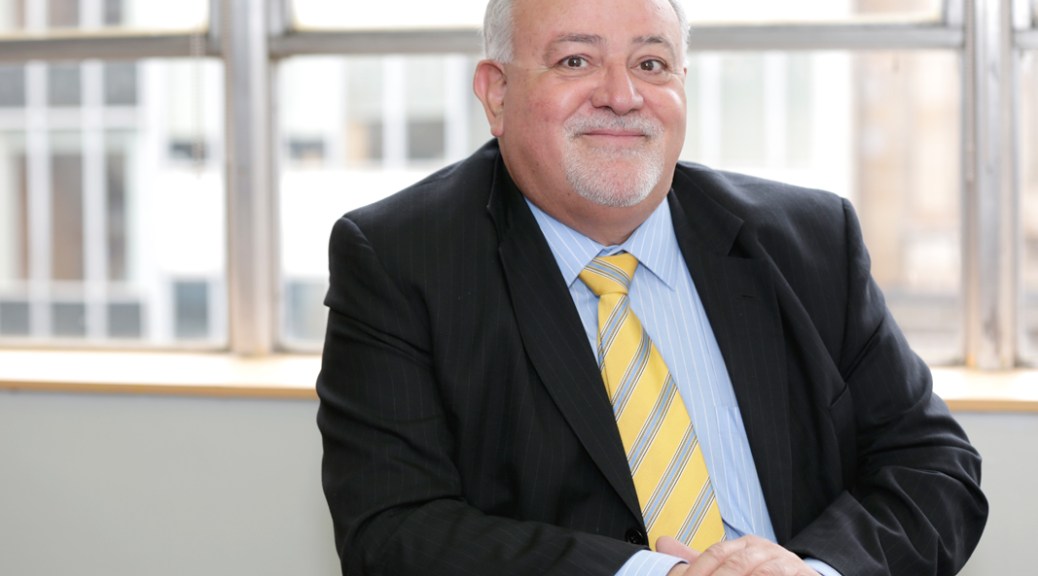
The pair’s labours haven’t fallen on futile ground. The testament of their triumphs and tribulations are captured through a single fruit of their union—a male offspring who’d go on to become a walking legend. That human treasure is who the world today celebrates as Joe Perri, the president of the Australia Malaysia Business Council’s (AMBC) Victorian chapter. A master of ship who directs with heart and depth, his origins mark a set of footprints indelibly printed on the sands of a past bent on making history.

Holding dear beliefs, lessons, and strength of character passed down from parents who dared to dream, his remarkable trail, according to the man himself, is the sum total of a heritage rooted in sheer perseverance. “Their love, care, and guidance have stayed with me always and continue to provide me with a beacon and are the values and morals which sit at the core of my character when relating to my own wife, family, friends, and clients, and so on,” Perri notes.

DYNAMIC DOER

Although well into his fifties, he continues to look to his exemplary guardians as his ultimate source of inner zest. Smiling on the path already trodden, he’s anxious to plot the voyage that remains. It’s been 10 years since his immersion in international trade relations began. He was propositioned to use his wealth of marketing and communications expertise to assist the newly appointed national president of the AMBC at the time. Eagerly accepting, he then proceeded to join the organisation in his home base as member.

“The activities of the council, friendly nature of its members, their diverse backgrounds, and business interests in Malaysia motivated me to go beyond just being a member and led to my joining the Victorian executive team.”

Here, his skills in marketing, public relations, communications, and more were put to good use. As a result, the appointment followed his election to VP and subsequently president, three years ago. Nine years before his first AMBC commission, the marketer founded his personal venture, Joe Perri & Associates.

Picking up on that last point, his duties are divided into two streams—a commercial side where he helps businesses achieve goals through marketing and PR processes as well as a Corporate Social Responsibility (CSR) side which he commits to in a voluntary capacity as president.

CONSCIENTIOUS COMMANDER

He adds cultural understanding and appreciation are feats to tackle, and that the way forward is to have the Asian and Western ways of conducting business adjust accordingly so the best of both worlds is the ultimate outcome. Facing these hurdles won’t be a cinch, but the implications on leadership and prospect of having to flex his captain of industry is justification enough for a heightened sense of exhilaration on his part. “What an exciting time to be in business. International trade is quite frankly in overdrive,” the AMBC head quips.

It’s become increasingly clear to Perri that no country or economy can operate in isolation; every nation is now part of the global ecosystem. To maintain success and strengthen mutually-beneficial trade and investments between countries, alliances are a necessity—and more so, since Malaysia is Australia’s eighth largest trading partner. “The Malaysia-Australia Free Trade Agreement enforced in 2013 was a significant step forward and will continue to be a platform to build on with more trade between the two nations.”

Needless to say, the unified body’s greatest asset is its members; they comprise business owners with commercial operations in Malaysia and Malaysian-born expatriates in Victoria. For the reasons above, the values of AMBC Victoria, especially those CSR-related, reflect that of Perri’s own, such as service to community and country and giving back to a nation that has aided those seeking to expand their businesses and in so doing, had created jobs for countless Australian and Malaysian families.

HAPPY CAMPER

On family, Perri’s consists of his wife, Luigina, two children, Danielle and Matthew, a goldfish as well as a “spoilt cat”. The latest to join that lineage is his son’s fiancée, Juliet. Their wedding takes place in October—the festivities for which the entire household is keenly anticipating. For senior, coming home to a loving family is one of the truest blessings in life. He may be a trade specialist, but the people mentioned above aren’t anyone he’d exchange for anything else.

Adding to that list, he is just as proud to have seen the world. Speaking of going places, the wanderlust-lover recently spent a weekend away with loved ones at a small township called Metung in the beautiful Gippsland Lakes area, a four-hour drive from Melbourne. “It was literally divine.  No tourist attractions, McDonalds, theme parks, cable TV or even a decent cell phone signal. Each morning, we woke to the sound of dolphins, seals, and pelicans in the water.” Now, he can’t wait to get back in a month.

MUSE ON A MISSION

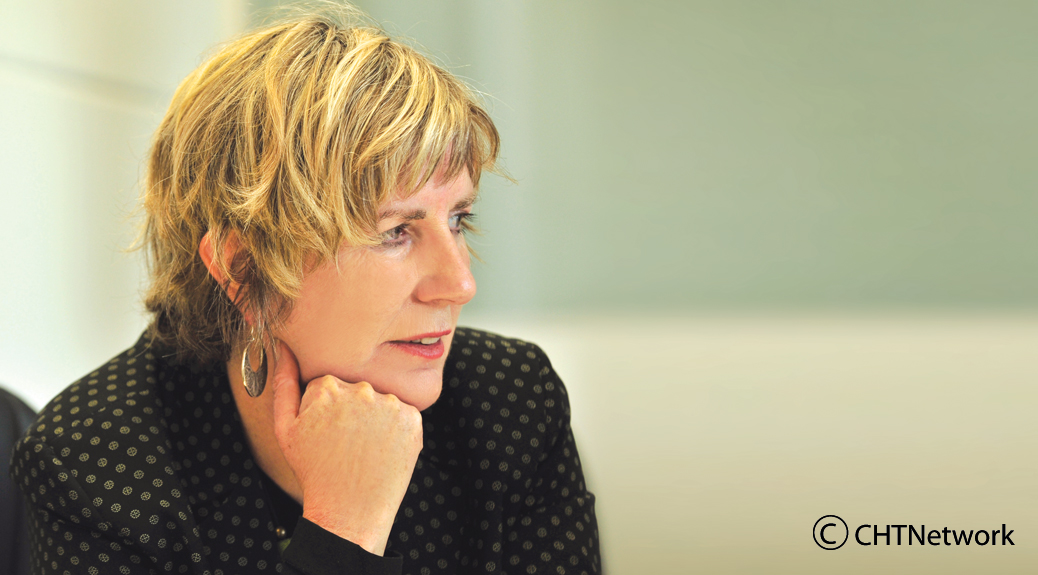
Jill Morgan

CEO of Multicultural Arts Victoria (Australia)

An advocate of freedom of expression through the arts, Jill Morgan is the face of the campaign promoting unity in diversity. Deborah Joy Peter tunes in as Victoria’s leading lady in multiculturalism paints a perfect picture of Australia’s creative landscape.

A once-upon-a-time blank canvas seated at the tip of the unrelenting strokes of a career dipped in artistic ambition, 25-year veteran and Multicultural Arts Victoria (MAV) chief executive officer, Jill Morgan, is today the focal point of an illustrious gallery which remains the spectacle of many. Positioned at the helm of Australia’s glistening multiculturalism movement, the prominent head of industry charts a well-seeded legacy dedicated towards championing the continuity and relevance of cultural cohesion amidst ethnic diversity specifically through the arts.

Relying on the said platform as a conduit for social change and altered perceptions, her active engagement in the scene has through the years, garnered results nothing short of triumphant. Inarguably, her contributions have aided in the progressive propagation of creative expression as a combative measure against racial demonisation as well as the challenges of migration. Aimed at driving attention towards the significance of breaking barriers beyond a mere tolerance of the other, her call-to-action stems from an earnest conviction to breed a perpetual state of non-prejudice and community-centredness.

While the journey down this road has been no walk in the park, her life’s story, sprinkled with unending tenacity and founded upon sincerity in its most basic form, is truly telling when deciphered through her mind’s eye. “The arts bring people together and can enhance cultural pride and well-being within communities. Cultural diversity can be at the heart of new contemporary works and innovation,” Morgan, the once Executive Director of Kulcha, Multicultural Arts of Western Australia, candidly shares.

Commenting on the arena’s role as a sustainable support system for both the present and future generations, the MAV lead explains how as a double-pronged tool, the arts serve as a fresh, creative, and inspiring voice which bridges the gap between colour and creed whilst making room for cultural dialogue and a shared understanding with and through youth. Having once herself been a vibrant, young lady whose immersion into the world of arts and culture was sparked by a genuine love of drama and theatre alongside a fascination towards literature and history, it’s no wonder her passion for education rings true to this day.

In her fight to preserve the sanctity of a universe where old meets new, the well-traversed Morgan has been indefatigable in her efforts to translate into activity, her underlying message which speaks of enriching individuals and society in general as well as carving from struggle, innovation, redefined identities, and newfound economic and social prowess for a healthier morrow. In defining her vision, she notes: “Culture and identity is central to the well-being of people from culturally and linguistically diverse backgrounds. Art programmes are an active and tangible way to connect cultures and to educate others about difference.”

For the reasons above, part of MAV’s process and programmes for social inclusion comprise collaborations with the Arts Centre Melbourne, Recital Centre, Melbourne Theatre Company, and Melbourne Festival, among others, to actively promote diversity through the arts whilst protecting the rights, values, and beliefs of refugees and migrants. According to the visionary, arts projects that present positive non-stereotyped images and stories of indigenous groups and artists play a pivotal role in ensuing equity, raising awareness, building self-worth, encouraging community pride, stimulating long-term growth, and formulating respect.

Determined to walk a mile in the footsteps of the late great Nelson Mandela, Morgan is quick to echo the sentiments found in the hugely celebrated political icon’s book, Long Walk to Freedom, when probed on her source of inspiration: “No one is born hating another person because of the colour of his skin, or his background, or his religion. People must learn to hate, and if they can learn to hate, they can be taught to love, for love comes more naturally to the human heart than its opposite.”

More than just a virtuous messenger, the MAV frontrunner whose non-profit organisation was recognised for its notable initiatives with the Pinnacle International Excellence Award in the International League (Art & Culture) category during the recent 2014 ceremony, is a highly-decorated servant of the cause. Her contributions include but are not limited to national-level multicultural arts policy and strategy development as well as overseeing the incubation and expansion of Kultour; the advocacy body for multicultural arts in Australia.

“To be even more effective change-makers, we need organisations such as CHTNetwork who share in our passion and commitment, to support and acknowledge the organisation and the importance of multiculturalism, as we grow to meet the increasing needs of our diverse artistic community including our connection with Southeast Asia,” Morgan tells Essenze.

While the aforementioned accolade was accepted on behalf of Multicultural Arts Victoria, she herself was voted in as a Member of the Order of Australia in 2013 while having been newly called upon to receive the Facilitators Prize at this year’s Sidney Myer Performing Arts Awards. Joining an elite list of industry movers and shakers, her sense of fulfilment comes from seeing young people celebrate their cultural heritage as proud Australians. For Morgan, that alone is the ultimate reward and true motivation behind her wanting to press on.

So much so, even when afforded the luxury of time to pursue her personal passions, the family-friendly cat-lover and creative curator is hardly one to wander far from the warm embrace of artistic endeavour. It is safe to conclude that the very essence of her being best finds solace in offerings that capture beauty in naturalness be it through the arts, film, photography, travel, or simply gardening. By her own admission, she enjoys growing organic herbs and vegetables.

An avid traveller not spared the pleasure of exploring multiple global heritage sites like Hampi, Borobudur, The Great Wall, Angor Temple Complex, Bagan, Luang Prabang, Ha Long Bay, Melaka, and Georgetown, her round-the-world adventures are only just beginning. “I like to travel to Asia and am keen to visit Jaipur Rajasthan and other parts of India by train to experience the music, food, culture, and dance of that region. I wish also to travel to specific parts of Africa; Ethiopia, Senegal, and Mali. Then, there is Mexico, Sri Lanka, and Colombia.”

As to what the future holds for Jill Morgan, she plans on spending the next five years still discovering what she calls amazing world culture and the arts and the five years after that, doing precisely the same thing. Truly, to be able to devote one’s existence to doing what she loves the most and then finding fun ways to embed her interests into her everyday living is testament that dreams do come true when pursued with the purest of intentions, and without leaving a single stone unturned.

MOBILE MATADOR WITH MILEAGE

Gary Xu

Country Director, Huawei Consumer Business Group, Malaysia

True to his Chinaman roots, country director for Huawei’s consumer business group, Gary Xu, has business built into his DNA. Deborah Joy Peter dials in for a chat with the Malaysian-based head, to talk tech and discuss the brand’s direction.

Slightly over a decade ago, sometime in 2004, China-based multi-national networking and telecommunications equipment and services behemoth, Huawei Technologies, braved the unknown when it went ahead and appointed Nanjing-hailing Gary Xu to oversee global sales of the brand’s niche offerings across multiple regions. Fast-forward to 2014, the decision has proven to be one of the most prudent hires in the history of the company by far. Fresh out of Shanghai at the time, the only tools under his belt were two years’ worth of field experience and a glorified degree from the prestigious Tongji University.

TECHNOLOGY TYCOON

However, a marketing maverick in his own right, the Jiangsu native although positioned at the peak of his youth, did nothing to shy away from the demands attached to such a commanding title. Instead, in an effort to showcase the full effect of the stock from which he was bred, he took the bull by the horns, only to trot far and wide, to pave the way for a name which would go on to become a world-renowned trademark across the smartphone arena. Today, he remains seated at the helm of the mobile giant’s Malaysian operations as country director of Huawei’s consumer business group.

A corporate-inspired commission afforded upon request by the man himself, the aforementioned re-assignment marks Xu’s second call of duty to the bustling yet exotic industrial district of Kuala Lumpur. Part of a dedicated South Pacific tour to manage sales for the home devices segment worldwide, his initial stint served back in 2007, albeit brief, rendered him an instant fan of the urban scape’s beyond-touristic trappings. Back then, Malaysia hadn’t yet become part of China’s open retail market but he made that happen. Hence, the enthusiastic envoy’s desire to return in 2013 to continue what he had started six years prior.

‘Lah’-vingly Asian

Essentially, what could have alternatively played out as a maiden European (Germany) or North American (USA) expedition, ended up being a deliberate but well thought-out re-journey instead, to the tropics. In his own words, he says while reminiscent of his previous visit, “It is possible that my comeback is skewed towards personal reasons. Admittedly, I understand the market, know the country well, appreciate Malaysia’s immensely international business potential, and fancy her vast education opportunities as well as multi-lingual (specifically English and Chinese) landscape for my son.”

Elaborating further, he notes: “Had it been Europe, it would’ve taken the family much longer to adapt. Other options were available to me but we really like it here; a nation with mixed cultures, fantastic food, and heart-warming weather.” Incidentally, throughout his tenure with the company, the duly driven trend-setter has clocked time not just in Asia—to include China, Malaysia, and Singapore before spending two years in Mumbai promoting various Huawei products under the branding of Tata Indicom and subsequently, Vodafone—but also the Middle East where he led business dealings out of Bahrain, the birthplace of his now four-year-old boy.

Influential enforcer

The core functions of Xu’s current capacity dictate that the mobile marketer engage in the strengthening of Huawei’s products and branding in a manner which translates to support of its recent re-alignment from a business-to-business to business-to-consumer focus. The said transition is indicative of a redefinition of the manufacturer’s long-term strategic goals. “Huawei is a technology-based company specialised in networking but since three years ago, we’ve started sinking our teeth into the consumer market. Although we’ve been involved with consumer devices for more than a decade now, we have begun actively beefing up our B2C segment.”

Since its inception in 1988, Huawei has over a 26-year period, expanded its offerings so that its three main extensions encompass networking, enterprise, and consumer. While networking is still the brand’s leading channel, the need arose to develop technology which was compatible with the products it rolled out. “As such, we improved our business model in 2011 to include the open market strategy and began leveraging our own branding. With the advent of the smartphone, the move in this direction hasn’t been in vain. Advancements in technology and economic growth have contributed to our success.”

Mover and shaker

Literally speaking, ‘success’ is an over-simplification of what the multi-billion dollar empire truly represents. Xu recalls how founder Ren Zhengfei started the company with only 20,000 RMB back in the day. Presently, Huawei not only enjoys a global revenue share in the region of USD 39.2 billion but also a global market share of 6.9 per cent and 5.2 per cent in Malaysia, making it the third largest smartphone manufacturer in the world, just behind Samsung and Apple. Ranked 94th, the Chinese brand is one of five new entrants to make it into Interbrand’s Best Global Brands ranking this year.

Meanwhile, 65 per cent of its revenue comes from outside of China while its earnings continue to climb both domestically and across Europe, the Middle East, and Africa. At the Malaysian level, Huawei went from 11 to 13 new smartphone models since 2013 and from zero Huawei-branded store identity outlets two years ago to a staggering 72 retail shops and 400 device touch-points by 2014. Despite its stellar performance amidst an exceedingly competitive arena, Xu’s work isn’t yet done as his dream is to increase Huawei’s market share even further, improve on product quality, and make the brand even more ‘international’.

Huawei patrol

Speaking to the challenges which remain, he confesses: “Even with these milestones, the need to explain how Huawei is different still persists. Although we have achieved widespread acclaim, in people’s minds, we are still Chinese. Consumer confidence, brand value, and media exposure must be enhanced if we are to showcase that our product is good. Technology-wise, Huawei is the best. Therefore, driving awareness is pivotal to ensure longevity.” To achieve all of the above, the technology provider plans on leveraging its speciality branches and using fully-integrated marketing campaigns to refine product introduction in the marketplace.

Evidently, he has his work cut out for him. Fortunately, he is one to welcome a good challenge and thrive in an ever-evolving and fast-paced environment. For exactly this reason, the larger popularity of Western brands does little to rattle his cage. The fact that all phones are manufactured in its backyard—that is China—has caused Huawei to subscribe to even more stringent protocols where its offerings are concerned, giving the brand an edge when it comes to quality control and assurance. That coupled with its extensive 4G-patented capabilities (dual SIM being one) and latest Huawei Mate 7 invention, places the juggernaut at the forefront of this added advantage.

MASTER JUGGLER

So how does this one gung-ho gentleman who is the Gary Xu whom the world has come to know, get it all done with precision intact and still manage to retain his very distinct sense of humour? It’s simple; he is in every sense of the word, ‘married’ to his job and quite literally in more ways than one. He is wedded to the once-upon-a-time secretary of his superior whom he met at Huawei in 2006, dated discreetly, and walked down the aisle with two years later.

But much has changed on that front, because six years in and one child later, her title has been upgraded from colleague to boss—not an unnatural progression for most wives. “I like to joke that at Huawei, I have the wife, the fun, the car, the money, and the house,” Xu kids without holding back tiny laughter. Interestingly enough, although the missus had resigned from the company directly after the awesome-twosome tied the knot, in 2010 she re-joined her husband as his leading lady to grow the business in India and the Middle East.

Following the birth of their son in Bahrain, the couple returned to China to prepare their teeny tot for kindergarten. Says the industrial mogul to Essenze when queried on his secret to triumph: “My family always comes first and to me, to flourish is to live by honesty, integrity, and sincerity. Treating people with respect is something I take seriously as I expect the same from others.” Plainly, being family-man and fierce frontrunner is how Xu stays productive.

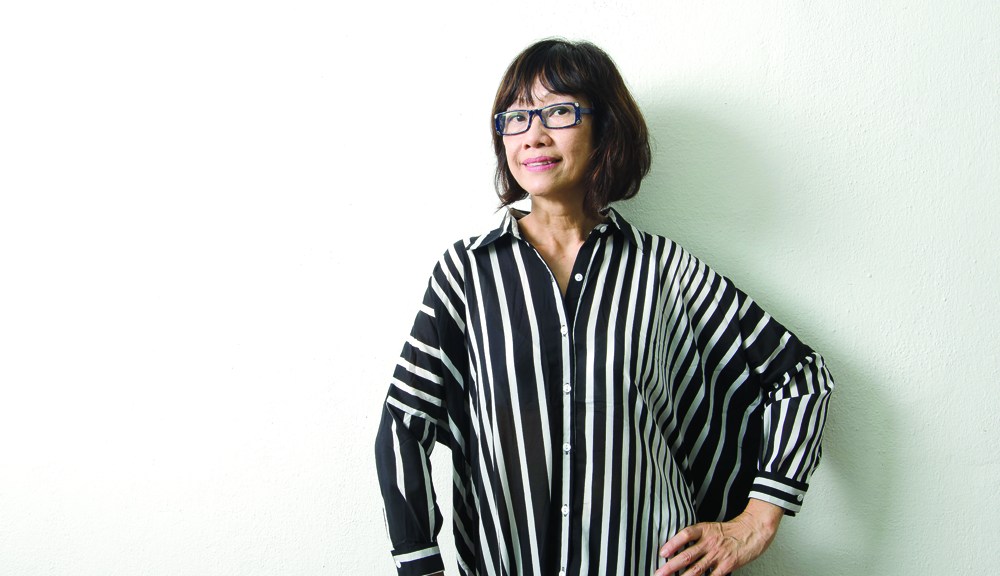
THE DIRECTOR

Joe Sidek

George Town Festival Director

Text by Jeremy Tan

CONCEIVED as a celebration of a city and its UNESCO World Heritage listing, the George Town Festival has since gone on to garner acclaim and repute across the region. And the man behind it all, believes it can only get better.

Festival director Joe Sidek hopes the annual month-long extravaganza will make its mark on the international scene in the coming years, and be on par with the many renowned arts and culture events hosted by various cities across the world.

He never envisaged such a rapid, upward trajectory when he first took on the post in 2010 when the Penang state government wanted to start a festival, and had an open call. Several groups came forward with proposals, but due to the short lead time there were ultimately no takers.

Enter the 56-year-old, who was roped in by George Town World Heritage Incorporated’s (GTWHI) then general manager Dato’ Maimunah Mohd. Sharif. Having been involved in the creative arena throughout his life – with spells in landscape gardening, running a modelling agency and owning a restaurant and revue club – he was the perfect candidate.

“My initial reaction was of fear and excitement, but it was a challenge that I am very glad I undertook. It turned out to be the most difficult, but enjoyable journey of my life.”

“Starting the Festival, I did a little homework about other existing arts and culture events in Malaysia, like in Kuala Lumpur, Johor and Malacca, and set about creating our own unique identity that highlighted all that was special about Penang,” he recalled.

Despite being born in Johor Bahru, the son of a former Northern Region Director of Customs has the Pearl of the Orient very much flowing through his veins, having spent most of his life on the island.

He was educated in Francis Light Primary School and then Penang Free School, before jetting off to London for his A-Levels, and subsequently the University of Manchester to study Town and Country Planning.

“My fondest memories of growing up was associated with my late father, whose career took him, me and my six siblings, travelling to all parts of Malaysia. We were constantly exposed to different cultures and traditions,” he noted.

But naturally, George Town inspires him the most. The sights, the sounds, the communities and their energy constantly fascinate him and spark ideas of how to use, promote, enjoy, showcase and be proud of what the city has to offer.

“It’s a journey that involves being creative, and sharing it with many different people – from my staff to participants and audiences at the festival, in particular school children who are an integral part of our programme as we want to make the arts accessible to anyone and everyone.”

“For the first three years, my focus was to brand the festival, so I set about curating its content with that in mind. After that, I felt comfortable to look into an ASEAN direction and roadmap, and strategise accordingly.

“In the coming years, I feel the festival should build further upon its local flavour, to sell to the international market. That would be my goalpost if I am retained as festival director,” adds Sidek, whose contract to run the festival expires after the 2015 edition.

Through the years, funding was and still is, the biggest challenge. He hopes more individuals and corporations would come forward and support the festival, as it a great platform to reach out to the masses.

Nonetheless, it has been an extremely meaningful journey that still continues to inspire him, and open up many cross-border opportunities. Since the festival started, he has been invited to cities like Yokohama, Seoul, Taipei, Edinburgh, Brisbane, Cebu, Chiang Mai and Yangon, some multiple times, to share his experiences and engage with like-minded parties.

“I never imagined that it would be that well-received,” quipped Sidek, who unbeknownst to many, is also an industrialist, having run a factory that has been producing and marketing textile chemicals since 2001.

In the midst of all the attention and accolades, he also sounds a note of caution about what’s happening with the city, and what the future holds. There has to be long-term planning and strategising, otherwise it risks being rail-roaded into a commercial product bereft of soul and character.

“George Town is a beautiful and delicate city, that belongs to the people. We need to continue looking after it.”

Fortune Favours the Bold

Dato’ Alvin Lim Theng Hooi
Executive Chairman, Arita Plastics Industries (M) Sdn Bhd

Bold, brave and visionary best describes Dato’ Alvin Lim whose contributions to the manufacturing industry in Malaysia hasearned him pioneer status. ELEANOR LOPEZ speaks to this flamboyant yet unassuming personality about his career, company and contributions to society.

“It was fated,” explains Dato’ Alvin Lim when asked about his career in the plastic manufacturing and trading industry. “I was supposed to go overseas to further my studies but my father changed his mind. He wanted me to continue with his business.” It will never be known if it was paternal instinct or a premonition of some kind that prompted this sudden change of heart, but two years after Lim joined the company his father passed away. As the only and eldest son, the responsibility of providing for his mother and three younger sisters landed firmly on his 20-year old shoulders.

“My father was involved in many different industrial businesses including plastic trading. He had asked me to choose which I thought was most suitable for myself. So that’s how I got started in the business. This was in 1978 and all my friends had left Penang for the UK, Australia and Europe. Although I was upset I couldn’t join them, I promised myself to achieve my goal of owning my own home, my own car and my own career before they returned in four years, “ he remembers.

It was a goal he achieved through hard work and the support of friends. “I was very lucky as many of my father’s friends and business associates, even in Singapore, came forward to help me. This helped me expand my network further and from that I ventured into trading.”

Twelve years later, Lim would be setting up his own trading company with a group of friends but it was also important for him to build up his own brand. In 1993 he joined forces with ACME a public listed company in Singapore to set up Arita Plastics Industries (M) Sdn Bhd.  Starting out on his own, the business was pretty much a one-man show until his wife Datin Peggy who was working for a multinational company at that time, decided to help him out. “That was how we met actually,” she smiles at the recollection. “He was doing everything on his own – the accounts, delivery, clerical, everything! He was very hardworking so I thought “why not” and joined him as his very first General Clerk.”

Growing the business from the ground up was a challenge that would soon take root and flourish. Taking heed of then Prime Minister of Malaysia, Dr Mahathir Mohamad’s ‘look east’ policy, Lim approached the most prominent pioneer in Japan’s manufacturing industry, Asahi Kosei to be his original equipment manufacturer (OEM) partner.

“This was my vision – to always keep up with the ‘big brothers’ in the market such as Japan and Taiwan. At that time, Malaysia was still behind by 10 years. In my business I was selling products by brands from Taiwan, Japan and Korea. My father had once told me that if I wanted to be a pioneer in this industry, I would have to create my own products.”

But Lim did not rely solely on emulating the eastern business modal. Demonstrating a competitive edge, he also approached a top US based chemical company. “I explained to them that the Asia Pacific region was a growing market, offered to be the OEM partner for them.” Through his exposure to both manufacturing worlds he was able to identify the different approaches, combining the two technologies to create his own.

“Now I am one of the pioneers in the Extruded Plastic Sheet technology in Malaysia,” he states with deserving pride. It is a claim validated by the many awards and recognitions his company Arita Plastics Industries (M) Sdn Bhd, has received over the years – the most recent one being the Pinnacle International Excellence (PIE) Award 2014 for Manufacturing. The national level trophy is awarded to Malaysian organisations that have established their brand within the country and are respected as leading names in their industries.

It is an admirable feat considering Lim did not have the opportunity to gain academic knowledge in the field. “I’m not a technical guy,” he admits. “I’m a marketer. I love to talk and communicate with other people. That’s why I have many friends.”

And it is this pool of friends that he calls on to support his charitable efforts, one of them being the Joyful Penang Concert which raises funds for charity and non-governmental organisations. The 3-hour concert with a twist is the brainchild of Lim, who was inspired by a friend’s suggestion that he organise one for charity. “Instead of celebrity performers, we approach all the ministers, Datuks and Datins, the rich and famous to perform in this concert; singing, part of the band and acting to raise funds for charities. In 2011, our first year we raised more than RM550,000!” he claims proudly. “It’s not easy to get everyone together especially the ministers and CEOs, but they are all equally committed and we start weekly rehearsals at least 3 months ahead.”

The concert was such a success that it made headlines in the local news. Whilst talking about his philanthropic projects, he becomes more animated and eager, pulling out photos of previous events from his mobile phone. It is clear that these activities are very close to his heart. He is also responsible for organising the biggest food fair in Penang, the Harmony Charity Food Fair, which is endorsed by the state government. “I’ve been the Organising Chairman for more than seven years and every year we raise more than RM200,000 which is divided between 20 beneficiaries including old folks homes, orphanages and the Red Crescent Penang.”

There is no doubt that these extra activities make Lim even more of a busy man but he doesn’t see it as an additional burden. ”This is something we have to do. It is not work, it is helping people and contributing to their welfare.” EZ_36 Alvin Lim2

Of Diamonds & Pearls

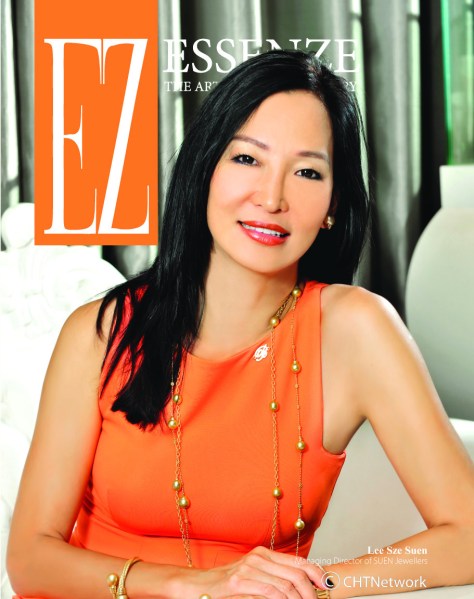
EZ36_Cover_PearlLee Sze Suen
Managing Director of SUEN Jewellers

EZ catches up with the reclusive entrepreneur who has been creating subtle waves within the fashion industry with her diamond jewellery boutique in Bangsar.

There are times in one’s life when the path set is often not the path taken. Likewise for Lee Sze Suen who practiced law for a year before fate introduced her to the diamond business. “I actually think that education is all about the development of the mind, development of analytical skills,” she muses during a quick chat at her boutique. “I think studying law has helped me with the business – being able to spot real issues and attack it and find the best solutions.”

Starting out as partner in the upmarket The Carat Club in 1997, Lee decided to venture on her own after the business unravelled three years later. SUEN Jewellers was founded in 2010 and officially opened its doors to the eager public in early 2011. Located in the prestigious neighbourhood of Bangsar, the SUEN brand, which is an evolution from The Carat Club, now caters to the astute taste and lifestyle of the contemporary consumer.

“When I launched SUEN, it was actually built on the corner stone of style and quality. I’m always trying to find new, interesting styles and quality. Basically that’s the benchmark that we set,” says Lee who makes personalised service a priority in dealing with customers. “We are a lot more customer-centric and aim to be recognised for creating exceptional and remarkable pieces of jewellery.”

Although Lee doesn’t design the pieces herself, she is constantly inspired by new ideas and keeps tabs with the creative views and works of some of the most creative minds in fashion, furniture and forms. “I can’t cut off sketch reasonably well, but I give a lot of input in terms of influences and design direction.”

Taking a stroll through the bright and spacious showroom, it’s clear that her taste for modern elegance is not confined to craftsmanship. The space which occupies three bungalow lots houses different galleries within which the sparkling gems take centre stage in polished glass cabinets.

The Love Diamond boutique is a particular favourite for couples looking to acquire a bespoke piece for their special day. Here wedding bands are customised to the customer’s preferences without compromising the brilliance of the diamonds.

“In diamond cutting, it is always yield versus profits. To get a better cut obviously you discard a bit more but then the brilliance is different, the brilliance speaks for itself,” explains Lee who admits that her choice of diamond cut makes the stones slightly more expensive. “It is very interesting because when we first started, some people who understood diamonds didn’t think we could survive. Because obviously, when we offer better quality we are slightly more expensive than others. But I think we have carved a niche for ourselves and people can see the differences in quality for themselves.”

Four years later, the SUEN brand is slowly but surely making a name for itself within the local and international scene. “We find a lot of jewellers knocking at our door – French jewellers, Italian jewellers – but we are fairly picky about whom we select,” says Lee who currently carries the Lalique, Daum and Hodel brands in her boutique. Lee’s vision for fine craftsmanship has also led to the commissioning of New York based Malaysian artist Eng Tay to create a signature design for the brand, which was later turned into a limited edition jewellery piece.

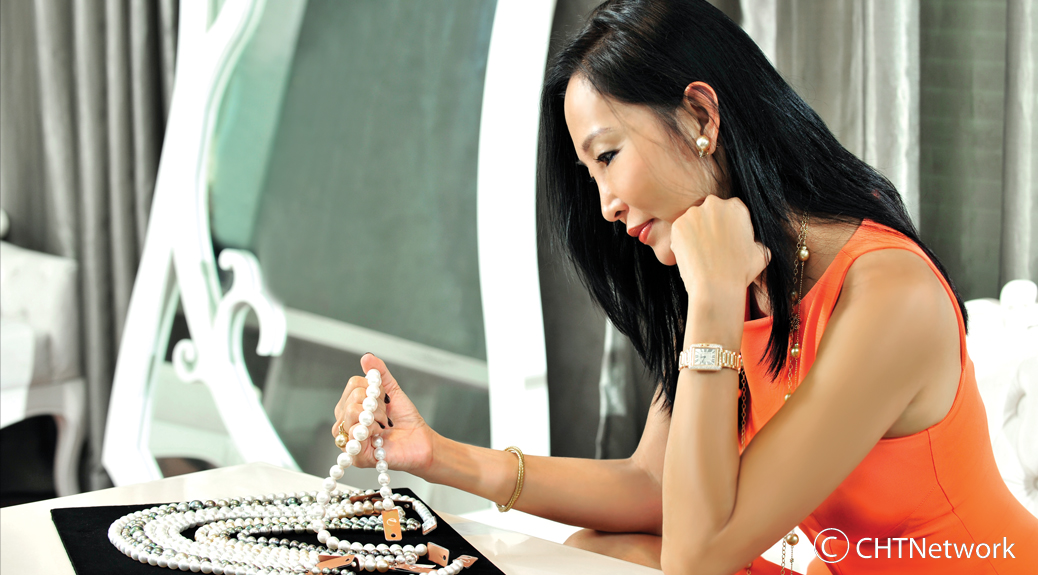
With its emphasis on simple, classic jewellery SUEN offers a wide range that encompasses diamond solitaire rings, eternity rings, varying styles of diamond earrings, tennis bracelets and Riviera necklaces. The gallery also houses the full works of more elaborate ready-made jewellery in diamonds, pearls, rubies, sapphires, coloured gemstones and jade.

The pearl collections by Hodel are a particular draw as SUEN is one of the very few dealers who carry the exclusive brand. The signature line features Baroque necklaces, gold-dyed pearls and pearl rings in diamond encrusted settings.

Needless to say the boutique keeps Lee very busy and any reason to travel whether it’s for work or leisure is a welcome respite from the demands of the store. “I enjoy long distance travelling. I find that in that quite space, I’m able to actually reflect on work a lot.” And as a mother of three, the juggling of work and home life does not come without its claims. “I think my challenge is always trying to find that balance between work and children. But I always put my children first. For example, I can be serving customers and I may not take calls from other people but whenever it’s my children I will pick up the phone.”

The self-confessed workaholic admits that she hardly has time for other pursuits and this could account for the low profile and minimal publicity. “I generally avoid frivolous talk and I just think don’t think it is necessary to have too much publicity. I like my privacy,” she muses before continuing with a laugh. “Actually I spend a lot of time working, in the evening sometimes I’ll be online with suppliers from New York and friends. Otherwise I play some tennis, go to the gym or start planning my next holiday destination.”


CURATOR of creativity

Richard Koh
Founder of Richard Koh Fine Art

As the gallery’s 10th year anniversary approaches, founder Richard Koh speaks to EZ about nurturing talent, promoting contemporary art and the developing art industry in Asia.  

Operating private gallery spaces in Kuala Lumpur and Singapore, Richard Koh Fine Art has not only been a platform for the viewing of pioneer works, it also serves to provide emerging artists access to a wider audience.

“It is a gallery that nurtures young contemporary artists. We promote them wherever we can,” explains Koh who with over 20 years of experience, is a valued resource for many of the region’s important private and public collections. “These are young, up and coming artists who have never had any exposure or opportunity to show their work but who are very good.”

Recently four Malaysian artists, who under the auspices of Richard Koh Fine Art were selected for the recent “Arts KL – Melbourne 2014” exhibition in Australia. The creations of Fendy Zakri, Haffendi Anuar, Hasanul Isyraf and Yeoh Choo Kuan are inspired by current events and communicate their ideas through abstract expressionism and reinvented images. It is progressive talents such as these that Koh is eager to discover and promote to the world.

Starting with Malaysian artists, it wasn’t long before his patronage extended to Southeast Asian artists and beyond. Koh often travels to discover new talent, keeping his eyes peeled for someone with the ‘it’ factor and has journeyed as far as the Middle East and South America. “At one stage there were more foreign artists than Malaysians”. This wasn’t so much the lack of home grown talent as the lack of new material produced by local artists. “Malaysian art is still the same in a sense, they are still painting the same thing but there is a new interest for a lot of  people,” Koh observes giving credence to developing interest in art collection which has created a demand for new ideas and techniques.

EZ36_Cover_Richard2It is certainly a very different scene from what it was about 10 years ago when art was seen as a privilege for the more astute section of society. Now with increasing accessibility through mainstream galleries and art shows, the world of art is opening up to the general public especially here in Asia. “Malaysia art is starting to have attraction. People are interested to buy real works of art, you know, for their homes and to collect or to simply enjoy it.”

The evolution within the art industry in Asia is certainly escalating especially with the emergence of auction houses, and there is some apprehension that this could turn into a double-edged sword. “The art scene is very interesting in that sense that they are developing. At the moment, in the Malaysian art scene there are more investors than collectors, so maybe in a way it is not as healthy as it should be for the artist to actually have a chance to develop,” says Koh who does not subscribe to the rules of economy where art is concerned. “When it is market driven then basically the art is done for the consumer. (But) art is a recording of history in many ways, so it must come from heart and not from the market proven perspective.”

The market is certainly buzzing here in Asia, although in Koh’s opinion this is not an indication for everyone to go out and buy art. “I think anytime is a time to buy art. A market is a market, you know. The only difference is with Asia, people are beginning to collect art. So the awareness of art is there now. In the west it’s been around longer, so it is a slightly more mature market compared to us.” When asked if this could potentially kill the market, Koh disagrees. “You need the auction houses, to generate interest you know. Malaysia never really had a secondary market till the auction houses came about but it has changed slightly because it is no longer about the secondary market.”

Although art is not regarded as an asset, Koh admits that there is a tendency to treat it like stock in the share market which is bought and sold for the sake of making a quick buck. “In many ways the auction houses have given the public awareness of art, but on the other hand it has also created, in strange way a very speculative market for people to play in.”

His advice to the public eager to bank in on this trend is to be exposed to the art scene as much as possible and do their research to be better informed about their potential purchases. “I think one needs to understand and know what they are buying art for – whether for pleasure, to decorate a house, investment. And before you buy, visit as many shows and galleries or museum as possible to help you understand what you really, really like.”

Koh is also keen to point out that the price of art is not necessarily an indication of its quality or worth. “Sometimes the cheapest piece art is something that you like the most and gives you the most pleasure. It may not go up with the price, it doesn’t matter but you enjoy it. And that’s special thing about art.”