Category Archives: Captains & Legends

An in-depth personality profile of the elites and leaders across various industries from all over the world

MOBILE MATADOR WITH MILEAGE

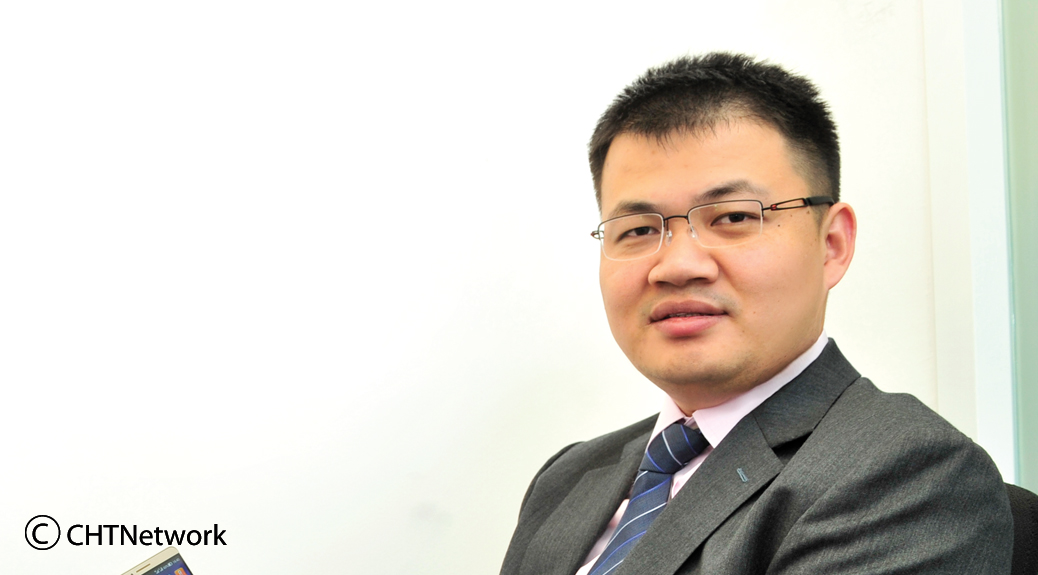
Gary Xu

Country Director, Huawei Consumer Business Group, Malaysia

True to his Chinaman roots, country director for Huawei’s consumer business group, Gary Xu, has business built into his DNA. Deborah Joy Peter dials in for a chat with the Malaysian-based head, to talk tech and discuss the brand’s direction.

Slightly over a decade ago, sometime in 2004, China-based multi-national networking and telecommunications equipment and services behemoth, Huawei Technologies, braved the unknown when it went ahead and appointed Nanjing-hailing Gary Xu to oversee global sales of the brand’s niche offerings across multiple regions. Fast-forward to 2014, the decision has proven to be one of the most prudent hires in the history of the company by far. Fresh out of Shanghai at the time, the only tools under his belt were two years’ worth of field experience and a glorified degree from the prestigious Tongji University.

TECHNOLOGY TYCOON

However, a marketing maverick in his own right, the Jiangsu native although positioned at the peak of his youth, did nothing to shy away from the demands attached to such a commanding title. Instead, in an effort to showcase the full effect of the stock from which he was bred, he took the bull by the horns, only to trot far and wide, to pave the way for a name which would go on to become a world-renowned trademark across the smartphone arena. Today, he remains seated at the helm of the mobile giant’s Malaysian operations as country director of Huawei’s consumer business group.

A corporate-inspired commission afforded upon request by the man himself, the aforementioned re-assignment marks Xu’s second call of duty to the bustling yet exotic industrial district of Kuala Lumpur. Part of a dedicated South Pacific tour to manage sales for the home devices segment worldwide, his initial stint served back in 2007, albeit brief, rendered him an instant fan of the urban scape’s beyond-touristic trappings. Back then, Malaysia hadn’t yet become part of China’s open retail market but he made that happen. Hence, the enthusiastic envoy’s desire to return in 2013 to continue what he had started six years prior.

‘Lah’-vingly Asian

Essentially, what could have alternatively played out as a maiden European (Germany) or North American (USA) expedition, ended up being a deliberate but well thought-out re-journey instead, to the tropics. In his own words, he says while reminiscent of his previous visit, “It is possible that my comeback is skewed towards personal reasons. Admittedly, I understand the market, know the country well, appreciate Malaysia’s immensely international business potential, and fancy her vast education opportunities as well as multi-lingual (specifically English and Chinese) landscape for my son.”

Elaborating further, he notes: “Had it been Europe, it would’ve taken the family much longer to adapt. Other options were available to me but we really like it here; a nation with mixed cultures, fantastic food, and heart-warming weather.” Incidentally, throughout his tenure with the company, the duly driven trend-setter has clocked time not just in Asia—to include China, Malaysia, and Singapore before spending two years in Mumbai promoting various Huawei products under the branding of Tata Indicom and subsequently, Vodafone—but also the Middle East where he led business dealings out of Bahrain, the birthplace of his now four-year-old boy.

Influential enforcer

The core functions of Xu’s current capacity dictate that the mobile marketer engage in the strengthening of Huawei’s products and branding in a manner which translates to support of its recent re-alignment from a business-to-business to business-to-consumer focus. The said transition is indicative of a redefinition of the manufacturer’s long-term strategic goals. “Huawei is a technology-based company specialised in networking but since three years ago, we’ve started sinking our teeth into the consumer market. Although we’ve been involved with consumer devices for more than a decade now, we have begun actively beefing up our B2C segment.”

Since its inception in 1988, Huawei has over a 26-year period, expanded its offerings so that its three main extensions encompass networking, enterprise, and consumer. While networking is still the brand’s leading channel, the need arose to develop technology which was compatible with the products it rolled out. “As such, we improved our business model in 2011 to include the open market strategy and began leveraging our own branding. With the advent of the smartphone, the move in this direction hasn’t been in vain. Advancements in technology and economic growth have contributed to our success.”

Mover and shaker

Literally speaking, ‘success’ is an over-simplification of what the multi-billion dollar empire truly represents. Xu recalls how founder Ren Zhengfei started the company with only 20,000 RMB back in the day. Presently, Huawei not only enjoys a global revenue share in the region of USD 39.2 billion but also a global market share of 6.9 per cent and 5.2 per cent in Malaysia, making it the third largest smartphone manufacturer in the world, just behind Samsung and Apple. Ranked 94th, the Chinese brand is one of five new entrants to make it into Interbrand’s Best Global Brands ranking this year.

Meanwhile, 65 per cent of its revenue comes from outside of China while its earnings continue to climb both domestically and across Europe, the Middle East, and Africa. At the Malaysian level, Huawei went from 11 to 13 new smartphone models since 2013 and from zero Huawei-branded store identity outlets two years ago to a staggering 72 retail shops and 400 device touch-points by 2014. Despite its stellar performance amidst an exceedingly competitive arena, Xu’s work isn’t yet done as his dream is to increase Huawei’s market share even further, improve on product quality, and make the brand even more ‘international’.

Huawei patrol

Speaking to the challenges which remain, he confesses: “Even with these milestones, the need to explain how Huawei is different still persists. Although we have achieved widespread acclaim, in people’s minds, we are still Chinese. Consumer confidence, brand value, and media exposure must be enhanced if we are to showcase that our product is good. Technology-wise, Huawei is the best. Therefore, driving awareness is pivotal to ensure longevity.” To achieve all of the above, the technology provider plans on leveraging its speciality branches and using fully-integrated marketing campaigns to refine product introduction in the marketplace.

Evidently, he has his work cut out for him. Fortunately, he is one to welcome a good challenge and thrive in an ever-evolving and fast-paced environment. For exactly this reason, the larger popularity of Western brands does little to rattle his cage. The fact that all phones are manufactured in its backyard—that is China—has caused Huawei to subscribe to even more stringent protocols where its offerings are concerned, giving the brand an edge when it comes to quality control and assurance. That coupled with its extensive 4G-patented capabilities (dual SIM being one) and latest Huawei Mate 7 invention, places the juggernaut at the forefront of this added advantage.

MASTER JUGGLER

So how does this one gung-ho gentleman who is the Gary Xu whom the world has come to know, get it all done with precision intact and still manage to retain his very distinct sense of humour? It’s simple; he is in every sense of the word, ‘married’ to his job and quite literally in more ways than one. He is wedded to the once-upon-a-time secretary of his superior whom he met at Huawei in 2006, dated discreetly, and walked down the aisle with two years later.

But much has changed on that front, because six years in and one child later, her title has been upgraded from colleague to boss—not an unnatural progression for most wives. “I like to joke that at Huawei, I have the wife, the fun, the car, the money, and the house,” Xu kids without holding back tiny laughter. Interestingly enough, although the missus had resigned from the company directly after the awesome-twosome tied the knot, in 2010 she re-joined her husband as his leading lady to grow the business in India and the Middle East.

Following the birth of their son in Bahrain, the couple returned to China to prepare their teeny tot for kindergarten. Says the industrial mogul to Essenze when queried on his secret to triumph: “My family always comes first and to me, to flourish is to live by honesty, integrity, and sincerity. Treating people with respect is something I take seriously as I expect the same from others.” Plainly, being family-man and fierce frontrunner is how Xu stays productive.

THE DIRECTOR

Joe Sidek

George Town Festival Director

Text by Jeremy Tan

CONCEIVED as a celebration of a city and its UNESCO World Heritage listing, the George Town Festival has since gone on to garner acclaim and repute across the region. And the man behind it all, believes it can only get better.

Festival director Joe Sidek hopes the annual month-long extravaganza will make its mark on the international scene in the coming years, and be on par with the many renowned arts and culture events hosted by various cities across the world.

He never envisaged such a rapid, upward trajectory when he first took on the post in 2010 when the Penang state government wanted to start a festival, and had an open call. Several groups came forward with proposals, but due to the short lead time there were ultimately no takers.

Enter the 56-year-old, who was roped in by George Town World Heritage Incorporated’s (GTWHI) then general manager Dato’ Maimunah Mohd. Sharif. Having been involved in the creative arena throughout his life – with spells in landscape gardening, running a modelling agency and owning a restaurant and revue club – he was the perfect candidate.

“My initial reaction was of fear and excitement, but it was a challenge that I am very glad I undertook. It turned out to be the most difficult, but enjoyable journey of my life.”

“Starting the Festival, I did a little homework about other existing arts and culture events in Malaysia, like in Kuala Lumpur, Johor and Malacca, and set about creating our own unique identity that highlighted all that was special about Penang,” he recalled.

Despite being born in Johor Bahru, the son of a former Northern Region Director of Customs has the Pearl of the Orient very much flowing through his veins, having spent most of his life on the island.

He was educated in Francis Light Primary School and then Penang Free School, before jetting off to London for his A-Levels, and subsequently the University of Manchester to study Town and Country Planning.

“My fondest memories of growing up was associated with my late father, whose career took him, me and my six siblings, travelling to all parts of Malaysia. We were constantly exposed to different cultures and traditions,” he noted.

But naturally, George Town inspires him the most. The sights, the sounds, the communities and their energy constantly fascinate him and spark ideas of how to use, promote, enjoy, showcase and be proud of what the city has to offer.

“It’s a journey that involves being creative, and sharing it with many different people – from my staff to participants and audiences at the festival, in particular school children who are an integral part of our programme as we want to make the arts accessible to anyone and everyone.”

“For the first three years, my focus was to brand the festival, so I set about curating its content with that in mind. After that, I felt comfortable to look into an ASEAN direction and roadmap, and strategise accordingly.

“In the coming years, I feel the festival should build further upon its local flavour, to sell to the international market. That would be my goalpost if I am retained as festival director,” adds Sidek, whose contract to run the festival expires after the 2015 edition.

Through the years, funding was and still is, the biggest challenge. He hopes more individuals and corporations would come forward and support the festival, as it a great platform to reach out to the masses.

Nonetheless, it has been an extremely meaningful journey that still continues to inspire him, and open up many cross-border opportunities. Since the festival started, he has been invited to cities like Yokohama, Seoul, Taipei, Edinburgh, Brisbane, Cebu, Chiang Mai and Yangon, some multiple times, to share his experiences and engage with like-minded parties.

“I never imagined that it would be that well-received,” quipped Sidek, who unbeknownst to many, is also an industrialist, having run a factory that has been producing and marketing textile chemicals since 2001.

In the midst of all the attention and accolades, he also sounds a note of caution about what’s happening with the city, and what the future holds. There has to be long-term planning and strategising, otherwise it risks being rail-roaded into a commercial product bereft of soul and character.

“George Town is a beautiful and delicate city, that belongs to the people. We need to continue looking after it.”

Fortune Favours the Bold

Dato’ Alvin Lim Theng Hooi
Executive Chairman, Arita Plastics Industries (M) Sdn Bhd

Bold, brave and visionary best describes Dato’ Alvin Lim whose contributions to the manufacturing industry in Malaysia hasearned him pioneer status. ELEANOR LOPEZ speaks to this flamboyant yet unassuming personality about his career, company and contributions to society.

“It was fated,” explains Dato’ Alvin Lim when asked about his career in the plastic manufacturing and trading industry. “I was supposed to go overseas to further my studies but my father changed his mind. He wanted me to continue with his business.” It will never be known if it was paternal instinct or a premonition of some kind that prompted this sudden change of heart, but two years after Lim joined the company his father passed away. As the only and eldest son, the responsibility of providing for his mother and three younger sisters landed firmly on his 20-year old shoulders.

“My father was involved in many different industrial businesses including plastic trading. He had asked me to choose which I thought was most suitable for myself. So that’s how I got started in the business. This was in 1978 and all my friends had left Penang for the UK, Australia and Europe. Although I was upset I couldn’t join them, I promised myself to achieve my goal of owning my own home, my own car and my own career before they returned in four years, “ he remembers.

It was a goal he achieved through hard work and the support of friends. “I was very lucky as many of my father’s friends and business associates, even in Singapore, came forward to help me. This helped me expand my network further and from that I ventured into trading.”

Twelve years later, Lim would be setting up his own trading company with a group of friends but it was also important for him to build up his own brand. In 1993 he joined forces with ACME a public listed company in Singapore to set up Arita Plastics Industries (M) Sdn Bhd.  Starting out on his own, the business was pretty much a one-man show until his wife Datin Peggy who was working for a multinational company at that time, decided to help him out. “That was how we met actually,” she smiles at the recollection. “He was doing everything on his own – the accounts, delivery, clerical, everything! He was very hardworking so I thought “why not” and joined him as his very first General Clerk.”

Growing the business from the ground up was a challenge that would soon take root and flourish. Taking heed of then Prime Minister of Malaysia, Dr Mahathir Mohamad’s ‘look east’ policy, Lim approached the most prominent pioneer in Japan’s manufacturing industry, Asahi Kosei to be his original equipment manufacturer (OEM) partner.

“This was my vision – to always keep up with the ‘big brothers’ in the market such as Japan and Taiwan. At that time, Malaysia was still behind by 10 years. In my business I was selling products by brands from Taiwan, Japan and Korea. My father had once told me that if I wanted to be a pioneer in this industry, I would have to create my own products.”

But Lim did not rely solely on emulating the eastern business modal. Demonstrating a competitive edge, he also approached a top US based chemical company. “I explained to them that the Asia Pacific region was a growing market, offered to be the OEM partner for them.” Through his exposure to both manufacturing worlds he was able to identify the different approaches, combining the two technologies to create his own.

“Now I am one of the pioneers in the Extruded Plastic Sheet technology in Malaysia,” he states with deserving pride. It is a claim validated by the many awards and recognitions his company Arita Plastics Industries (M) Sdn Bhd, has received over the years – the most recent one being the Pinnacle International Excellence (PIE) Award 2014 for Manufacturing. The national level trophy is awarded to Malaysian organisations that have established their brand within the country and are respected as leading names in their industries.

It is an admirable feat considering Lim did not have the opportunity to gain academic knowledge in the field. “I’m not a technical guy,” he admits. “I’m a marketer. I love to talk and communicate with other people. That’s why I have many friends.”

And it is this pool of friends that he calls on to support his charitable efforts, one of them being the Joyful Penang Concert which raises funds for charity and non-governmental organisations. The 3-hour concert with a twist is the brainchild of Lim, who was inspired by a friend’s suggestion that he organise one for charity. “Instead of celebrity performers, we approach all the ministers, Datuks and Datins, the rich and famous to perform in this concert; singing, part of the band and acting to raise funds for charities. In 2011, our first year we raised more than RM550,000!” he claims proudly. “It’s not easy to get everyone together especially the ministers and CEOs, but they are all equally committed and we start weekly rehearsals at least 3 months ahead.”

The concert was such a success that it made headlines in the local news. Whilst talking about his philanthropic projects, he becomes more animated and eager, pulling out photos of previous events from his mobile phone. It is clear that these activities are very close to his heart. He is also responsible for organising the biggest food fair in Penang, the Harmony Charity Food Fair, which is endorsed by the state government. “I’ve been the Organising Chairman for more than seven years and every year we raise more than RM200,000 which is divided between 20 beneficiaries including old folks homes, orphanages and the Red Crescent Penang.”

There is no doubt that these extra activities make Lim even more of a busy man but he doesn’t see it as an additional burden. ”This is something we have to do. It is not work, it is helping people and contributing to their welfare.” EZ_36 Alvin Lim2

Of Diamonds & Pearls

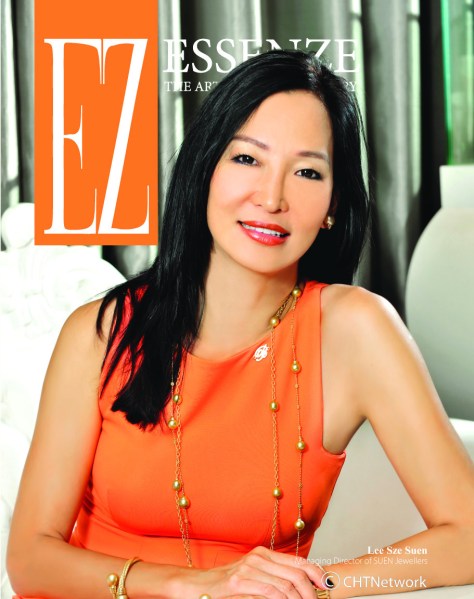
EZ36_Cover_PearlLee Sze Suen
Managing Director of SUEN Jewellers

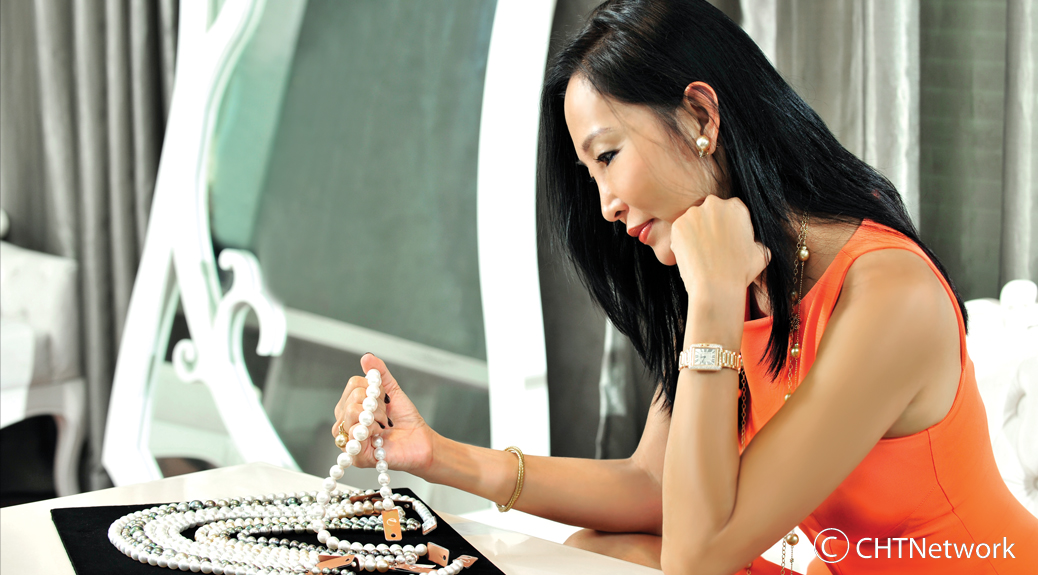
EZ catches up with the reclusive entrepreneur who has been creating subtle waves within the fashion industry with her diamond jewellery boutique in Bangsar.

There are times in one’s life when the path set is often not the path taken. Likewise for Lee Sze Suen who practiced law for a year before fate introduced her to the diamond business. “I actually think that education is all about the development of the mind, development of analytical skills,” she muses during a quick chat at her boutique. “I think studying law has helped me with the business – being able to spot real issues and attack it and find the best solutions.”

Starting out as partner in the upmarket The Carat Club in 1997, Lee decided to venture on her own after the business unravelled three years later. SUEN Jewellers was founded in 2010 and officially opened its doors to the eager public in early 2011. Located in the prestigious neighbourhood of Bangsar, the SUEN brand, which is an evolution from The Carat Club, now caters to the astute taste and lifestyle of the contemporary consumer.

“When I launched SUEN, it was actually built on the corner stone of style and quality. I’m always trying to find new, interesting styles and quality. Basically that’s the benchmark that we set,” says Lee who makes personalised service a priority in dealing with customers. “We are a lot more customer-centric and aim to be recognised for creating exceptional and remarkable pieces of jewellery.”

Although Lee doesn’t design the pieces herself, she is constantly inspired by new ideas and keeps tabs with the creative views and works of some of the most creative minds in fashion, furniture and forms. “I can’t cut off sketch reasonably well, but I give a lot of input in terms of influences and design direction.”

Taking a stroll through the bright and spacious showroom, it’s clear that her taste for modern elegance is not confined to craftsmanship. The space which occupies three bungalow lots houses different galleries within which the sparkling gems take centre stage in polished glass cabinets.

The Love Diamond boutique is a particular favourite for couples looking to acquire a bespoke piece for their special day. Here wedding bands are customised to the customer’s preferences without compromising the brilliance of the diamonds.

“In diamond cutting, it is always yield versus profits. To get a better cut obviously you discard a bit more but then the brilliance is different, the brilliance speaks for itself,” explains Lee who admits that her choice of diamond cut makes the stones slightly more expensive. “It is very interesting because when we first started, some people who understood diamonds didn’t think we could survive. Because obviously, when we offer better quality we are slightly more expensive than others. But I think we have carved a niche for ourselves and people can see the differences in quality for themselves.”

Four years later, the SUEN brand is slowly but surely making a name for itself within the local and international scene. “We find a lot of jewellers knocking at our door – French jewellers, Italian jewellers – but we are fairly picky about whom we select,” says Lee who currently carries the Lalique, Daum and Hodel brands in her boutique. Lee’s vision for fine craftsmanship has also led to the commissioning of New York based Malaysian artist Eng Tay to create a signature design for the brand, which was later turned into a limited edition jewellery piece.

With its emphasis on simple, classic jewellery SUEN offers a wide range that encompasses diamond solitaire rings, eternity rings, varying styles of diamond earrings, tennis bracelets and Riviera necklaces. The gallery also houses the full works of more elaborate ready-made jewellery in diamonds, pearls, rubies, sapphires, coloured gemstones and jade.

The pearl collections by Hodel are a particular draw as SUEN is one of the very few dealers who carry the exclusive brand. The signature line features Baroque necklaces, gold-dyed pearls and pearl rings in diamond encrusted settings.

Needless to say the boutique keeps Lee very busy and any reason to travel whether it’s for work or leisure is a welcome respite from the demands of the store. “I enjoy long distance travelling. I find that in that quite space, I’m able to actually reflect on work a lot.” And as a mother of three, the juggling of work and home life does not come without its claims. “I think my challenge is always trying to find that balance between work and children. But I always put my children first. For example, I can be serving customers and I may not take calls from other people but whenever it’s my children I will pick up the phone.”

The self-confessed workaholic admits that she hardly has time for other pursuits and this could account for the low profile and minimal publicity. “I generally avoid frivolous talk and I just think don’t think it is necessary to have too much publicity. I like my privacy,” she muses before continuing with a laugh. “Actually I spend a lot of time working, in the evening sometimes I’ll be online with suppliers from New York and friends. Otherwise I play some tennis, go to the gym or start planning my next holiday destination.”


CURATOR of creativity

Richard Koh
Founder of Richard Koh Fine Art

As the gallery’s 10th year anniversary approaches, founder Richard Koh speaks to EZ about nurturing talent, promoting contemporary art and the developing art industry in Asia.  

Operating private gallery spaces in Kuala Lumpur and Singapore, Richard Koh Fine Art has not only been a platform for the viewing of pioneer works, it also serves to provide emerging artists access to a wider audience.

“It is a gallery that nurtures young contemporary artists. We promote them wherever we can,” explains Koh who with over 20 years of experience, is a valued resource for many of the region’s important private and public collections. “These are young, up and coming artists who have never had any exposure or opportunity to show their work but who are very good.”

Recently four Malaysian artists, who under the auspices of Richard Koh Fine Art were selected for the recent “Arts KL – Melbourne 2014” exhibition in Australia. The creations of Fendy Zakri, Haffendi Anuar, Hasanul Isyraf and Yeoh Choo Kuan are inspired by current events and communicate their ideas through abstract expressionism and reinvented images. It is progressive talents such as these that Koh is eager to discover and promote to the world.

Starting with Malaysian artists, it wasn’t long before his patronage extended to Southeast Asian artists and beyond. Koh often travels to discover new talent, keeping his eyes peeled for someone with the ‘it’ factor and has journeyed as far as the Middle East and South America. “At one stage there were more foreign artists than Malaysians”. This wasn’t so much the lack of home grown talent as the lack of new material produced by local artists. “Malaysian art is still the same in a sense, they are still painting the same thing but there is a new interest for a lot of  people,” Koh observes giving credence to developing interest in art collection which has created a demand for new ideas and techniques.

EZ36_Cover_Richard2It is certainly a very different scene from what it was about 10 years ago when art was seen as a privilege for the more astute section of society. Now with increasing accessibility through mainstream galleries and art shows, the world of art is opening up to the general public especially here in Asia. “Malaysia art is starting to have attraction. People are interested to buy real works of art, you know, for their homes and to collect or to simply enjoy it.”
The evolution within the art industry in Asia is certainly escalating especially with the emergence of auction houses, and there is some apprehension that this could turn into a double-edged sword. “The art scene is very interesting in that sense that they are developing. At the moment, in the Malaysian art scene there are more investors than collectors, so maybe in a way it is not as healthy as it should be for the artist to actually have a chance to develop,” says Koh who does not subscribe to the rules of economy where art is concerned. “When it is market driven then basically the art is done for the consumer. (But) art is a recording of history in many ways, so it must come from heart and not from the market proven perspective.”

The market is certainly buzzing here in Asia, although in Koh’s opinion this is not an indication for everyone to go out and buy art. “I think anytime is a time to buy art. A market is a market, you know. The only difference is with Asia, people are beginning to collect art. So the awareness of art is there now. In the west it’s been around longer, so it is a slightly more mature market compared to us.” When asked if this could potentially kill the market, Koh disagrees. “You need the auction houses, to generate interest you know. Malaysia never really had a secondary market till the auction houses came about but it has changed slightly because it is no longer about the secondary market.”

Although art is not regarded as an asset, Koh admits that there is a tendency to treat it like stock in the share market which is bought and sold for the sake of making a quick buck. “In many ways the auction houses have given the public awareness of art, but on the other hand it has also created, in strange way a very speculative market for people to play in.”

His advice to the public eager to bank in on this trend is to be exposed to the art scene as much as possible and do their research to be better informed about their potential purchases. “I think one needs to understand and know what they are buying art for – whether for pleasure, to decorate a house, investment. And before you buy, visit as many shows and galleries or museum as possible to help you understand what you really, really like.”

Koh is also keen to point out that the price of art is not necessarily an indication of its quality or worth. “Sometimes the cheapest piece art is something that you like the most and gives you the most pleasure. It may not go up with the price, it doesn’t matter but you enjoy it. And that’s special thing about art.”

A Noble Profession

Prof Dato’ Dr Ikram Shah bin Ismail

Director of Universiti Malaya Medical Centre

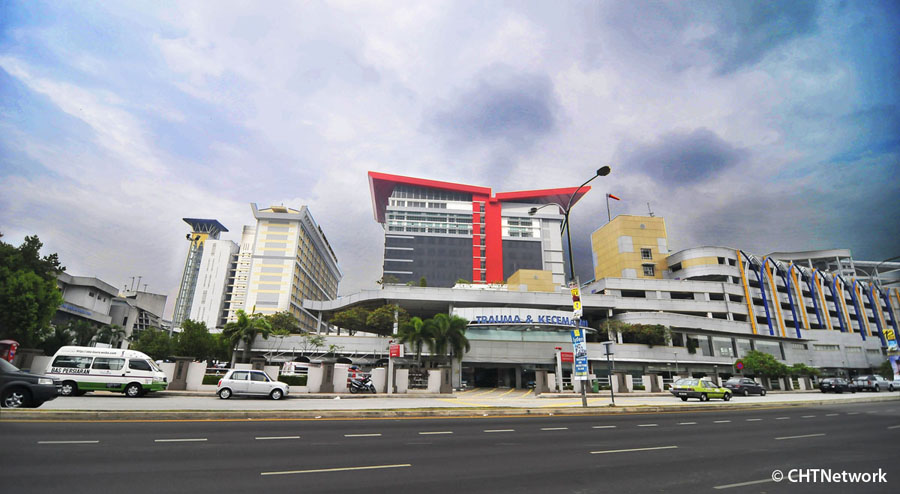
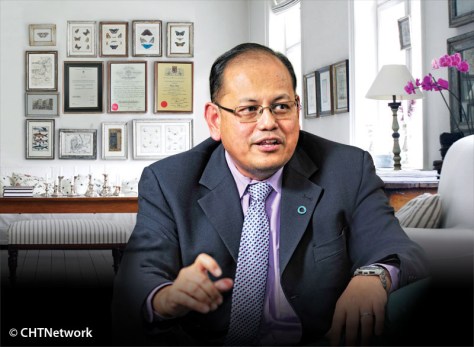
‘Let the doctor do the worrying for your health,’ some may say. But there are times when the human body gives up on you without any forewarning, and this is when you do a fair share of the worrying as well. EZ seeks out Professor Dato’ Dr Ikram Shah bin Ismail, Director of Universiti Malaya Medical Centre, who provides his insight on what makes medicine the occupation of the compassionate and Malaysian conundrums with quality doctors.

1985 marked the induction of Professor Dato’ Dr Ikram Shah bin Ismail into the faculty of Universiti Malaya, Malaysia’s oldest and most prestigious university, where he first started out as a lecturer. Over the following decades, he was one of the men who built the foundations of Universiti Malaya Medical Centre (UMMC). At the time that he was promoted to the directorship of the Centre, the Director of UMMC also held the seat of the Dean of the Faculty of Medical Sciences at Universiti Malaya. ‘Three years ago the Board of Directors decided to split (the designations) so they had to appoint another person as the dean. Because I’ve been the Director before this and as the hospital became a bigger entity, they needed somebody with experience so the Vice-Chancellor at the time asked and I stayed on as the Director,’ said Dr Ikram.

But Dr Ikram did not embrace the medical profession by design. His heart lay with mathematics long before a career in medicine crossed his mind. ‘I’m very mathematically-oriented. Computer science has always been my childhood dream,’ Dr Ikram relished. An opportunity presented itself, but with an unlikely outcome. ‘I was given a scholarship by MARA to do my matriculation in Brisbane, Australia. When I was there, I did rather well in my senior exam, and my seniors told me that it’d be such a shame if I didn’t do medicine because of my good results. So I called my parents and they approved.’

That decision altered his life path forever. He completed a six-year programme in East Queensland, and during this time, medicine gradually grew to occupy a space in his heart. ‘The love of medicine begins because when you start seeing patients, you feel like you’re doing something. By the time I was in my fifth year, our final year, I realised that this is what I want to do because this is where I feel I can do most good to humanity – to help people who are suffering from illness,’ said Dr Ikram. ‘My aim in life has always been to help the sick. In my younger days as a doctor, and now as hospital administrator, I try to improve hospital conditions and environment so that our doctors can do a better job in healthcare.’

Ikram editI realised that this is what I want to do because this is where I feel I can do most good to humanity
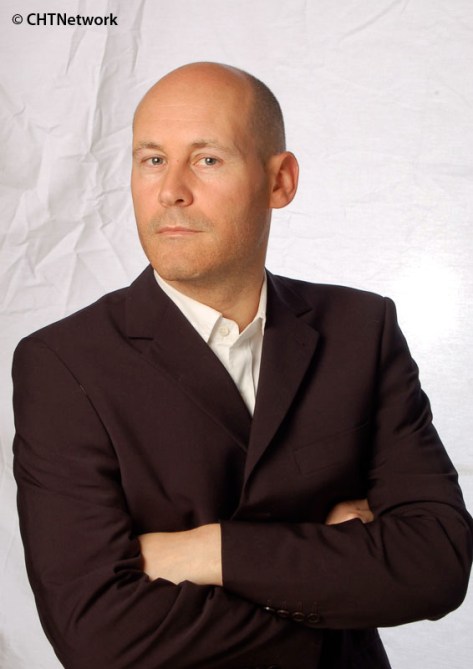
– to help people who are suffering from illness…

As he worked his way into the medical profession, Dr Ikram had his fair share of distressing experiences. He described his first job as a medical officer at Hospital Kuala Lumpur (HKL), illustrating just one of the many the struggles he has faced. ‘I was posted to HKL and they put me in a third-class ward. At that time the third-class ward was really like a hospital in a third-world country; it was horrible and I had nightmares about that period. I spent about three months there and my consultant at that time felt that I probably learned enough medicine or suffered enough, so she took me in and asked me to look after the first-class ward patients and second-class,’ he related with a chuckle.

However, that wasn’t the end of it. Later during his training, he endured a medical officer’s nightmare. ‘I was sitting for my exam at night, but the night before I was asked to go on call and I had to work through the night and next day, and I had to go to my exam feeling very sleepy after being on call for 24 hours,’ he explained. However, being the doctor that he is, the lack of sleep and fatigue didn’t stop him from acing the examination.

Being the son of schoolteachers, the professional veteran in Universiti Malaya and UMMC reveals that, contrary to popular belief, teaching and practicing medicine do go hand-in-hand. ‘All doctors should teach,’ Dr Ikram asserted. ‘As a medical doctor, we’re also lecturers. A doctor is supposed to learn to do things and then once we learn how to do things, then we teach. So teaching is part and parcel of being a doctor.’

‘When you teach other people, you are actually strengthening your own knowledge, because to be able to teach you must know your subject very well. If you want to teach students, you just have to keep up with the latest in medicine. So if you teach, you actually become a better doctor,’ reasoned Dr Ikram. He added that research plays a similar role to teaching in improving medical skills. ‘When I was doing my PhD, it trained me to be an even better doctor because by doing research, you learn how to solve problems. You have a particular research problem, you learn the approach to use, scientific approach to solve a problem. You know the approach on how to solve that problem. So it is very useful for a doctor to be able to do research, even up to the PhD level.’

With a foreign education, it is puzzling why Dr Ikram chose to come back to Malaysia when there are greener pastures in fully-developed countries, such as Australia and the United Kingdom that he has been to. But he stands firm on this decision with several valid reasons. ‘I never looked to it. I rather like the environment here,’ he answered. ‘Here, we have everybody. All the specialists are here, so if you have any problems or need any advice, everybody’s here. And they’re the best in the country, so that’s why I like it here. I always tell people, if you go to see the doctor in a private hospital, you’re seeing our students. If you come here, you will see the mahaguru (great teacher). If you want the best, you come to UMMC,’ he said.

Recent international rankings of education institutions, however, have raised the ire of Malaysians who question the performance of Malaysian tertiary education providers. This provides fodder for the public perception that, perhaps, current Malaysian education standards are declining when compared to the previous generation. ‘In those days, everything is done by reputation. If they’re famous, people think that they’re good, but they may not. Maybe those lecturers that were considered to be good in the past – if they were to practice now – may not reach up to the standards that we expect them to do now. So it’s a perception. I don’t think that the standards are coming down, but of course we are always trying to improve,’ explained Dr Ikram.

There are even instances where Malaysian education standards actually exceed the quality of certain foreign education institutions around the world, which debunks another myth amongst common perceptions that foreign education makes a better-trained graduate. ‘It depends on where you come from,’ Dr Ikram reasoned, adding some countries, like UK and Australia, have reputable medical schools. ‘(If it’s from countries like) UK, Australia then you know that the schools are good. ‘But if you come from, say, some of these universities in Russia, Crimea, these are the ones where their students may not be as good as the local universities.’

UMMC puts its money where its mouth is in light of these international education rankings, for they are the testament to the quality of Universiti Malaya’s graduates. That standard continues to outstrip that of most other institutions in the country. ‘We are the top university and also the oldest. There are medical schools in UKM (National University of Malaysia) and USM (Science University of Malaysia), and these are also very good medical schools. But there are some of the newer ones, which are not as good,’ said Dr Ikram. ‘When it comes to choosing doctors I would prefer doctors who are graduating from this university.’

Regions of Art

pascal Odille-®Vivian van BlerkPascal Odille

Artistic Director, Middle East & North Africa, Singapore Art Fair

The latest addition to the art extravaganzas in Southeast Asia is the Singapore Art Fair. Set to enthral the public for the very first time, Singapore Art Fair is an off-shoot of the Beirut Art Fair which is in its fifth year. To chart the progression of the Fair and its novel concept of ME.NA.SA, and what it hopes to accomplish, Yasmin Bathamanathan interviews Singapore Art Fair’s Artist Director of Middle East & North Africa, Pascal Odille.

It is no denying that Singapore is fast becoming the centre of art and culture of Southeast Asia. In fact, the island-country has always enjoyed a central location for trade and economics that stretches back to the days of the spice trade. When it was announced that Singapore would be home to yet another world-class art event, the news was not met without some amount of scepticism from the art world. However, what sets Singapore Art Fair (SAF) apart from the rest is its concept of ME.NA.SA.

For the uninitiated, ME.NA.SA. stands for Middle East, North Africa, Asia and Southeast Asia, and with that, SAF is positioning itself as a ‘platform for cultural and artistic exchange with the aim of widening interests and to explore the artistic development of the ME.NA.SA region through strategic curatorship and programmes, and selection of exciting representations of art from this region.’

Pascal Odille, who is also the artistic director of Beirut Art Fair (BAF), said that SAF’s desire is ‘to bring together all players of the art market of the ME.NA.SA regions, including the press, collectors, novices, public or private museums, auction houses and curators.’

‘Without these people coming together, there will never be true visibility of ME.NA.SA artists. A contemporary art fair is a meeting place for participants to gather to share common interests and ideas on how best to raise the profile of art in that particular market. This helps to create strong connections.’

Having worked with SAF Founder and Fair Director, Laure d’Hauteville on several projects over the past 15 years before joining BAF, Odille was interested in joining forces with d’Hauteville once again, this time in Singapore. ‘When we decided to embark on the adventure of SAF, we saw it as a continuation of the spirit of BAF. Therefore, it was natural that I took on the role of Artistic Director, Middle East & North Africa of SAF to achieve our goal of showcasing ME.NA.SA art in Singapore,’ said Odille.

Just as branching off to SAF from BAF was natural to Odille, one could say that the ME.NA.SA. connection in terms of art is also organic. The ties between the Middle East, North Africa and Asia started with the Silk Road, and there is shared history between these regions. ‘Archaeological excavations carried out by the Russians in the early 20th Century in Eastern Turkestan led to the discovery of Christian objects of worship that were brought ​​by Syrian merchants dating from the 8th Century. The first exchanges that took place between the traders were forged through artworks. As such, there is a common history.’


Without these people coming together, there will never be true visibility of ME.NA.SA artists. – Pascal Odille, Fair Director of Middle East & North Africa, SAF


‘Closer to our time, modern history, particularly that of decolonisation, seems to affect all of ME.NA.SA – for SA, in particular, this would be the period from early 1960s to early 1970s. All these countries have a common cultural and artistic past,’ Odille expounded on the history behind the ME.NA.SA concept.

Art and art history have always been subjects that fascinated Odille, interests that only deepened as he grew in age. ‘I discovered my love for art at a very young age. I started with a high school diploma focusing on literature with a specialisation in philosophy and art history,’ said Odille, who has taught at the Paris campuses of American institutions such as Center for University Programmes Abroad, Parson’s School of Design and University of Delaware.

‘While finishing my studies, I took a number of internships in institutions and galleries. It was after my stint as assistant of Claire Burrus (of the now-defunct Galerie Claire Burrus) in Paris that I decided to only work in contemporary art. It was at that time that I opened Gallery Pascal Odille in Paris, and applied to be an expert at C.N.E.S (National Chamber of Specialised Experts).’

‘After three years of study and supplementary internships under the direction of Armelle Baron, a specialist in Nordic painting, I finally obtained my title as an expert,’ explained Odille. He credits Baron for cultivating his ‘profound interest in art and determination to further artistic research.’

As the Artistic Director of ME.NA.SA., Odille does not only have the task of selecting the artworks that best represent the region, but also to foster an understanding among the galleries and artists on their presence in Singapore. ‘The potential for expression through art is fabulous. It is time that the ME.NA.SA regions are given the opportunity to showcase itself on the international artistic stage and for us to work together on this visibility.’ As for how he selects the artists and artworks, he employs a set selection criteria: ‘the intrinsic quality of the work and the relevance of the subject.’

For most in the SA side of ME.NA.SA., there might be a preconceived notion that the regions of Middle East and North Africa are one, and in that, their  art too are similar. In one part, this perception is not all that wrong. ‘The differences between the ME and NA are not found in their artistic practices. These regions have always used similar media such as video, installation and photography,’ commented Odille. The close proximity between the countries in the two regions and ties that date all the way back to the biblical days are sure to be reflected in art produced in these two regions.

In present day, the ME.NA. region is wrought with internal conflicts, and political unrest. Then there is the on-going Arab Spring, which in the course of four years has seen demonstrations, protests, riots, and civil wars. How the artists react to the turmoil is reflected in the art that they create.

On this note, Odille said, ‘What is also crucial is the question of identity and how it is part of contemporary society. Thirty years of civil war in Lebanon have inevitably pushed young Lebanese artists to try to understand how they got to where they are today. Therefore, I understand their quest to work on themes such as the memories of these painful moments.’

Moreover, the notion of identity in Algeria has always been very evident; the different political and social events that the country has suffered, along with a painful decolonisation, has given Algerian artists a compelling reason to tackle such themes. These themes are eventually reflected in their work,’ said Odille, drawing parallels between the North African nation of Algeria and the Middle Eastern nation of Lebanon.

This quest for identity and its expression is also found in the art of SA, a common thread in much of the contemporary art world. ‘I find the artists share the same reflection when it comes to the notion of identity. The social problems as well as the political involvement of certain artists, regardless of where they come from, are themes that are clearly illustrated in their work. They are the witnesses of their time, whether they are from ME, NA or SA, and so their reflections are similar,’ said Odille on the contemporary art of ME.NA.SA.

As SAF would be the official inaugural point of convergence for Middle Eastern and North African art in Southeast Asia, collectors who are not as familiar with the art of ME.NA. have a lot to look forward to. Like purchasing art from any other regions or periods, Odille said that collectors should ‘buy with their eyes and not with their ears’.

Personally, he finds the contemporary artworks from those two regions fascinating. ‘I am truly touched by the sensibility, intelligence and diversity displayed in them,’ said Odille, ‘From Algeria to Tunis, Lebanon to Egypt, even Iran and Iraq, an important artistic tradition and a strong sense of speaking out prevail throughout these countries.’

‘The significance of the artists from these regions would be of great interest to a number of art enthusiasts and collectors. Therefore, I believe in the importance of taking the time, as an art collector, to talk to gallery owners and asking the relevant questions about the artists they represent.’

Crown-ing Glory

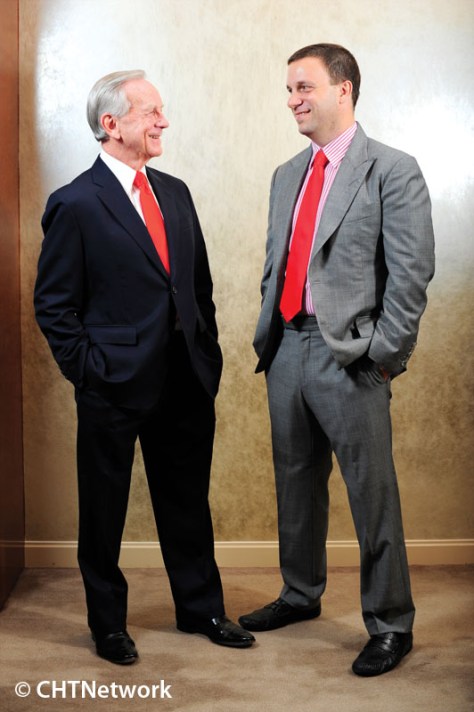
Jim Thompson &  Jimmy Thompson

Founder & Chairman, The Crown Worldwide Group & Managing Director, Crown Worldwide Group Sdn. Bhd.

After 50 years in business, Crown Worldwide has handled everything from alligators to the King of Tonga’s throne and even the priceless ‘Mona Lisa’ painting at the Louvre. With 250 offices in 50 countries and a global turnover of USD850 million, EZ speaks to the father-and-son team about their success story so far.

‘A rose by any other name would smell as sweet’ – so the old bard, (Shakespeare) believed but others are convinced there are advantages in sticking with a good name, be it recognition or influence. Perhaps that would account for three generations of James ‘Jim’ Thompson in this family of self-made men.  ‘In the Irish tradition, usually the name stays in the family – not directly one to another, but usually grandfather to grandchild. But for some reason my father gave me the same name he had, and I gave it to my son,’ laughs Jim Thompson.

‘My father was an amazing man,’ Jim, remembers. ‘He came from nothing – poverty, and made a success of his life. I felt that having done what he did and giving me the opportunity to get an education, I should build on that.’

Crown Worldwide was founded in 1965 when a young Jim Thompson who was residing in Japan recognised the need for a reputable international moving service. With only USD1,000 to his name, Jim established Transport Services International in Yokohama. Even here, the significance of a ‘good name’ would become apparent.

‘People used to forget that name; they couldn’t get it right. So when we opened in Hong Kong for a second operation, we wanted to name it something different, something we could associate with a symbol,’ explains Jim. ‘Crown emerged as a nice name of quality, royalty and all that. It became very popular in Hong Kong so we kept the name for all our operations.’

By 1975, Crown Pacific would expand into Singapore, Indonesia, Malaysia and other Asia Pacific regions, becoming the leading relocation company in Asia. The expansion was accompanied by a new name to reflect the company’s global presence; this time the name was to remain Crown Worldwide Group with Crown Relocations being one of its primary division. The other divisions include Crown Fine Art, Crown Logistics, Crown Records Management, Crown Wine Cellars and Crown World Mobility.

According to Jim, the phenomenal success of the company was not something he anticipated or expected. ‘People often ask about Asia and I can’t honestly say it was a vision. It was a startup like any startup company. There’s always this effort to just survive for the first few years. And then as you get going, you say, ‘maybe we can do this well,’ and we just kept expanding and that’s been successful.’ Timing also lent a helping hand as world globalisation was accelerating and Crown and its divisions were there to serve the mobile and logistic requirements.

‘That was our constant effort, to convince people that we are the best. We’ve always been fanatical about quality and I think that has paid off because people use our services and tell their friends about it. We developed over fifty years and became the only global company in our business,’ continues Jim.

Crown was only 10 years old when they opened here in Malaysia, four decades ago, but it has seen rapid growth, brand distinction and even acquired a sense of exclusivity. ‘We like people to think of us as high quality, top of the market. Most people in the industry require three quotations. So long as they call us even if they think we are expensive, they find that we are not. We’re quite competitive with the other good companies in town,’ explains Jim. ‘When they see that our quote is reasonable we stand a good chance of getting business.’

Though they may share the same name, the father and son team did not always share the same career ambitions. ‘I always hoped that my children would be in the company someday, I think most fathers would, but I think that, he knew when he graduated from university that if he wouldn’t join Crown, he would have to go and get his own job, which he did, in China.’

A request by one of the operating managers to assist with a project in China led to Jimmy joining the company officially and staying with Crown for 15 years. ‘My first thought was I needed to pay my rent,’ he chuckles. ‘Second thought was, well, I’ll get the project done and then I’ll look for something else. But I guess, I’m just that good and here I am!’

Having married and resided in China for almost 18 years, the opportunity to relocate to Malaysia was too good to miss. ‘It was a time of change for me and an opportunity came up in the organisation as well. I was very pleased to come to a place with cleaner air, a new environment and very friendly people.’Of course, there were some domestic arrangements to consider as well. ‘To be honest, my wife said this was the only place she would move to if she left China,’ he grins.

Nevertheless, the move would prove to be mutually beneficial for both, man and company. ‘I speak Chinese and I also have certain skills in different sectors of the business, that other employees don’t have in Malaysia − particularly on the logistics side of the business, which can be used to really build up the development of the business in Malaysia.’

Jim Thompson3‘Crown emerged as a nice name of quality, royalty and all that. It became very popular in Hong Kong so we kept the name for all our operations.’

– Jim Thompson

As for managing the operations of over 5,000 employees and contractors worldwide, it may not be an easy feat but the Thompsons have taken it well in their stride. ‘We have to really motivate them, centralize them with compensation, whether through salary or recognition for their good services,’ says Jim. ‘Frankly I think we have one of the best teams, certainly in our industry.’

Respect is a key ingredient in the management style at Crown. ‘I started the company and I’m still here, but it’s all these people who built the business for me. I really think about that all the time. Whether they’re driving a truck or cleaning the offices or someone in a management position, I try to respect these great men and I think this has sort of filtered down to our team.’

Working for his father’s company does not seem to affect Jimmy in any way. ‘Well, Crown is a pretty big company and there are different layers of management. We do work closely together sometimes but mostly with the management team within Crown.’

Jim agrees, ‘I think the important thing is that Jimmy doesn’t work directly for me. He’s my son so we talk a lot, but his boss is actually the head of the Asia Pacific region. I think that’s good because he’ll be mentored by that guy, who’s also quite experienced.’

But there is no denying Junior’s admiration for the man who built the company. ‘I always look at my dad, who has a very positive attitude. Even though times may be tough, he’s always got a positive outlook. He’s been in the business for so many years, that all the experience that I or anyone else can give is just a story.’

As for what the future holds for these enterprising men and their business, there is talk of a book and quite possibly a museum. ‘I’m hopeful that Crown as a company will be able to build an art collection as well. Many businesses do that and I thank this opportunity because in Asia, art is coming up so much, it’s fantastic. We’re in a position to buy pieces from time to time and build a Malaysian art collection,’ muses Jim, who is himself an art collector. ‘I love art, so I hope that my collection will be passed on and hopefully grow in the future.’

The passage of time has been a reflective time for this charismatic man who has achieved so much through hard work, determination and mutual respect. And it’s a life story he wishes to preserve for the next generation. ‘I realised when I saw a lot of people in the office today, that not one of them was 40 years old. So they weren’t here when the company started in Malaysia. And they and the ones coming after should know what Crown was in the beginning. I want it written down accurately, with old pictures … I want to tell my own story as well, about what it’s been like.’

A Belle and Her Dreams

It is a story right out of a fairy tale; a girl dreams of making it big, chases her dreams and builds a fantasyland that makes other girls’ dreams come true! In a journey of self-realisation and exploration, one Penang-lass makes it to the big league with her large dreams and bold ideas. For this issue of EZ, we talked to Anne Lee, the bridal industry maverick and fairy godmother to a host of brides and brides-to-be.

When Malaysian king of badminton and world champion Datuk Lee Chong Wei decided to tie the knot with his sweetheart, former Malaysian badminton singles player, Datin Wong Mew Choo, only the best would do for the special occasion. He and his now-wife turned to Anovia Bridal, more specifically Anne to capture and immortalise the couple’s love.

To Anne, this celebrity wedding was the most outstanding one that she has been involved in and goes down as one of her most memorable projects. ‘There are a lot of celebrity weddings, but there’s only one Datuk Lee Chong Wei, and I’m proud to have had the opportunity and ability to handle his wedding,’ said Anne when met at her latest bridal boutique, Obsidian in Penang.

‘He is one of the world’s top badminton players and he makes Malaysia proud. He even asked to visit Anovia and have a look at the chapel. That made me feel very proud because before that, he already had his wedding photos taken at Sepang. He was training there, and therefore he couldn’t come to my place in Penang. But at the very last minute, Datuk Lee suddenly said that he wanted to come to Penang. ‘I want to go to Penang to take photos, your shop is very nice,’ he said.’

‘There are a lot of celebrity weddings, but there’s only one Datuk Lee Chong Wei, and I’m proud to have the opportunity and ability to handle his wedding.’

– Anne Lee, Managing Director of Anovia Bridal and Obsidian Production Studio

Long before Anne’s Anovia Bridal captured the attention of Malaysia’s golden boy, the bridal house was already generating positive buzz not only within Malaysia, but also overseas. Housed in a sprawling heritage mansion with an immaculate garden adorned with angelic sculptures, Anovia Bridal has a celestial wedding chapel built on its grounds where love-struck couples can pledge their love and seal their marriage.

The idea for Anovia Bridal came at a time when Anne had decided to take a break from the bridal industry, which she was involved in for almost two decades as a wedding gown designer, a sales person, a bridal house supervisor and then as a bridal house manager. Knowing the ins-and-outs of the industry and having worked with top bridal houses in Singapore, Kuala Lumpur and Penang had prepared her to build and run her own business in the bridal industry.

Invited by her friend to view a property, which used to house the famous Penang establishment, Bagan Bar, Anne was reluctant at first. This would however change the moment she entered the mansion. ‘When I reached Bagan, I don’t know why but I immediately felt a connection to the place. I could visualize so many changes to the place; this is where I could have my reception, and there would be the gown department, and I kept talking and talking about my ideas,’ recalled Anne, saying that it was almost akin to a ‘love at first sight’ with the mansion.

That deliberate maneuver by her friend was successful in reigniting within Anne the passion for the bridal industry. ‘From then on, my dream started once more. I wanted this, I wanted that, I wanted a chapel; I didn’t want this tree… I talked a lot with the designers to create and realize my own dream bridal house. When I first entered this area, the premises were derelict and unkempt. It was like a jungle, with trees here and there. But it had such a big compound that I could make a dream wedding house of my own,’ she said.

Any visitors to Anovia would feel like they are entering a surreal world, one that is magical and serene. The concept of this bridal house is very clear and tactical, and it is all credited to Anne’s vision. ‘Last time, my dreams and ideas were restricted by my superiors. But now that I had a place of my own, I could let my creativity run loose. I could have what I wanted at Anovia, like the statue, decorations, everything which was from my heart. I created a feeling that was welcoming, and with every step you take in Anovia, a story unfolds in your mind. We can feel it inside, in ourselves. That’s what I visualized, that every step is a moment of its own with a different scenery and perspective playing out in the mind of every visitor,’ explained Anne on her concept.

Having established Anovia Bridal in 2011 and receiving rave reviews and accolades for her celestial bridal concept, Anne has unveiled another exciting concept this year. Obsidian, which is right next door to Anovia Bridal, is like the hip, younger sister complete with its exposed brick walls, obsidian black ceilings and glam wedding gowns.

‘Obsidian’s concept is completely different from Anovia’s. It is urban, contemporary and bold – a different way to present a wedding. It appeals more to the young generation. Another thing is I think that in the whole of Malaysia, you’ve never seen a bridal house with a black or grey ceiling. It’s a very strong colour, and it’s such a bold concept that I had to spend a few months mulling it over,’ said Anne.

Introducing such a novel concept to an already saturated industry could be daunting, something that was certainly not lost on Anne. She had to ensure that the concept was not just a superficial one that was contemporary in its aesthetics but one that was daring to create new trends within the bridal industry. ‘One of the main products we offer here in Obsidian is short film productions. Out of the whole of Malaysia, this is the only bridal house with its own screening theatre. We create short bridal videos, and hold previews as well as screenings for the customers to present the finished product to their family and friends,’ said Anne.

‘In my opinion, photos capture memories without sound and movement. Many years after the photos are taken, they still evoke nostalgia but we can only make simple statements while looking at them. However, videos and short films are different. We create short bridal films because a marriage doesn’t concern just two people; it involves the joining of two families and their worlds. Only a short film can capture the worlds of the bride and the groom. So, one day, when the customer watches the short film of their wedding, he or she can listen to the voices of loved ones and relive the moment.’

Another key aspect of Obsidian’s short film concept is its technical and creative crew, which Anne assures are all professionals – both from the bridal industry and international film industry. ‘When a customer signs up for the short film package with us, we create a story for them. We prepare a script, a director, art director, producer … basically everything for the customer. Obsidian has invested in an overseas movie crew, and so we have a team of specialists whose expertise lies in making short-film movies,’ she said, ‘You can make a short film with your girlfriend, or a short movie with your friends. That means this service is not restricted to just newlyweds or engaged couples. This is Obsidian’s new challenge for the market. This is our new plan for the millennium.’

With Anne realizing her own dreams and ideas, what she has done is give this generation a channel to make their own dreams come true and to capture it for all eternity.

When East Meets West

In 2011, a new art event took place that would, over the next four years, change the position of Singapore within the Asia Pacific art industry. The very first edition Art Stage Singapore was held at Marina Bay Sands and each year since, the event has attracted worldwide attention. At the 2014 edition of the art fair, the team from EZ had the privilege to sit down for a chat with the man behind Art Stage Singapore, Lorenzo Rudolf. We discussed how the art fair has grown and its relation to the Southeast Asian and global art market in general.

Lorenzo Rudolf is a prominent figure in the art world. Long before he headed east and brought a much needed breath of fresh air and vigor to the Southeast Asian art world, Rudolf was at the helm of the world’s most recognised and lauded art fair for the modern and contemporary – Art Basel. From 1991 to 2000, he led Art Basel as its director.

This Bern, Switzerland native has always been surrounded by art, not surprisingly. ‘It started all in the house of my parents who were art lovers and culture lovers. I grew up in a place at the time which was probably one of the most interesting moments in the history of contemporary art,’ said Rudolf during the interview on the last day of Art Stage Singapore 2014.

‘Exactly at this time the Kunsthalle Bern was directed by a guy who was at his time considered crazy but he was the one who really opened the doors for contemporary art as the conceptual thing with his very famous exhibition, When Attitudes Become Form. I was once standing in front of his museum in Bern and saw this museum was packed; it was the first time I crossed a packed building,’ he said. The ‘crazy’ curator was none other than the controversial Harald Szeemann, said to be the most important curator of the post-World War II period.

‘So I was probably also lucky to grow up at the right time, at the right place. In that context I made my career start as an artist myself and then realizing that there were better artists than me, and coming to the point, maybe I can bring together my professional background with my passion to organize events – that’s the way how we’re doing it, and I became director of Art Basel, and from there, step by step it continued,’ he said.

After his long tenure with Art Basel, Rudolf traveled around the world setting up various other fairs, namely the Frankfurt Book Fair and the International Fine Arts Exposition in Palm Beach. In 2007, he headed to China to launch the ShContemporary art fair in Shanghai. ‘The first country in Asia which really became important in the international arts was China, and that had a lot to do also with Swiss, maybe. The first big gallery in China, it was a Swiss who opened it and is still today the biggest gallery,’ explained Rudolf on the Swiss-China art connection. Incidentally, it was also the great Harald Szeemann who would be instrumental in bringing Chinese art to the international art world.

However, Rudolf’s fascination with Asian art had started long before his move to the East with the first piece of art work from Asia that he had collected during his time at Art Basel. ‘The first few pieces I bought were in the early 90s, which were brought over to Europe through these people,’ he said. It would seem coincidental that the bridging of Southeast Asian art and the global art world would be paved by yet another Swiss.

As he became involved with Asian art during his stint at SH Contemporary, Rudolf’s interest for it deepened. It was his first big show in Asia and China at that time was experiencing a huge boom, quite rightly an exciting time of growth for the art world. Inspired by the buzz around him, Rudolf felt the urge to do something in Asia, particularly Southeast Asia. ‘I fell more and more in love with this region because I think Southeast Asia has incredible creativity, and it’s not only a creativity which is trying to fulfill certain Western criteria of contemporary art, but has its own character and identity,’ he said. And that was how the seed for Art Stage Singapore was planted.

‘That’s also the reason why I decided to come to Singapore and do this show here. The show, which is a platform for the entire Southeast Asia, brings (the countries) together and in exchange, at the same time, opening a window to the West,’ he said about the concept behind Art Stage Singapore. 2014 marked the fourth edition of Rudolf’s grand visionary plan of a world-class art fair based in this oft-overlooked part of the world, and the mark Art Stage Singapore has made on the overall art market of this region is not just highly visible, but also profound.

‘I think today we are at a situation where we have a momentum all over the world for Southeast Asia. There was never a curiosity and interest in Southeast Asian art as today; that has surely to do also with the phenomenon here. I’m glad we can help Southeast Asia to go out, to become a part of this global art world, to integrate Southeast Asia in this global context. That’s why, at the end, I’m happy that we can contribute,’ he said.

‘I think today we are at a situation where we have a momentum all over the world for Southeast Asia. There was never a curiosity and interest in Southeast Asian art as today …’

Southeast Asia is comprised of diverse art scenes; each of the nations in the region has their own distinct art scenes that have their own unique microcosms. To bring them together as how Rudolf has done with the Southeast Asia Platform at the 2014 edition of Art Stage Singapore is quite a novel concept, to say the least. The discourse between the different member countries makes for a rather fascinating study. ‘I think what is important in the Southeast Asian context is when its different countries and art scenes begin to interact with each other – not only the Indonesians among the Indonesians, Malaysians with Malaysians, Thais amongst Thais. I think it is important to have this exchange,’ Rudolf explained.

‘Contemporary art is a global language; it is an expression which has to be understood everywhere. A good art piece done by a Malaysian artist is understood in New York as well as in Jakarta. A good art piece done by an Italian artist is understood in Singapore as well as in Tokyo. That’s what you have to create here. I think for that, this place here is ideal, because Southeast Asia is quite a big region. There are a lot of interesting artists, but not a lot of infrastructure. Here we have the infrastructure. Here we can build up the bridge to the West, to the world, to everybody,’ he said, making a point for the suitability of Singapore as a hub for the region, ‘And that at the end is what we do.’

This year, to coincide with Art Stage Singapore, the Singapore Art Week was held with numerous art-related events strewn all across the island nation. There were also a number of auctions held, capitalizing on the congregation of the movers-and-shakers of the art world in Singapore for the week. When asked his take on the cluttering of so many art events at the same time, Rudolf commented, ‘Every medal has two sides, I think. On the one side, it’s good to have a lot of things around and not only one event because it attracts a lot of people. On the other side, it’s clear the more you have things around that people spend money on, the more it spreads left and right.’

‘Contemporary art is a global language; it is an expression which has to be understood everywhere. A good art piece done by a Malaysian artist is understood in New York as well as in Jakarta.’

However, seeing that collectors are a discerning bunch in general, and some might be collecting art for the sake of investment, the presence of many art auctions and sales also mean that they have a wider selection to choose from. ‘They concentrate their purchases where they really want, where they find the best,’ said Rudolf, adding that this translates to the different players in the art scene trying to do their best to outdo the other. ‘The more you have around, you always have to try to be the best and then you can be sure people come here to sell and buy.’

‘It’s proof that Southeast Asia and Singapore is moving, it’s developing. If that was not the case also, nothing would happen. So in other words, all in all, I think it’s great but it has to be (coordinated) a bit. Only then can we have a round and sound result as something without any concept behind it would help nobody’, he said on the activities surrounding Art Stage Singapore 2014, ‘If really a lot of events are complementing each other to create something new, great! It’s fine.’ Seeing the success of Art Stage Singapore 2014 and the various art-related activities that Rudolf’s brainchild has inspired, it all bodes good news for the development of the Southeast Asian art world.