All posts by EZ Malaysia

BLOOD IN URINE: A WARNING Sign That You SHOULD NOT IGNORE!

By Mr Lau Ban Eng
Urologist
MBBS (Aust.), FRCS (Edin.), FRCS Urology (Edin.),
D. Urol (Lond.), FCS (Hong Kong), FHKAM

“Peter, a 57 years old executive chef went to the toilet one night and noticed that his urine was red in colour. The urine cleared up the next morning but Peter was very worried. He visited his family doctor who sent his urine for tests and found the presence of red blood cells. His family doctor referred him a Urologist. After some investigations, Peter was found to have early stage kidney cancer. Peter underwent appropriate treatment and is now cured.”

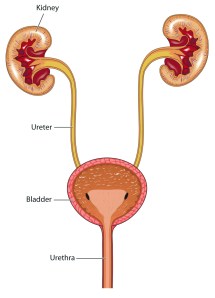
Seeing blood in your urine is a frightening experience for most people. When this occurs, it must be fully investigated by a doctor. Although in many patients no specific cause can be found, blood in urine – medically referred to as haematuira – can be an indication of a serious problem of the urinary system (Diagram 1) and is a warning sign that you should never ignore.

It is estimated that up to 20% of the population is at risk of haematuria. There are two types of haematuria. The first is called “gross” or “macroscopic” haematuria where the blood in the urine is visible to the naked eye. Macroscopic haematuria can vary widely in colour, from light pink to bright red with clots. It can result from as little as 1ml of blood in 1litre of urine, and therefore the colour does not reflect the degree of blood loss.

If the blood can only be detected with laboratory testing of urine, it is called “microscopic haematuria”. People with microscopic haematuria are often unaware of the problem and it will most commonly be detected from urine tests during a routine medical check-up.

Although the amount of blood in the urine may vary, the causes of gross and microscopic haematuria are the same. So, any degree of blood in the urine should be fully evaluated by a doctor, even if it resolves spontaneously.

Is there definitely blood in the urine?
Before you read on, it is worth considering whether you have recently eaten beetroot, red dragon fruits or food with colourings as these can make the urine to turn pink and cause unnecessary alarm. Certain medications and antibiotics such as nitrofurantoin and rifampicin can also turn urine brown or red. Check that the blood in the urine is not from the rectum/anus and in females, blood from the vagina should be ruled out.

What are the causes of blood in urine?
The cause of haematuria, whether microscopic or macroscopic are similar and may result from bleeding anywhere along the urinary tract (Diagram 1). 50% of patients with visible blood in the urine will have an underlying cause identified but with non-visible blood in the urine, only 10% will have a cause identified.

Risk factors for significant underlying diseases include: age over 40, smoking, exposure to certain chemicals, history of radiation, overuse of painkillers, history of diabetes and hypertension.
white-fig14_0072

Common causes of blood in the urine include:

  1. Infection of the bladder (cystitis) or kidneys (pyelonephritis). This usually causes pain when you pass urine and pain over lower part of abdomen and loin area. Fever can occur in severe infection.
  2. Kidney, ureteric or bladder stones which may be painless and may present as only haematuria.
  3. An enlarged prostate. This commonly occurs in older male and associated with symptoms of difficulty passing urine, slow urinary stream and frequency of urine.
  4. Kidney cancer. This is an uncommon cancer and may present as microscopic or gross haematuria. The gross haematuria may be intermittent. If it is detected early, the chance of cure is very high.
  5. Bladder cancer. Again this usually occurs in people aged over 50. Usually the patient is a heavy smoker. As in kidney cancer, if found early and treated, the cure rate is very high.
  6. Kidney disease can also cause haematuria. It is a common cause of microscopic haematuria in younger people. Most of the time, protein will also be detected in the urine.
  7. Medications that thin the blood like warfarn and clopidogrel (Plavix) can also cause bleeding in the urinary tract.

How is blood in urine diagnosed?
After taking a detailed history and carrying out physical examination, the Urologist will order a urine test which consists of testing the urine with a chemical test strip and examining it under a microscope. This is to confirm the presence of red blood cells. If three or more red blood cells are seen per high power field in the urine specimens on microscope, referral to a specialist, either an Urologist or Nephrologist for further evaluation is recommended.

Usually the specialist will repeat the urine test and also obtain a culture of the urine to identify the presence of bacteria. Blood tests will be carried out to assess kidney function and identify any blood clotting abnormalities. Further investigations will be ordered depend on the findings of the urine and blood tests. If necessary, two additional tests, imaging and cystoscopy will be performed.

Nowadays, CT scan is preferred to intravenous urogram (IVU) as it gives a better, more detailed image of the kidneys and ureters. It is also the best method to detect urinary stones. However, CT scan cannot visualise the lining of the bladder clearly and therefore, a second examination called a cystoscopy is necessary.
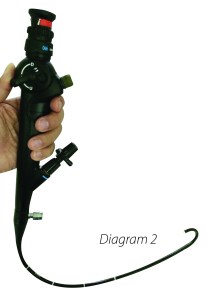
Diagram 2 showing a flexible cystoscope2

This procedure uses a small (3mm in diameter), flexible scope (Diagram 2) which is inserted through the urinary passage (urethra) into the bladder to directly visualise any abnormality or source of bleeding in the bladder. It also allows the doctor to take a sample for examination under the microscope. This procedure takes about 10 minutes and is usually carried out with intravenous sedation and local anaesthetic gel.

Treatment
Treatment depends on the exact cause for the haematuria following a specialist’s evaluation and investigations. In patients where investigations fail to find the source of the bleeding, observation with repeat urine tests is necessary. Investigations like CT scan and cystoscopy may be repeated if haematuria recurs.

Conclusion
Any degree of blood whether macroscopic or microscopic in the urine, especially for those aged 40 or above should be fully investigated by a Specialist as it might be a sign of serious disease of the urinary system.
Screening For Bowel Cancer Today

by Mr Buvanesvaran Tachina Moorthi
MBBS (Mal), MS (UKM), MRCS (Ire)
Fellowship in Colorectal Surgery (Hull, Eng)

Better understanding of anatomy and bowel physiology coupled with technological advancement has propelled new concepts, techniques and ever evolving trends in the management of colorectal disorders in the present era.

Historically, the Ebers Medical Papyrus 1700BC described 33 prescriptions for anorectal disease. Hippocrates (460-377 BC) had documented dissertations on Fistulae and Haemorrhoidal diseases. Such is the influence of history in the development of Colorectal Surgery into a subspeciality as it stands today.

Screening for bowel cancers are routine practice in many Western countries. The United Kingdom has a well-established bowel cancer screening program where anyone turning 60 years old are offered a ‘Fecal Occult Blood’ test kit which tests to identify microscopic bleeding in the stools of asymptomatic persons.

Those with positive results are invited to undergo a screening colonoscopy to exclude presence of polyps or cancers and are followed up with regular colonoscopy (as per protocol) depending on the findings of the first screening colonoscopy. However, these are meant for asymptomatic persons with no obvious family history of bowel cancer. Individuals with strong family history of bowel cancer or symptoms of it should be investigated much earlier.

Though Colorectal Disorders encompass a wide range of conditions ranging from benign perianal diseases to functional disorders, none gets more importance that Colorectal Cancers as it rightly deserves. The morbidity and mortality associated with bowel cancers has pushed researchers to innovate new investigative tools, surgical techniques and treatment options that promises better outcomes for patients.

Successfully treating a clinical condition vastly depends on the understanding of the pathophysiology of the disease. However, the multifactorial origin of cancers on the whole is the stumbling block towards its treatment.

The “Adenoma-Carcinoma Sequence” best describes the formation of bowel cancers through a series of gene mutations whereby the normal bowel mucosa undergoes changes leading to the formation of small polyps that grow and eventually risk becoming cancerous lesions. Hence, early detection of these precancerous polyps through screening techniques offers hope in preventing overt cancers and its grave sequelae.

This brings us to the most important question on what exactly are the symptoms of bowel cancer? Unfortunately, bowel cancers may have vague symptoms and unless one is aware it may be missed. Blood in the stool or during defecation are the most obvious signs. Early bleeding from small tumours or polyps may go unnoticed to the naked eye and as such requires stool testing. In addition passage of mucus with the stools are often noticed.

Another important feature is the change of bowel pattern. Every individual develops their own routine normal bowel pattern. Common pattern among Asians is moving the bowel once or twice a day or even once in two days.

However, what matters most is a deviation from the normal pattern of bowel movement in a person. Thus, if one notices change in their habits of visiting the toilet, either in frequency of visits or in the nature of their stool then it should be investigated. The risks of cancer in persons with such changes are multiplied in the background history of bowel cancers among family members.

Screening colonoscopy is conducted using a fiber-optic video-endoscope inserted through the anus to directly visualize the entire colon and rectum. The procedure performed under sedation on a cleansed bowel can be done as a daycare procedure.

In addition to direct visualization, the video-endoscope allows biopsy and removal of polyps (Polypectomy). Advanced endoscopic techniques through the use of ‘narrow band imaging’ also allows earlier detection and removal of suspicious lesions through the ‘Endoscopic Mucosal Resection’ (EMR) techniques.

Bowel Cancer Screening in Malaysia is still in its infancy and lack of awareness is yet a stumbling block. Successful detection of early cancers and pre-cancerous polyps would enable early multi-modality treatment that promises good outcome for patients.

Hence visiting a Colorectal Surgeon, who would risk stratify and advise the most appropriate investigation for each individual is the first step to a successful bowel cancer screening programme.

Unicompartment Mobile Bearing Knee Replacement: Oxford® (Partial) Knee Replacement

Should We Sacrifice The Whole Joint When Only Partial Knee Placement Is Needed?

By Dr Goh Eng Tat
Orthopaedic, Joint Reconstruction & Trauma Surgeon
MBBS (M’lore), M.S. Ortho. (UM), FRCS (Ire), CMIA (M’sia), F’ship in Joint Reconstruction (St. George, Sydney)

If knee pain is affecting your lifestyle, then you need to know this: the new concept in joint replacement surgery is to replace only the worn out portion of the arthritic joint and save as much of the natural knee as possible.

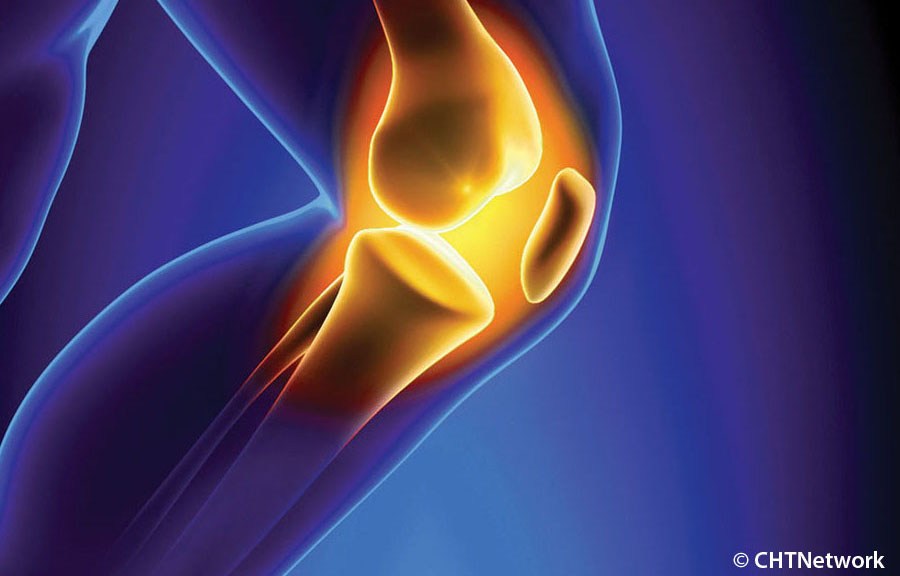
A large number of people with osteoarthritis of the knee have worn out only the cartilage of one of the three compartments in the knee. If this is the case, the individual may only require a partial replacement, preserving the unaffected compartments of the knee and all the ligaments of the joint.

Oxford® Knee Replacement is an implant that can accomplish this task with a proven track record of 95% success at 15 years and beyond. For this reason, the Oxford® makes a total knee joint replacement unnecessary in many cases. In some centres in the US, the number of Oxford® Partial Knee Replacement has reached almost 50% of all joint replacement surgeries.

The photograph below represents one (sided) compartment of bone-on-bone osteoarthritis. This occurs due to wear and tear of the articular cartilage. The other compartment cartilage is still normal. Once this situation develops, the individual usually has severe pain. An Oxford® is ideal for this situation.

The x-ray photographs above demonstrate a pre-operation x-ray and post operation x-ray (after an Oxford® has been placed). One can see that the bone on bone rubbing condition has been replaced by the Oxford® with its mobile bearing (the white horizontal line between the metal).

The Oxford® ® Unicompartmental Knee Replacement System offers these advantages:

At 15 years following surgery, 95% of implants are still functioning well

• Preserving other compartments of knee while only the affected inner portion of knee is resurfaced

• Preserving all the ligaments of the knee thus allow more normal, natural and physiological motion of the human knee

• Only a portion of the knee is replaced, making this procedure available to a younger population

• Minimally invasive – a small incision is utilized

• Less pain due to a smaller operation scar and dissection

• Blood transfusion is rarely needed

• Two to three nights in hospital

• Quicker recovery – discontinue walking aid as fast as one week

The Oxford® Unicompartmental Partial Knee Replacement prosthesis allows for better range of motion of the knee by replicating the function of the menisci and more normal motion of the human knee. With the Oxford® partial knee replacement, only a portion of the knee is replaced. In performing an Oxford®, the anterior cruciate and posterior cruciate ligaments are always preserved. In performing a total knee replacement, the cruciate ligaments are always removed.

In some cases, this prosthesis may be applicable to individuals who were previously considered too young to undergo a total knee replacement. The Oxford® implant utilizes a minimally invasive procedure in which patients may experience less pain and a quicker recovery time, contrasted with a total knee replacement.

To be qualified to implant an Oxford®, the United States Food and Drug Administration requires an orthopaedic surgeon to attend a special training course. This training is required because the implantation technique for this procedure is very delicate. I personally attended one of the training courses in Chicago in 2011 and have since been using Oxford® with favourable outcome.

If you have substantial pain in your knee, you should go for a complete evaluation of your knee pain problem. You may only require an arthroscopic surgery, you may need an Oxford® knee replacement, or you may need a total replacement. Most substantial knee pain problems can be helped or cured by modern orthopaedic surgery.

Detox & Live; The New Way of Healing

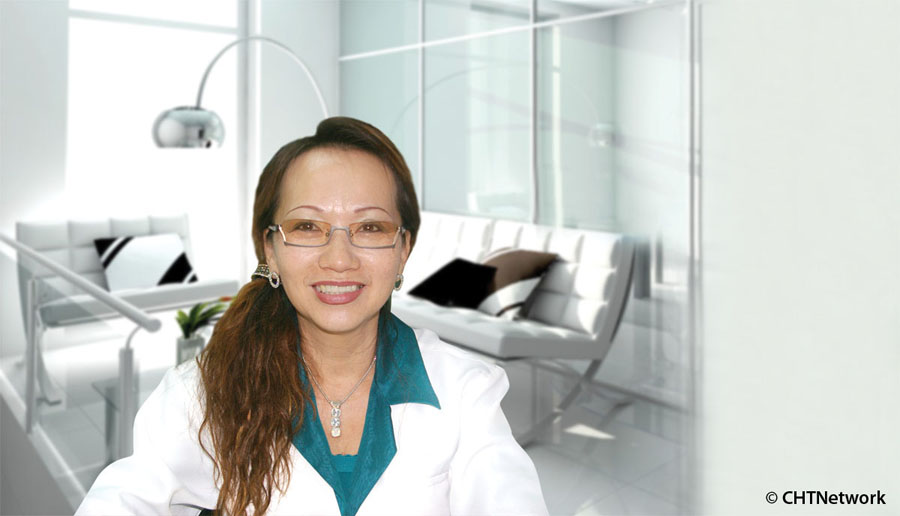
EZ welcomes Dr Michelle Lim, MD (MA) Naturopath ND, Dip. Holistic Kinesiology, a pioneer of Alternative Medicine in Malaysia, to our panel of contributors. Starting in our next issue, she will be writing on topics related to health, natural remedies and general wellbeing.

Vivacious, vibrant and oozing vitality, it’s hard to imagine that this lively lady is well into her 60s. Dressed impeccably in the calming hues of turquoise, she recounts her experience travelling around Australia in a camper with her partner, Ian. ‘If you’re on the road and you see something interesting, you can stop, get out and explore!’ And it is this openness to life and living that has propelled her throughout her own existence.

Despite a difficult childhood wrought with rejection and hardships, Lim was resolved from a very young age to build a successful life for herself. Having completed her secondary school examinations, she braved the working world and worked her way up to become supervisor of the whole factory. But with a keen interest in aesthetics, she took up night courses in the subject and trained to become a beautician. Following her graduation she opened up her own business in the 1970s.

This would prove to be the turning point in her life, as marriage and the birth of her three sons followed soon after. Though her marriage would not last, her career as a beautician proved to be a success – albeit having to manage a household on her own. ‘I always felt torn between caring for my children, managing my business and all the chores related to running a household,’ she remembers. But fuelled by her determination, she carried on.

Balancing the demands on her time and attention, Lim went on to open a second branch of her business. It was at this point that she experienced an epiphany that would direct her to the fundamentals of internal health and how this can affect the external appearance.

She studied alternative medicine via correspondence with a training centre abroad and travelled to Australia, Sri Lanka and the States to explore this branch of holistic wellness further. Michelle Herbs Therapy & Complementary Medicine Clinic, the fruit of her extensive training and research, was founded in 1990 in Penang.

Having been in this field for 24 years, Lim is dedicated to identifying and addressing the root causes of chronic illnesses through a ground breaking holistic system called Functional Medicine which employs the art of Listen to Your Body Talk. Lim has since developed a unique programme called Detox & Live, an integrated detoxification plan that targets liver and kidney cleansing, digestive problems, candidas and parasite killing combined with a range of protocal herbs, natural supplements and appropriate nutrition.

Adding to her portfolio of holistic therapies is kinesiology, which combines modern medical knowledge with ancient oriental philosophy. Having recently returned from an intensive study course in Melbourne, Lim uses this skill to tap into one’s subconscious and energy centres to counter the negative influences. ‘I firmly believe that knowledge empowers us to take charge of our lives and our health. Without awareness, we cannot change anything,’ said Lim.

HSL Helps Cambodian Community

PENANG, May 2014 Universiti Sains Malaysia (USM) Hamzah Sendut Library (HSL) has conducted a series of community networking programmes in the country such as HSL@Chemor, HSL@Koperasi Tadika Minden, HSL@Tadika Lestari Ilmu, HSL@Al-Itqan and has recently extended its mission abroad to Cambodia through HSL@Cambodia: Reaching the Bottom Billions.

The main objective of the programme is to set up a library in one of the schools in Kampung Poti In, Kampong Cham, Cambodia. This mission was attended by 10 staff members from HSL who brought with them 132 reading materials to be stocked in the library there.

“It is not easy to be in a foreign land where upon arrival at Phnom Penh we had to rush to buy book shelves for the library and then take a 3-hour journey to Kampung Poti In via a winding village road,” said HSL Head of Customer Relations, Radia Banu Jan Mohamad.

“On our arrival at Kampung Poti In, we were joyously greeted by the villagers who then held the akikah feast. The overnight stay at the house of the village chief was a memorable experience as well as an opportunity to learn the culture of the local community which is not much different from Malay culture,” said Radia Banu.

Among the activities carried out were the assembling of book shelves, classifying the books according to their appropriate themes and clean-up of the library with the help of the teachers and students of the An Nikmah Religious School of Kampung Poti In which has about 300 students.

“Besides the mission to set up the library, HSL also took the opportunity to raise funds to supply clean water to villages through the construction of wells and water pump channel.

“A total of 33 wells and water pumps were given to the villagers as a contribution from Malaysia,” said one participant.

This mission is just the beginning and it certainly will not end here. HSL will continue to seek funds to improve the library as well as add to the existing reading material from time to time.

“I call on the USM community and also anyone who wants to help, either in donating reading material or other forms of assistance, to contact us as this programme will be on-going,” said Radia Banu.

Prior to Cambodia, HSL also helped Sekolah Rendah Al-Itqan in Teluk Kumbar, Penang, a private religious school that provides religious education and other subjects to students of Penang and also from other states.

The programme was made ​​possible by a total of 20 HSL staff members who were divided into two groups – one to brighten up the surroundings (painting, murals and arranging the furniture) while the other deals with the technical aspects (system development and cataloguing books).

All the HSL programmes ran without a hitch with the help and support of the library top management.

Tiger Milk Mushroom to Help Manage Asthma

IMG_6327Asthma is a chronic respiratory disease that causes difficulty in breathing. Many asthmatic patients make a wheezing sound when they breathe due to blocked airways in the lungs, and usually require an inhaler to supply oxygen directly to the lungs to help them breathe easier.

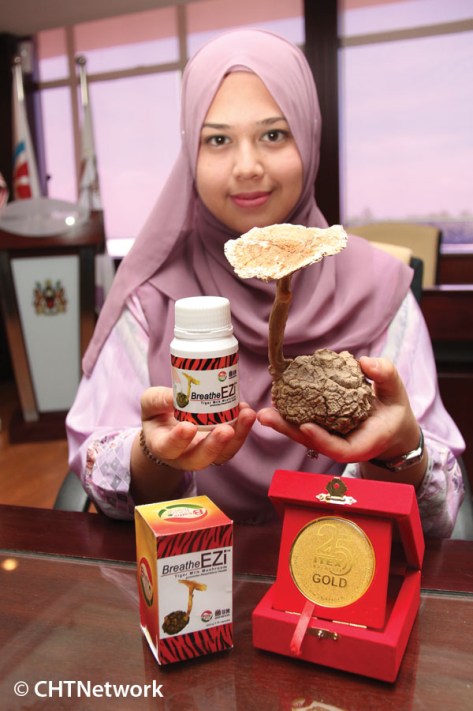
Dr Nurul Asma Abdullah, a researcher and lecturer from Universiti Sains Malaysia (USM) School of Dental Sciences, has developed a new capsule formulation from Tiger Milk Mushroom or its scientific name Lignosus Rhinocerus called BreatheEZi as a new treatment for the management of asthma.

“Tiger milk mushroom is very rare and it can only be found in the tropical forest of South East Asia. Fortunately I found a local company that cultivates this type of mushroom and this greatly aided my research as I do not need to go into the jungle to get it,” said Nurul Asma.

“BreatheEZi helps to reduce common asthma symptoms, minimize the usage of inhaler, reduce severity of asthmatic attack while promoting better respiratory health,” explained Nurul Asma.

She added that since BreatheEZi is a natural alternative for the management of asthma, it has several advantages in terms of commercialisation potential compared to the present modern medications in the market as it has less side effects, is cost-effective, easily available with the current cultivation technology and sustainably prepared.

“Asthma medications can be divided into preventers, controllers and rescuers. BreatheEZi acts as a preventer and controller but not a rescuer,” Nurul Asma said at a press conference to highlight this product that had won a gold medal during the recently concluded 25th International Invention, Innovation and Technology Exhibition (ITEX) 2014 at Kuala Lumpur Convention Centre.

“USM submitted 20 products and inventions in 23 catagories for ITEX 2014, and 19 of them won gold medals, one silver medal and three special awards from recipients of gold. USM also obtained a silver medal for the best exhibition booth design category,” said Deputy Vice-Chancellor (Research and Innovation), Professor Dr. Muhamad Jantan who chaired the press conference.

According to Nurul Asma, BreatheEZi has good commercial value especially in the international market as asthma is a global health problem that is increasingly affecting the population of many developed and developing countries who are facing unhealthy air quality due to smog pollution.

“Research on BreatheEZi is ongoing and I hope that it can still be further improved. Since this research started two years ago, a total of RM230,000 has been spent including for human capital development,” added Nurul Asma.

Fair Game? Freedom?

Resize_Bersih3_NileBowie1When Malaysia’s independence was declared in 1957, there was no rift among those from different colors, races and religion. It was a pure and sincere show of unity when our forefathers fought together in order to have a place that they could call home. It was then Malaysia for Malaysians. Cooperation was flawless.

Today so often after many years of stability, the notion of people come and go does not really apply to most Malaysian leaders, be in the politics, associations or private companies.

They are very reluctant to abdicate their positions. Many even build a family dynasty within these organizations where the children so to speak are groomed to be the crown prince and princess who will take over the throne when the time comes.

The best take in this fairy tale is that the leaders built these empires through the legacies of fighting for the benefits of the people who wished for a better future. This is how heroes were created in the olden days but in today’s modern world, heroes become leaders through a democratic election process.

Although the United Nations consistently persuades all countries to conduct a fair and free democratic election process, most election procedures are said to be free and fair but the baggage usually comes with many unpublished accounts where the losers would have strong objections of the system not being fair and not being free.

The last two Malaysia elections saw the emergence of an opposition party, Pakatan Rakyat loosely formed together by three main parties with the Democratic Action Party (DAP) seen to anchor the voice of the Chinese community whereas Parti Islam SeMalaysia (PAS) is on the other extreme, safe guarding and preaching Muslims’ sacred rights of religion and teachings.

Sandwiched in the middle is none other than the Parti Keadilan Rakyat (PKR) led by the infamous former Deputy Prime Minister, Dato’ Seri Anwar Ibrahim who was removed from office following sodomy charges.

Although not actually having the same principles on how to run a country, these three amigos do have a common enemy that is the current ruling coalition party, Barisan Nasional (BN) comprising several component parties.

BN has been around running the country for ages and is made up of a pie majority of UMNOs and the leftover remaining small pieces are shared among the Chinese, Indian and East Malaysian parties.

The acute frustration is that BN won the last election but the opposition party, PKR won the popular vote. Hence the Malaysian society that was once united 50 odd years ago now stands in a limbo of what I like to call a hot tub politics – meaning even though everyone loves being in a hot tub after a hard day’s work, not everyone is agreeable with the temperature. The best is to be the one controlling the taps. What’s new?

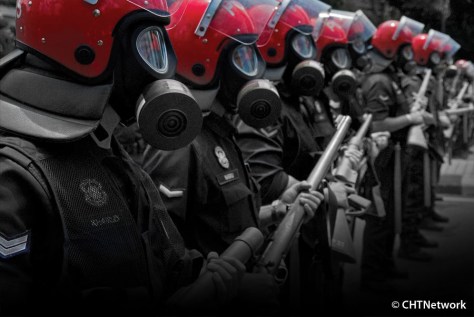
Our neighboring country Thailand has been in this hot tub politics for the past 15 years when the ruling party once led by Thaksin Shinawatra won every election, until the opposition party just took to the streets and staged mass protests that sometimes turned violent just to cripple the economy hence toppling the government.

The last demand the opposition wanted was to have an appointed government rather than an elected one simply because they cannot win but they still want to take charge. They have no doubt succeeded in destroying the economy and deterring any foreign investments but ultimately both sides were losers when the army flexed their muscles, abolished the government and took control of the country in the name of stability.

Some may say that this coup is unconstitutional but I personally have the opinion that this is best scenario the Thais have before the whole country falls into an uncontrollable and undesired unrest like that which happened or is currently happening in countries such as Syria and Egypt. Then what?

Malaysians have been pretty much controlled when it comes to violence, probably because we have been through May 13 and it was a black page in our history. Today, Malaysia has removed its controversial Internal Security Act (ISA) and demonstrations are allowed. It definitely seems that the country is slowly changing and heading to what many deem as a more democratic nation where the people have the freedom to voice out. Is this a good or bad move? Are Malaysians ready for such liberty?

I guess the main worry here is that the majority, especially the younger generations, are happy to be able to have their voice heard but what if a peaceful demonstration turns into an ugly riot? There is no doubt that all of us want a better life and most will not be satisfied with what we have today but look forward to having more tomorrow. Then some will point the finger to the powerful and rich claiming that they are not playing a fair game or to put it bluntly – corrupted or dirty.

It is always so simple to criticize others and not blame ourselves for what we are today. It is always other people’s faults and we are usually always right. Sad to say that most will only become aware of how lucky we are when the situation turns bad and the sufferings eat into their own lives and families. Only then there will be regrets as many are just mere blind followers joining in the fun of it.

Somehow it makes these people feel ‘great’ as they are doing something good for the nation although they usually know near to nothing about the cause. But there is no doubt that they act as if they know everything. At the end, the winners will only be the few smart ones leading the pack if they succeed in their so called ‘revolution’. If they fail, then the winners will be those in power as they would have crushed the uprising.

Like it or not, the losers are always the people. Worst of all is that we are the ones choosing and somehow, sometimes, some of the chosen ones just are not what we expected. Tough! That’s life!

Rome: 10 things not to miss (PART 2)

06 Pantheon

Originally Rome’s famous ‘Temple of All Gods’, the Pantheon was twice destroyed, twice rebuilt and now stands as the most complete structure in this ancient city. This wonderful example of 2nd Century Roman architecture boasts mathematical genius and simple geometric calculation that would impress todays’ modern architects. The Patheon contains the tombs of several Italian kings and Raphael, the famous Renaissance painter. This must-see site is actually not far from Piazza Navona and the Trevi Fountain.

07 Luxury Paradise

Tired of old architecture and wanting to indulge yourself with some luxury items? The few streets leading to Piazza di Spagna are where all luxury stores exist side-by-side. Italian and international brands such as Prada, Gucci, LV, Jimmy Choo, Tiffany, Versace and other big brands can be found here. The term ‘shop till you drop’ does not apply here as if you are not careful, you can end up ‘shopping till your wallet drops’! If you want to take a break from the expensive shopping experience, then the Spanish Steps is a good place for people-watching.

08 National Museum of Rome

Unlike museums in most countries, the National Museum of Rome is not situated in one location, but is made up of a set of museums located all over the city. There is actually a combo ticket that you can purchase and it is valid for a few days, enabling you to visit all its museums. These include the Baths of Diocletian, the Palazzo Altemps, the Palazzo Massimo alle Terme, and the Crypta Balbi, all for just one price! Although items exhibited are among the world’s most important archaeological collections, but these artefacts may sometimes be too much to absorb especially for those who did not pay attention in their history lessons during schooling days.

09 The Vatican City

With an area of approximately 110 acres and a population of less than 1000, Vatican City is the smallest international state in the world. The easiest way to this magnificent mega structure is to take Metro Line A, stop at Ottaviano San Pietro Musei Vaticani and then walk a few blocks. It is highly recommended to pre-purchase a ‘skip the line’ ticket, better yet, with a guide. This is because entry lines into the Vatican City are painfully long and one will just be wondering around aimlessly, especially if it is their first time. Having a guide will not only save the queuing time and make your tour interesting, but it also provides the opportunity to visit other cultural sites including Vatican Museum, the Sistine Chapel and St Peter’s Basilica. Remember to send postcards with Vatican City stamps to your friends and loved ones at the end of your visit.

_DSC3284_F10 Pizzas Pastas & Coffee

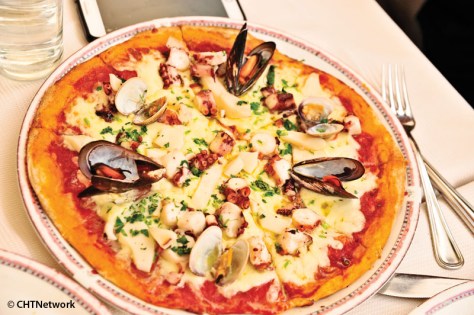
You can find pizza on just every corner in the city. One must have a bite of those hot freshly baked pizzas with golden crust and a touch of char on the edges. Other than that, pasta is the most important cuisine in Rome and to cap it off, you must relax and have a sip of Italian coffee to complete your Roman trip.   

10 Dark Secrets of Romeo & Juliet

The tale of two star-crossed lovers of English literature isn’t just a tragic romance revolving around forbidden young love. Here to let you in on the dark secrets of Romeo and Juliet, EZ brings to you the most bizarre anecdotes behind one of Shakespeare’s most famous plays. So pay close attention! Read between the lines and you’ll find many hidden aspects to the play, some outrageous and some just plain weird.

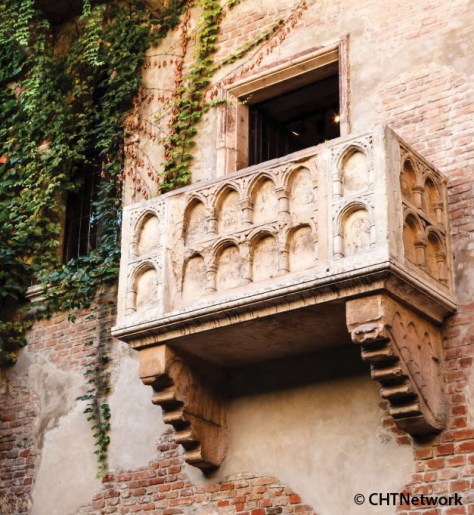
Juliets-balcony-Verona-Italy-1024x6821. Borrowed names

Shakespeare, who has been credited as the inventor of many English words and being very innovative in delivering insults was apparently not that good a name-giver. Oh, yes. He borrowed (or stole, depending on whom you ask) names from other famous tomes. Dante’s Divine Comedy is the most direct inspiration for the names of the rival families ‘Montague’ and ‘Capulet’ as they appeared side-by-side in his work. And the star-struck lovers? Luigi da Porto coined the names ‘Giulietta’ and ‘Romeo’ in his novel, which was published 65 years before Shakespeare’s play.

2. Which version do  you know?

There were not one, but three different editions of Romeo and Juliet! Now don’t go splitting hairs with production directors yet. The first edition, published in 1595 is considered a ‘bad quarto’ for errors and writing errors. Four years later, the second edition was published. This edition is the most used version of Shakespeare’s prominent play, even more popular than the third edition (1623).

3. Rage on Romeo

Psychoanalytical literary critics see Romeo’s nature as aggressive, displays ‘ill-controlled, partially disguised aggression’. You can’t disagree with that when most of the hero’s misfortunes stemmed from his spontaneity and violent reactions; killing Tybalt, eloping and committing a double-suicide with a girl he barely knew, all within a week.

4. Some critics hated the play

Back in the 17th century, prominent writers, critics and philosophers grovelled about the play and some even called it a failure for not ‘following classical rules’ of drama. Samuel Pepys, British Member of Parliament, said that ‘it is a play of itself the worst that I ever heard in my life.’

5. Bring on the sexual jokes

Page after page of the play is filled with sexual jokes. Crude euphemisms, innuendoes and double-entendres are scattered throughout the play, thanks to characters like Mercutio and Sampson. You might want to swear children off Romeo and Juliet until the inevitable.

6. Hi, we just met. Marry me?

Would you marry a person you just met? It happens in this play, as Juliet asked Romeo to prove that his love for her was honourable. So they married in less than 24 hours after they met.

7. Roller-coaster romance

Take a step back, and another look at the story of Romeo and Juliet. You’ll find that all the events in the entire play covers a short span of four to six days. Romeo and Juliet got married the day after they met and consummated their marriage before killing themselves. Well, that escalated quickly, didn’t it?

8. Pedo much?

Yes, you expected young love as the central theme for Romeo and Juliet. But for a girl to meet a boy, get married and have sex at only 13? Some girls have only barely started puberty at that age. In this day and age, Romeo would be guilty of statutory rape.

9. Romeo was bi…sexual

Would a male buddy make passing mentions about your libido? Some readings of the play have found Mercutio, Romeo’s best friend, to have a homoerotic desire for him as the borders of friendship blend into sexual love. In other words, Romeo was gay for Mercutio.

10. Just another Shakespearean theft

The beginnings of the storyline can be traced to the 1476 Italian story titled ‘Mariotto and Gianozza’ by Masuccio Salernitano. It was then adapted by another Italian a century later, then translated into French before making its way into English as a narrative poem and finally, into a play by Shakespeare. Just like how he ‘borrowed’ names, Shakespeare ‘borrowed’ the greatest love story of literature. How’s that for originality?


Next time you run out of things to say at a party, lighten up the mood by flaunting your literary side like a true Shakespearean with these niblets of trivia.

Art Basel Impresses Hong Kong

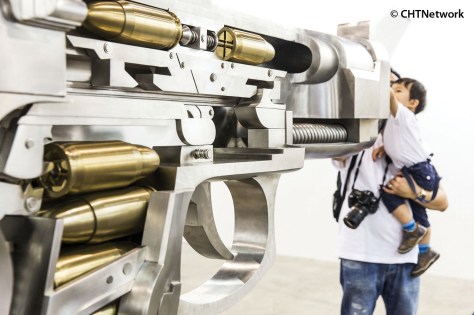
Galleries_PekinFineArts_17May2014_03121Art Basel Hong Kong’s second edition opened in dramatic fashion as Berlin-based artist Carsten Nicolai’s latest audio-visual installation ‘α (alpha) pulse’ lit up the Hong Kong skyline, setting the stage for a spectacular weekend of art for everyone.

Pulsating light patterns were projected in synchronised frequency across the entire facade of Hong Kong’s iconic 490-meter high International Commerce Centre (ICC) which also happens to be the world’s 7th highest building. Like a lighthouse the tower radiated prismatic pulses into the city, much to the awe of the island’s residents and visitors.

Visible from numerous locations across Hong Kong, the installation, which appeared each night of the fair, was also available on an accompanying mobile phone application, adding another layer of accessibility for art enthusiasts as well as the public.

The high-profile annual event which took place from May 15 – 17 at the Hong Kong Convention and Exhibition Centre (HKCEC) featured 245 premier galleries from 39 countries and territories. Among the renowned galleries that took part were Anna Schwartz Gallery, Pearl Lam Galleries, Lehmann Maupin and ShanghART.  With over 50 percent of the participating galleries having exhibition spaces in Asia and the Asia-Pacific region, Art Basel cemented its deep commitment to and success with the art community in the East.

Attracting over 65,000 visitors, the quality of the artworks brought in and the high level of presentation drew many new and returning collectors from around the world as well as curators, patrons and trustees from leading museums and institutions such as Paris’s Louvre,  Sydney’s Museum of Contemporary Art Australia, and  Washington’s Smithsonian American Art Museum.

‘We are extremely happy with how the show has gone. We have met and made sales to new clients including great connections to visitors in China, Taiwan, Hong Kong, Singapore and the Philippines. The show is as active and the same level of quality as any European or American fair,’ enthused Nicholas Nahab, Sales Director of Marian Goodman Gallery (Paris, New York).

Not exclusive to connoisseurs, Art Basel Hong Kong was also supported by a strong public programme including the Asian debut of Art Basel’s popular film sector. This 3-day programme saw the screening of 49 films by 41 artists, represented by participating galleries. Highlights of the program included works by international artists such as Takashi Ishida, Dinh Q. Le and Hong Kong artists Kwan Sheung Chi and Christopher Doyle.