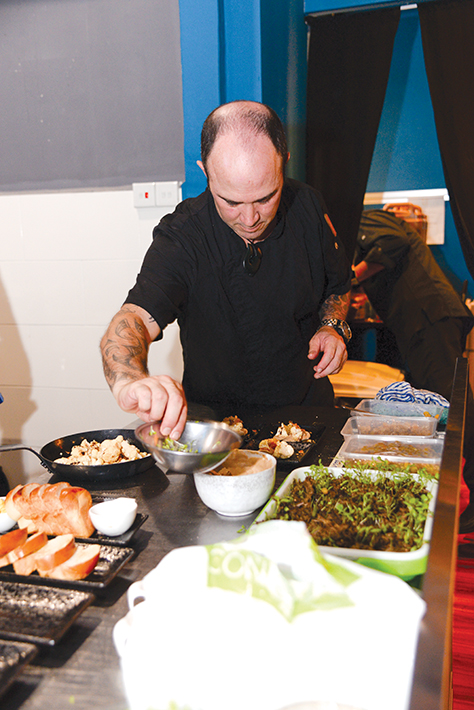
Le Venue’s Penang Guest Chef “Series 2.0” dining experience saw a three days exclusive dining experience with award winning Chef Jose Martin Ruiz Borja. The specially curated 6-course dinner brought guests on an exciting Spanish gastronomical journey paired with a fine selection of quality wine.
Celebrating its impeccable relationship with chefs globally, Malaysia’s oldest heritage name in traditional Chinese pastries and sesame oil Ghee Hiang recently unveiled its latest initiative themed ‘Chef Around The World with Ghee Hiang’. The debut program welcomed top New Zealand guest chef Craig Martin who presented his signature creations for a one night special appearance in Teels Heritage Cafe. ‘Chef Around The World with Ghee Hiang’ encourages guests to immerse themselves in an authentic and extensive New Zealand production. Two lucky guests walked away each with a Ghee Hiang premium gift set and a plaque autographed by Craig.
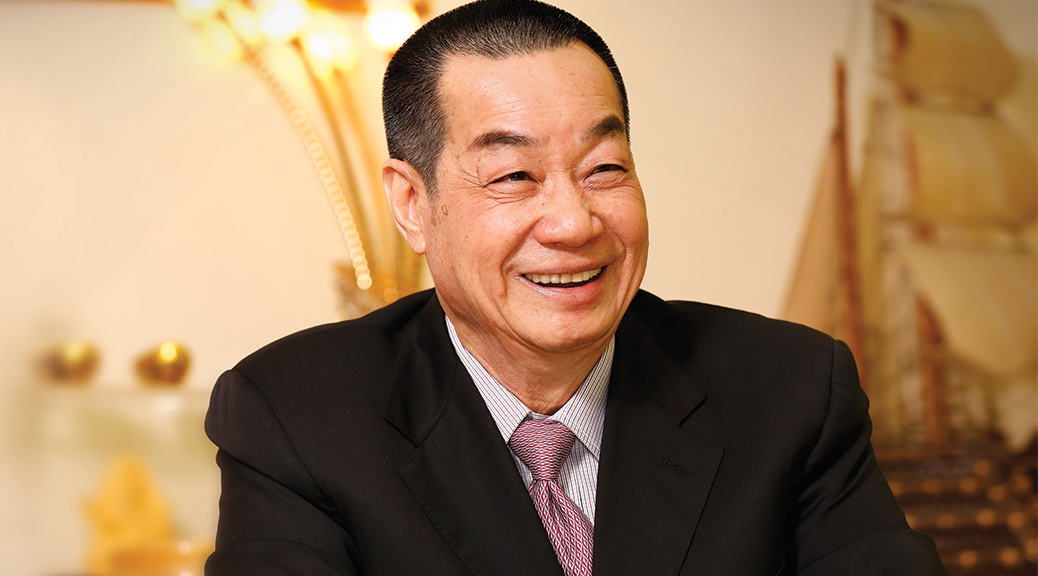
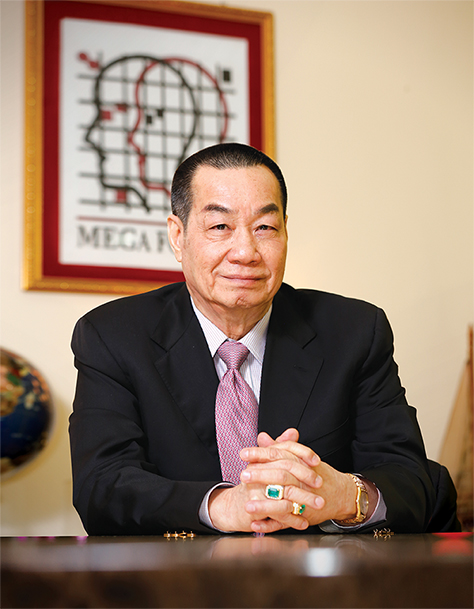
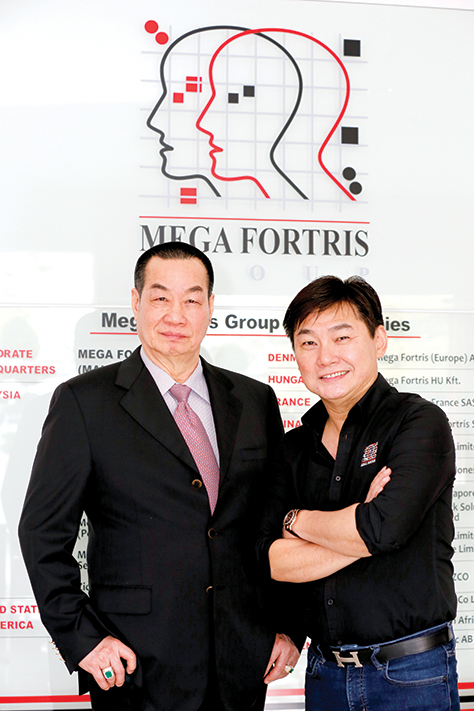
Dato’ Dr Nick Ng Founder of Mega Fortris Malaysia Sdn Bhd
The reason for our success is because we had went through a lot to get there and most important of all, we keep to our integrity and principles
Ng has always had an adventurous streak and he attributed most of his success to the adventures he had as a young man. He literally left home to see the world at the age of 18 years. With little money on hand, he took a ship to India and from there, made his way to Europe. It was a trip that formed who he is today. It taught him perseverance and a die-hard attitude. What he remembered most about that epic journey that spanned several years was how he had to suffer and starve in the beginning due to shortage of money. “I was adventurous and I was determined to make it, I don’t give up easily so no matter how much I suffered, I refused to go home, I wanted to stay on,” he said.
If one were to tell Dato’ Dr Nick Ng that he would reap huge success in selling security seals back when he was young, he would have laughed it off. Never in his imagination had he thought that his eventual success in life was from selling security seals that initially only earned him a few sen of profit per seal.
Ng had ventured into the security seal business with his brother Adrian, who is 15 years younger than him, in 1996. When he first started, he was quite sceptical of the profit as each security seal costs about 9 sen which they had to sell at 12 sen. “Yet, we had to push on, we wanted to penetrate the market,” he said.
The brothers persisted and thanks to Adrian’s sales skills, Ng said they started making it big and soon they were venturing overseas. Before long, Mega Fortris was manufacturing its own security seals and exporting it to various countries. It is now one of the leading security seal manufacturers in the world.
“I was adventurous and I was determined to make it, I don’t give up easily so no matter how much I suffered, I refused to go home, I wanted to stay on,”
Even after he came back to Malaysia, Ng found it hard to stay put in Penang. Life here was monotonous and boring so he left again and this time, he went to United Kingdom to work as a window cleaner for three years.
He came back to Malaysia from that stint and tried a few businesses which failed. This never deterred him. Instead, he pushed on with his die-hard attitude as he believed he would eventually make it.
The Ng brothers started Mega Fortris with a RM2 million debt and it was their joint hard work that led to their success today. ”The reason for our success is because we had gone through a lot to get here and most important of all, we keep to our integrity and principles,” he said.
His advice to the youths is to venture out and take risks. “I was bold enough to take risks and this was where I learned important lessons about life,” he said.
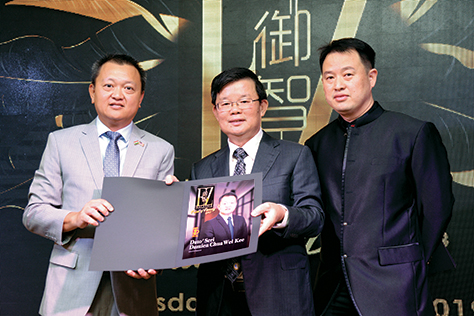
Dato’ Seri Damien Chua Wei Kee Founder and Chief Executive Officer, JD Resources
“It was not easy but each challenge that came my way, I always find ways to overcome it.”
If there is only one formula for success, it would have to be seizing an opportunity and make it work through pure grit and hard work. This was how Dato’ Seri Damien Chua went from a waiter to become the owner of 30 companies in nine countries within a span of 26 years.
It can be said that his early years as an adult striking out on his own was an invaluable lesson that taught him independence and a strong will to succeed. Coming from a middle-class family, Chua had wanted to study aeronautical engineering or chemical engineering when he finished school. Yet, aware of his parents’ financial limitations, he gave up that dream and started working various jobs to fund his own education. “Since engineering was too expensive, I chose the cheapest course – accounting,” he said. To fund his education, he did a slew of different jobs that ranged from tutoring to waitering and coaching. He worked in McDonald’s, Parkson Store as a promoter, a lifeguard, a swimming coach, a tuition teacher and a waiter in a restaurant.
He ended up working in a zinc distribution company while studying ACCA part-time. It was this job that gave him the most experience in the zinc industry. When the 1997 Asian financial crisis hit, Chua lost his job in the zinc distribution company as the company was so badly hit, it went under. Desperate for a job, he decided to apply for the accountant post in a Melbourne zinc supplier company. Instead of landing a job, he was unexpectedly appointed as an agent in Malaysia. With no other job offers, he decided to give it a try and this saw the establishment of JD Resources in 1998. “It was a challenge taking up the risk at a time when we were still facing the effects of the financial crisis but somehow, I managed to face up to it,” he said. It was not all smooth-sailing and yet for each challenge that came his way, Chua somehow managed to overcome it and came out unscathed. “It was not easy but each challenge that came my way, I always find ways to overcome it,” he added.
Today, JD Resources holds 30% market share of the zinc supplies and 55% market share of zinc alloy supplies in the Southeast Asia market. The company started out as a sole proprietorship distributing 15 to 20 tonnes of zinc products two decades ago and now, the company is large enough to be publicly listed and is distributing 12,000 to 15,000 tonnes of zinc products. “Last year, when everyone was pulling out of China due to the trade war, we were going in to set up our factory there because we wanted to tap into the China market,” he said.
Other than continuing to expand his growing business, Chua is involved in 16 non-governmental organisations (NGO) and was recently appointed as the Honorary-Consul of Hungary. He also makes sure he allocates time for his family every weekend and spends most of his free time, if any, reading at least one book each month. “I must read to continuously improve my knowledge, it is a life-long process that must never stop no matter how busy I am,” he said.
“I must read to continuously improve my knowledge, it is a life-long process that must never stop no matter how busy I am”
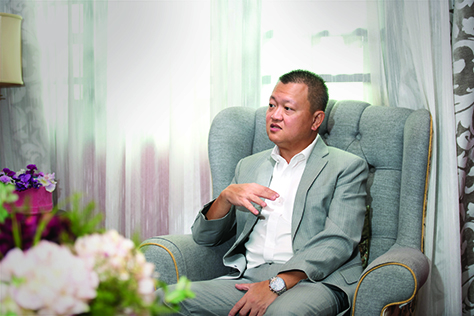
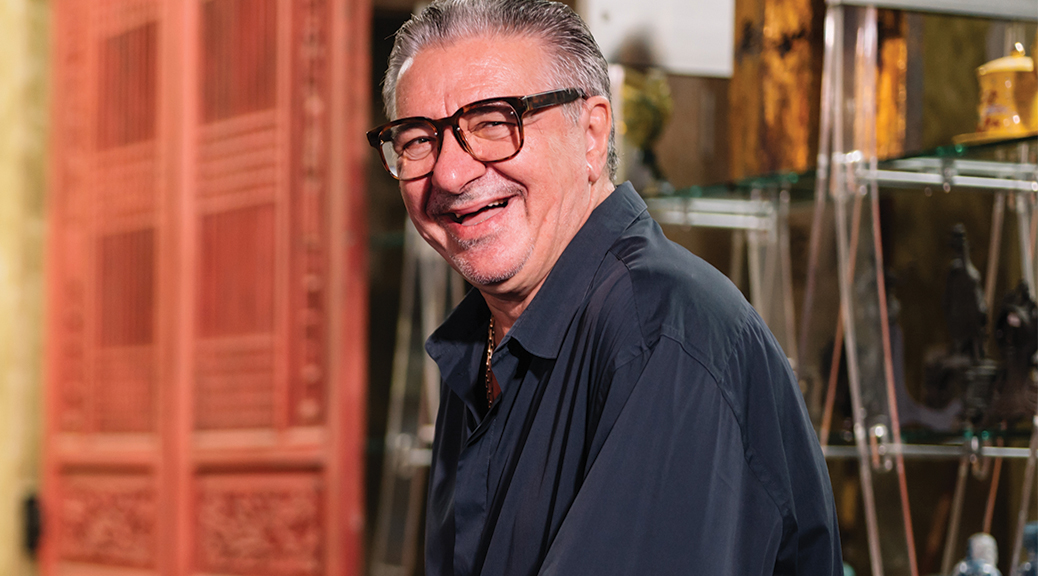
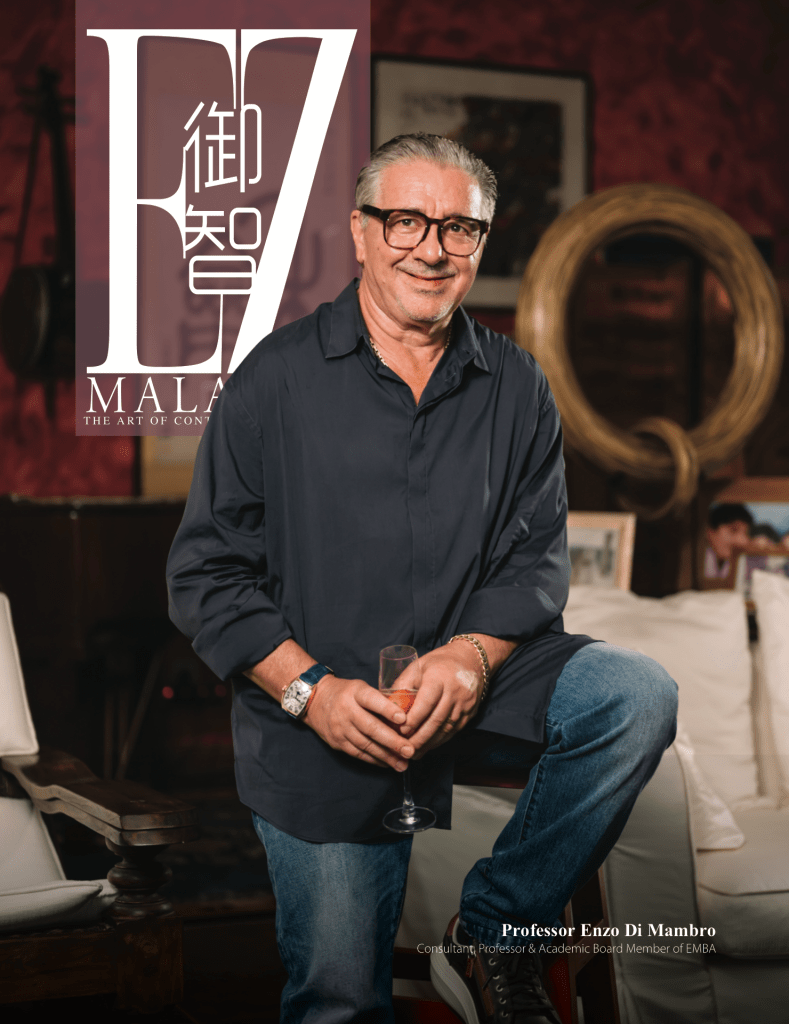
Professor Enzo Di Mambro Consultant, Professor & Academic Board Member of EMBA
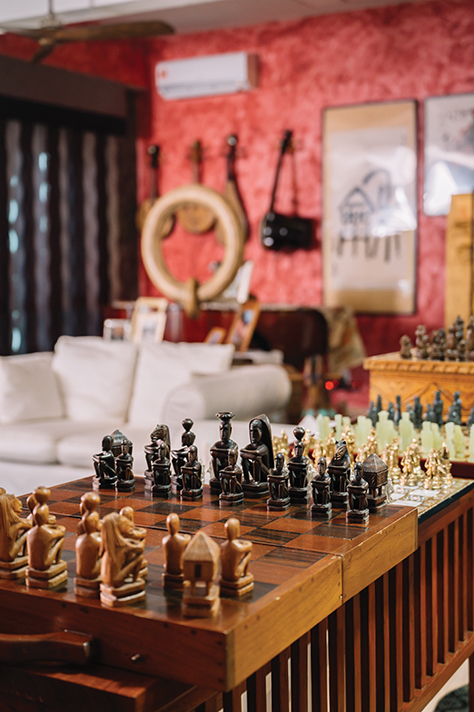
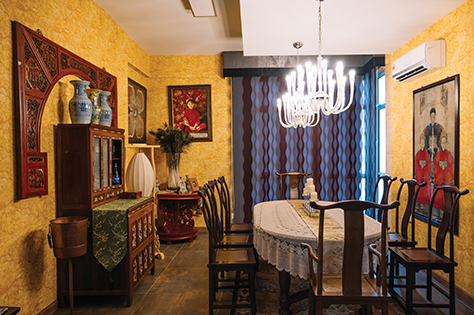
“I grew up in Rome where I was constantly surrounded by beautiful things and this was emphasised with my travels, particularly when we stayed in China because of its rich culture and people.”
Life is short, so live it to the fullest and always be happy. This has been heard so often and can even be cliche to many. Nevertheless it’s the mantra that Professor Enzo Di Mambro lives by and while life is not perfect, he certainly is happy.
The Professor of the Inner Mongolia University in Penang lives happily ever after as an expatriate in the Moonlight Bay Apartments in Batu Ferringhi very much enjoying life and living it to the fullest.
He is also the Consultant and Professor and Academic Board Member of the university’s EMBA (Executive Masters of Business Administration) programme as well as a professional chef with more than four decades in the hospitality industry.
Enzo was born in Italy, but not in a hospital or even at home. Rather, he greeted the world alongside his twin brother under a pomegranate tree in the middle of nowhere as his mother went into labour while she and her husband were traveling.
“I grew up in Rome where I was constantly surrounded by beautiful things and this was emphasised with my travels, particularly when we stayed in China because of its rich culture and people.” He loved China so much that he even married a Chinese woman but interestingly, decided to settle in Penang under the programme, Malaysia as my Second Home (MM2H).
“I am culturally successful because I believe that throughout my 63 years of life, traveling and working, I have developed worldly wisdom or a deep “knowledge” of people, how and why they behave the way they do. ”
“This decision happened years ago when some of my colleagues and I were in Perth. We had dinner and some drinks and started talking about where we want to die! So I said that I want to LIVE on a nice island, in a villa, with beautiful views and great weather. A few days later, a friend showed me an advertisement of the Moonlight Bay apartments in Penang. I did some research about Penang, then bought a unit almost immediately,” he quipped.
It wasn’t a rash and misguided decision however, as Enzo had considered other nearby islands. But Penang called to him because of its very laid back way of life – “There’s also a lot more to do here. I think Bali and Phuket are more short-term tourist destinations while Hong Kong is quite chaotic,” he said.
To him, everything about Penang is value for money from entertainment, shopping to properties. The people are warm, friendly and hospitable, the weather is warm throughout the year, food is delicious and the hospitals offer one of the greatest services among the other countries he’s been to.
“So with these reasons, Penang is my home. But the main issue is the traffic, but I think many others share the same sentiments,” he said.
You may believe that Enzo is successful as he nonchalantly refers to his luxury cars as his “toys” and owns a number of properties in other countries. But he thinks he is still “working” to achieve success. “I am culturally successful because I believe that throughout my 63 years of life, traveling and working, I have developed worldly wisdom or a deep “knowledge” of people, how and why they behave the way they do. Money is just a bonus. In fact, I’m just lucky because life has been very generous to me,” he explained.
Leadership is not a position or a title but it is about leading by example and making things happen.
Tan Lay Seong from Great Eastern is a name majority will know or at least have heard of in the Malaysia insurance industry. Coming from a poor family of eight, Lay Seong has endeavored this journey through hard work, determination and self belief. “The spirit of believing in whatever you do is very important, we cannot change where we came from but we can always decide what we want to be in the future,” said Lay Seong. Immediately after graduating from the National University Of Malaysia (UKM) in 1995, he joined the insurance industry and never looked back. 10 years later, he successfully built his own empire, won numerous awards and wrote his first book ‘The Champion Path’, documenting his life journey to encourage people to live their dreams. The book was later translated into English and subsequently sold internationally.
To date, Lay Seong’s numerous outstanding achievements include the first and only Malaysian to be selected twice for the Worldwide 500 Chinese Insurance Agency, Top 10 Outstanding Youth Malaysian Awards (Merit) and Agency Leader Of The Year 2018. When asked why investing in insurance is important, his answer was short and precise saying that this is an alternative investment to protect or at least to ease the burden of families or corporations when encountered with unfortunate business or financial stress. He firmly believes that insurance is not only a wise investment as protection, but this is also a good career path for those who have good leadership qualities with proper management systems. “Leadership is not a position or a title but it is about leading by example and making things happen, ” Lay Seong explained.
Besides insurance, this remarkable gentleman is also the National President of PUMM and the Advisor for PCCC Youth – Personal Development Bureau. This father of two loves soccer and badminton for the persistence and fighting spirit of the games.
Last but not least, Lay Seong’s principle in life is “Let us use our lives to influence others to do better!”
“The spirit of believing in whatever you do is very important, we cannot change where we came from but we can always decide what we want to be in the future.”
The Rigg Design Prize is the highest accolade for contemporary design in Australia. Hosted triennially, this prize reflects on the NGV’s dedication to the contemporary design and architectural scene in Australia. In 2018, this prestigious award was awarded to Hecker Guthrie, outstanding Melbourne design practice that has demonstated excellence in creative achievement.
Installation view of Imaginarium, 2018 The Society Inc by Sibella Court design studio Australia est. 2009 Designer Sibella Court
Ten Australian design studios working in the interior design and decoration field were shortlisted for the Rigg Design Prize 2018 with the exhibition theme as Domestic Living. This required the ten entrants in the Rigg Design Prize 2018 to demonstrate in their interior work how interior design can transcend basic functionality to become a form of communication embedded with values, ideas, attitudes and narrative.
Installation view of Take It Outside, 2018 Amber Road design studio Australia est. 2013 Designers Katy Svalbe and Yasmine Ghoniem
Installation view of Wunderkammer, 2018 Scott Weston Architecture Design design studio Australia est. 1997 Designer Scott Weston
Installation view of Inner-Terior, 2018 Danielle Brustman design studio Australia est. 2012 Designer Danielle Brustman
Installation view of We’ve boundless plains to share, 2018 Flack Studio design studio Australia est. 2014 Designer David Flack
Kneeling Archer Qin Dynasty 221–207 BCE earthenware 120.0 cm (H) Emperor Qin Shihuang’s Mausoleum Site Museum, Xi’an (2812)
The National Gallery of Victoria (NGV) presents the Melbourne Winter Master-pieces, featuring a dual presentation of past and present Chinese art and culture. Opening in May, this exhibition will bring forth this concept by exhibiting the world famous ancient Terracotta Warriors alongside a parallel display of new works by famous contemporary artist, Cai Guo-Qiang.
The Terracotta Warriors are known as the guardians of immortality and the eighth wonder of the world. This exhibition will feature eight warrior figures and two life-size horses from the Imperial Army, as well as two half-size replica bronze chariots, each drawn by four horses. ‘The Transient Landscape’ by Cai Guo-Qiang on the other hand will see new art works inspired by his home country’s culture and its enduring philosophical traditions, including a monumental installation of 10,000 suspended porcelain birds.
Cai Guo-Qiang, Qatar, 2016 Photo by Wen-You Cai, courtesy Cai Studio
These pistols are among the finest known examples of English Neoclassical-style firearms. Each stock is inlaid with engraved sheet silver and embellished with heavy cast-silver mounts. This decoration was inspired by contemporary French Empire firearms, such as those by Boutet also in the Metropolitan Museum’s collection (acc. nos. 36.58a–c, 42.50.7a–n, and 1970.179.1). Several of the motifs are based on ancient Roman sources. On the sideplate, for example, the Nereid riding a sea-leopard derives from an engraving of 1762 depicting a wall painting in the recently found ruins of Herculaneum. On the trigger guard, the oval medallion representing Hercules with a defeated Amazon is copied from a well-known antique gem. The Medusa head on the butt also derives from Classical art, but here the idealized model has been transformed into a grimacing, almost humorous caricature of the legendary gorgon.
Made by John Manton & Son (British, London 1815–1878). British, London, ca. 1815–34. The Metropolitan Museum of Art, The Collection of Giovanni P. Morosini, presented by his daughter Giulia, 1932 (32.75.138–.139)
Pair of Flintlock Pistols
The original owner of this remarkably decorated pair remains unknown, but the pistols’ opulence and French character suggests they may have belonged to George IV (1762–1830) or someone in his circle. Their gold-inlaid locks are the most lavish ever produced by John Manton’s firm during his lifetime. The carved eagle on the grip—a feature also found on a pair of the king’s pistols, made for him when he was Prince of Wales, now in the Royal Collection at Windsor Castle (Acc. no. RCIN 6166)—is here further enhanced with gold-inlaid eyes. Similarly expressive lions may be found adorning the pommels of contemporary Parisian firearms, a possible source of inspiration for the accomplished steel chiseler Manton commissioned to create the mounts for this unique pair. The mounts, which include elaborate belt hooks chiseled with swirling acanthus leaves, are unsigned.
British gunmakers of the late eighteenth and early nineteenth centuries seldom deviated from the sober style that brought them fame throughout Europe and distinguished their work from that of the Continent. But for wealthy clients, particularly the Prince of Wales, later George IV (1762–1830), they shed standard decorative patterns in favor of more ostentatious embellishments. The prince was the preeminent patron of contemporary London gunmakers from the late 1780s through the 1820s, and over his lifetime he commissioned dozens of superlative firearms for sporting, personal use, and presentation. Gunmakers enhanced select firearms and accessories for the prince by substituting silver mounts for traditional steel, adding engraved and gilt ornament to the locks and barrels, and personalizing the weapons with the royal arms and Prince of Wales feathers. But the prince’s affinity for all things French also sometimes guided the gunmakers’ decorative choices. Indeed, he built his palatial London home at Carlton House (demolished in 1827) with an eye to the French Neoclassical style and decorated it with artworks, furniture, and other accoutrements from France. The most elaborate works by royally favored gunmakers catered to this taste and achieved a graceful blend of French-inspired decoration with traditional British design and technology.
Made by James Purdey the Elder (British, London 1784–1863 Margate). British, London, ca. 1831. The Metropolitan Museum of Art, Purchase, Rogers Fund, 1935 (35.41.1–.15)
Pair of Four-Barreled Turnover Percussion Pistols of Henry Pelham Fiennes Pelham-Clinton, 4th Duke of Newcastle-under-Lyne (1785–1851), with Pair of Box-Lock Turn-Off Pocket Pistols, Case, and Accessories
Recent archival research revealed this lavish set to be one of the costliest pistol ensembles ever made by James Purdey, selling for £101 10s in 1831. Purdey made just ten four-barreled pistols in his career, and this pair is the only surviving set cased with pocket pistols. It is remarkable, too, for its exceptional state of preservation. The combination of vivid blueing, case-hardening, and finely finished wood looks much as it would have to the original owner, the fourth Duke of Newcastle-under-Lyne.
One of the most famous British aristocrats of his era, the fourth Duke of Newcastle-under-Lyne took delivery of this lavish pistol set from Purdey in April 1831. The duke purchased it for self-defense three months after being assaulted by a mob in the streets of Newark. The attack was prompted by his vigorous opposition to electoral reform, a contentious national issue that reached a boiling point in the early 1830s. Roughly six months after the duke acquired his pistols, the House of Lords rejected a new reform bill, resulting in widespread public violence. Several private residences were attacked, including the duke’s Nottingham mansion, which rioters burned to the ground on October 10, 1831. The duke was in London at the time. Weapons with a small customer base among the elite, Purdey’s four-barreled pistols show the great expense that members of the aristocracy lavished on firearms for personal protection.