Tag Archives: FEATURED

Fully Invested in Art

A successful artist …..”must be passionate about art, have some friends with the same interest, be familiar with the backgrounds of other artists and with the market value of their works.”

INTEREST in artworks as a form of investment is growing throughout the region, thanks to the wealth of indigenous talent, and the burgeoning ranks of eager collectors. But though many see it as having relatively low risk, it still helps to be knowledgeable about the industry.

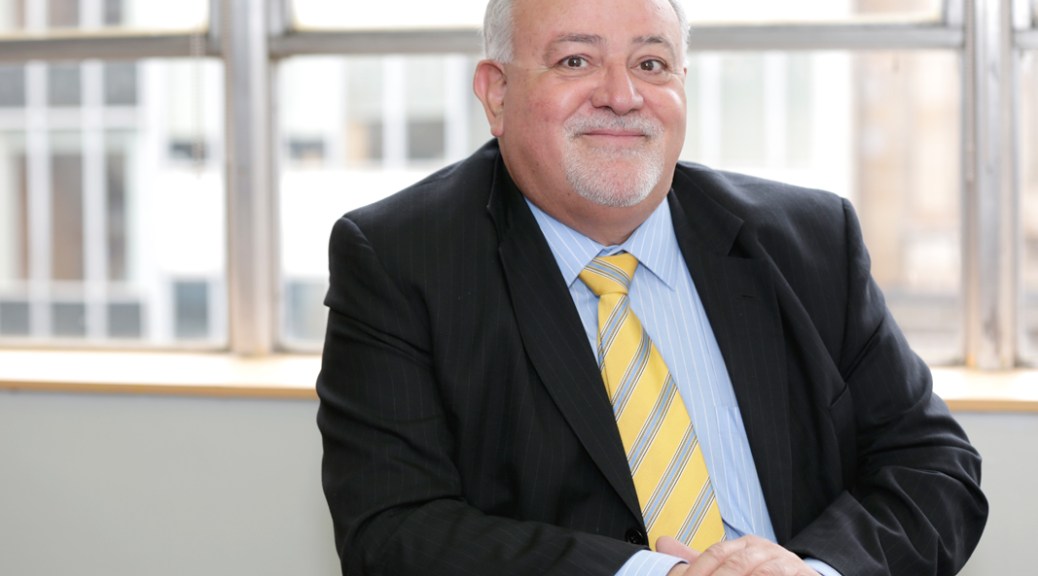
Masterpiece Auction House Managing Director Dato’ Oon Pheng Khoon believes it is vital that one is passionate about art, have some friends with the same interest, be familiar with the backgrounds of various artists, as well as the market value of their works.

Those eager to start collecting should also regularly attend art exhibitions, previews and auctions – as they provide ample lessons about the buying and selling of art, and which artists or artworks, are in demand or otherwise. And best of all, they are mostly free to attend.

“Prices of art are always fluctuating, so it helps to be familiar with the bidding process, and understand the value behind each piece. Serious collectors track artists’ backgrounds, career progression and standing within the art scene, as it influences the value of their works,” said Oon in a recent interview.

Senior artists tend to be in favour, as are those with positions in art-related fields and institutions, as they often end up painting for life. Some collectors also favour works done in certain mediums, for they last longer and degrade less over time, hence representing a more solid investment.

“Good works may be pricey, but its value appreciates. Artists who are regularly featured in auctions are a good bet, as it shows their works are constantly in demand. If you buy a piece today, and there’s someone else willing to acquire it from you immediately, then you know you’ve got a gem.

“Collecting art is as good a investment compared to traditional options like stocks, properties or commodities. It is mobile, and you can buy or sell it anywhere. Art is also a finite thing, each piece is truly one-of-a-kind, and their availability gets less and less over time.

“You hardly see the best works from prominent names on the market, because they have all been snapped up by collectors once they become available. But besides the monetary value, collecting art also means you have excellent treasures to look at everyday,” he added.

Oon, who was born in Alor Setar, Kedah, fell into art almost by chance. Educated at Keat Hwa Secondary School, he worked in the construction, shipping and transportation industries during the 1980s, followed by real estate in the 1990s.

Around that time, many in Kedah started collecting Chinese ink paintings as a hobby. Oon  followed suit and never looked back. After China opened its doors to the world in 1993, he would regularly venture there to meet renowned artists, and buy their works.

“We would read a lot of art magazines and find out who the good artists were, and then approach them. At that time it was hard for them to sell their works, so they very receptive towards our interest,” he recalled of the time when he developed a passion in buying and selling art.

Also in the 1990s, art auctions started in Singapore, and he would regularly attend to broaden his knowledge. Indonesian artists were all the rage back then, but once art auctions started in Malaysia in the 2000s, local artists soon found a great platform to promote their works and excel.

In 2005, Oon relinquished all his directorial positions at his former companies, to concentrate on the buying and selling of art. He was roped in by Masterpiece Auction House when it established its Kuala Lumpur branch in 2012, with the company holding its first auction a year later.

Five auctions later and the company had sold over 800 pieces of art worth approximately RM15million, with a take-up rate averaging close to 90%. Other auction houses are enjoying similar results, and Oon believes the industry can only get better and better.

“It has grown steadily, and the number of art collectors today has increased four or five-fold, compared to a decade ago. Many lesser known Malaysian artists have now become prominent names, as the buying power and interest amongst collectors increase.

“I feel it is my responsibility to help promote Malaysian artists, and I’m now enjoying my life doing just that,” he sums it up succinctly.

WUNDERKIND of IRON WILL

Responsible for spearheading the Victorian chapter of the Australia Malaysia Business Council and leading a landscape poised for change, Joe Perri is the face of the campaign championing bilateral trade and relations with Malaysia. Deborah Joy Peter tells his story.

The story begins over six decades ago. An obscure immigrant couple of Italian descent, whose only real chance at survival at the time, was to pick up what was left of their mangled existence after the second World War, exit their motherland, and start over in a whole new world—the forever home they would soon recognise as Australia. The man goes ahead, slogs to save a few coins, and sends them back for the woman. She then joins him in Sydney where they exchange vows before settling down in Melbourne.

PREMIUM PEDIGREE

The pair’s labours haven’t fallen on futile ground. The testament of their triumphs and tribulations are captured through a single fruit of their union—a male offspring who’d go on to become a walking legend. That human treasure is who the world today celebrates as Joe Perri, the president of the Australia Malaysia Business Council’s (AMBC) Victorian chapter. A master of ship who directs with heart and depth, his origins mark a set of footprints indelibly printed on the sands of a past bent on making history.

Holding dear beliefs, lessons, and strength of character passed down from parents who dared to dream, his remarkable trail, according to the man himself, is the sum total of a heritage rooted in sheer perseverance. “Their love, care, and guidance have stayed with me always and continue to provide me with a beacon and are the values and morals which sit at the core of my character when relating to my own wife, family, friends, and clients, and so on,” Perri notes.

DYNAMIC DOER

Although well into his fifties, he continues to look to his exemplary guardians as his ultimate source of inner zest. Smiling on the path already trodden, he’s anxious to plot the voyage that remains. It’s been 10 years since his immersion in international trade relations began. He was propositioned to use his wealth of marketing and communications expertise to assist the newly appointed national president of the AMBC at the time. Eagerly accepting, he then proceeded to join the organisation in his home base as member.

“The activities of the council, friendly nature of its members, their diverse backgrounds, and business interests in Malaysia motivated me to go beyond just being a member and led to my joining the Victorian executive team.”

Here, his skills in marketing, public relations, communications, and more were put to good use. As a result, the appointment followed his election to VP and subsequently president, three years ago. Nine years before his first AMBC commission, the marketer founded his personal venture, Joe Perri & Associates.

Picking up on that last point, his duties are divided into two streams—a commercial side where he helps businesses achieve goals through marketing and PR processes as well as a Corporate Social Responsibility (CSR) side which he commits to in a voluntary capacity as president.

CONSCIENTIOUS COMMANDER

He adds cultural understanding and appreciation are feats to tackle, and that the way forward is to have the Asian and Western ways of conducting business adjust accordingly so the best of both worlds is the ultimate outcome. Facing these hurdles won’t be a cinch, but the implications on leadership and prospect of having to flex his captain of industry is justification enough for a heightened sense of exhilaration on his part. “What an exciting time to be in business. International trade is quite frankly in overdrive,” the AMBC head quips.

It’s become increasingly clear to Perri that no country or economy can operate in isolation; every nation is now part of the global ecosystem. To maintain success and strengthen mutually-beneficial trade and investments between countries, alliances are a necessity—and more so, since Malaysia is Australia’s eighth largest trading partner. “The Malaysia-Australia Free Trade Agreement enforced in 2013 was a significant step forward and will continue to be a platform to build on with more trade between the two nations.”

Needless to say, the unified body’s greatest asset is its members; they comprise business owners with commercial operations in Malaysia and Malaysian-born expatriates in Victoria. For the reasons above, the values of AMBC Victoria, especially those CSR-related, reflect that of Perri’s own, such as service to community and country and giving back to a nation that has aided those seeking to expand their businesses and in so doing, had created jobs for countless Australian and Malaysian families.

HAPPY CAMPER

On family, Perri’s consists of his wife, Luigina, two children, Danielle and Matthew, a goldfish as well as a “spoilt cat”. The latest to join that lineage is his son’s fiancée, Juliet. Their wedding takes place in October—the festivities for which the entire household is keenly anticipating. For senior, coming home to a loving family is one of the truest blessings in life. He may be a trade specialist, but the people mentioned above aren’t anyone he’d exchange for anything else.

Adding to that list, he is just as proud to have seen the world. Speaking of going places, the wanderlust-lover recently spent a weekend away with loved ones at a small township called Metung in the beautiful Gippsland Lakes area, a four-hour drive from Melbourne. “It was literally divine.  No tourist attractions, McDonalds, theme parks, cable TV or even a decent cell phone signal. Each morning, we woke to the sound of dolphins, seals, and pelicans in the water.” Now, he can’t wait to get back in a month.

From Beads to Engines

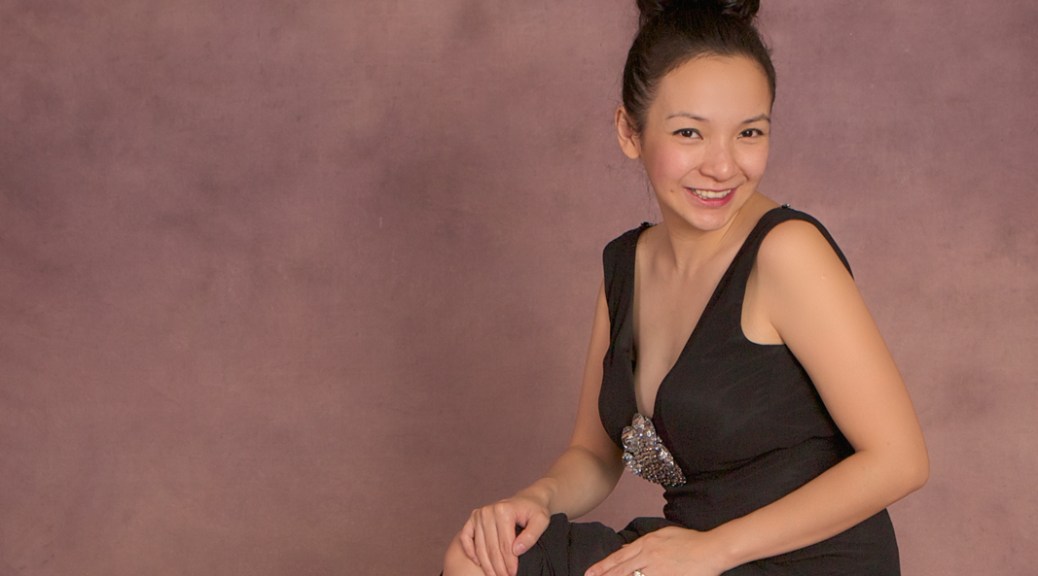
Datin Sri Joanna Lim, proudly Penang born, bred, dispatched and came back to stay, strikes one as “le femme petite”, but it doesn’t just stop there. Instead one can’t help but wonder how from dealing with beads, crystals and costume jewellery, she now is in the midst of setting up an automobile business dealing with the selling of cars and car accessories.

She made time for Essenze recently and over coffee shared some of her experiences and life lessons.

Coming from a small family, Joanna reassured her father that the family business of Syarikat Lean would continue and duly set off to enjoy what the world had to offer. Having completed her basic education she went on to Melbourne for business studies. This was a chapter in her life she had been waiting for, to savour the experience of living independently away from home.

“Perhaps it is that children always want they cannot get and in that sense we were never in want for anything” says Joanna. Her parents had set ideas as to the proper etiquette for girls. This by no means curtailed the close knit bond the family had for each other, maintained till the present.

It was during her undergraduate days in Melbourne that she met her husband , “but I only knew him as an acquaintance then and we probably only met like maybe three times while I was in Melbourne” she explains. Later when she was back in Penang they were re-introduced by mutual friends. Romance soon blossomed and they dated for nine years with the occasional “chaperoning” from Mom.

“When the fun was over and the studies completed, it was easy enough to pack and come back home and get to work”, she states. The first task at hand was to hang her father’s original business signboard – “Syarikat Lean” prominently overshadowing her own signboard – “Jo’s Accessories”.

It all started from a little corner in Dad’s shop which had the crystal display”

That little corner has transformed into a whole store known as “Jo’s Accessories” in Beach Street, Penang, Malaysia.  Jo’s Accessories specialises in a huge range of beads, crystals and various costume jewelry accessories, not forgetting the Swarovski collections as well. One can purchase custom-made accessories or just buy the various essentials to put their own ideas of costume jewellery together.

Currently Jo’s Accessories is a successful “clicks and bricks” business, combining the best of the traditional “shop premises with a doorbell”, to a presence on the World Wide Web. Joanna creates her own jewellery label for sale online.

What astonishes even more is what Joanna has in mind as part of her business expansion plans. From beads to engines! This spritely businesswoman is now laying the foundations for starting up her next business venture which takes her into the automobile industry, specifically with the selling of cars and its accessories. In the near future one can expect to see another “Jo” signboard hanging somewhere  soon!

On being a mom…

“A mom must enable her children to develop their own identity. As mothers we should ensure that the environment they grow up in is a good one. Their nutrition is a priority and we must ensure they are given healthy food and I believe that education is important. Beyond this, the character the child develops and grows into is their doing. I don’t feel that parents should take credit for it or for that matter be blamed for it either.”

She emphasises that teaching children compassion is crucial. Her face beams as she tells of how compassionate and giving her elder son is. (Her eldest son is 2 years while the second son is 11 months) “I don’t take credit for the fact at all. He was born with kindness in his genes. He is so generous with his toys and freely gives his toys away to other children he meets”

“Of what use is luxury when one can’t even sit with a peace of mind to enjoy a cup of good coffee?”

“Joanna treasures all the travels that she and her family enjoyed throughout their growing up years. “We would do so much of travelling that at times we would be travelling to three different countries within a month. There were times when I woke up and had to recall which part of the world I was in”

The most valuable lesson that all these travel experiences has taught her? “That home in Malaysia is best”

“When all is said and done, what matters the most is what you do in that moment and not where you are….. choose to be kind and compassionate and this will create a vibrations of a life well lived.”

Rome: 10 Things Not To Miss (Part 1)

Touring Rome is unlike visiting any other major city in Europe. This place, with a history of more than 2500 years, presents to visitors the  opportunity to experience an open air museum where angels and demons once ruled. One has to really like and appreciate heritage as this is a place where treasures and masterpieces of Roman art and architecture are preserved and presented proudly by the Italians. EZ has selected 10 things you should pen down when planning your tour in this ancient city.

 Part 1

01 Hop On Hop Off

Rome is unlike many modern European cities where the trains or subways are designed to directly reach important tourist attractions. This city has so many ancient architectural sites above and below ground level that the rail transportation system was built around these important sites, making sure that no heritage was damaged. As such, it is highly recommended that one should pack along a pair of good sport shoes. Furthermore if you are not travelling with a tour group, it is advisable to buy tickets and take a round trip with the Hop On Hop Off bus so that you will have a good idea and perspective of the city of Rome.

02 Colosseo (Colosseum)

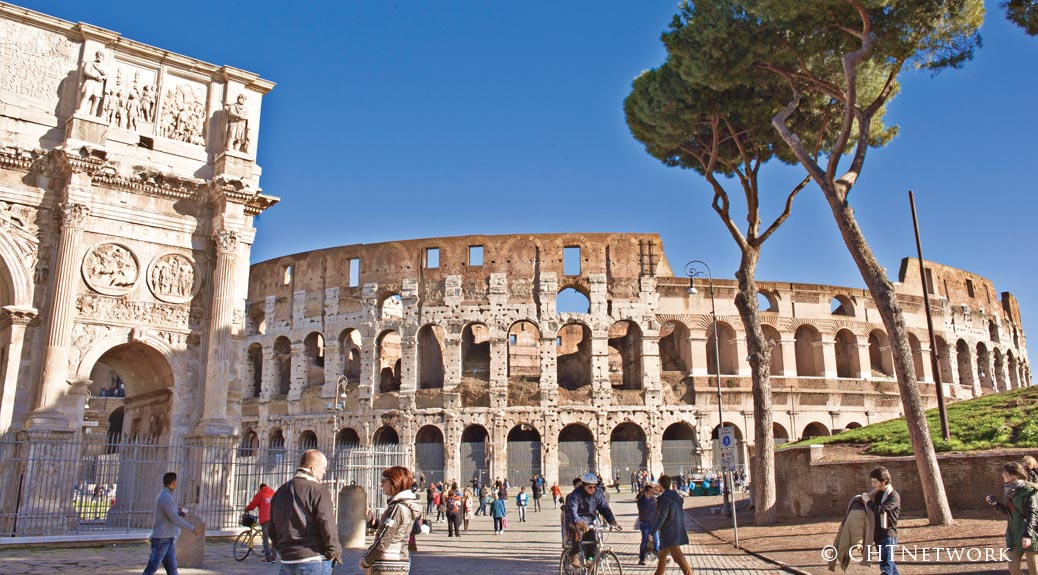
The Colosseo (Colosseum in Italian) is one of the world’s most recognised buildings. One would be hard pressed to find a larger and more glorious setting that could seat over 50,000 people to view the mass slaughters which were a form of entertainment millennia ago. This was a brutal stage on which gladiators, slaves, criminals and animals had to fight to death for the sole purpose of surviving another day. It is highly recommended to purchase a combo ticket that covers the entrance for Forum and the Palatine Hill. Moreover, it allows you to bypass the super long queue. The ticket also comes with an English speaking guide that will take you to places that are restricted if one only buys the normal ticket. Before leaving, remember to take some memory shots with the Arch of Constantine, the triumphal arch in Rome.

03 Piazza Navona

Built on the site of the 1st century AD Stadium of Domitian, this city square is the venue that was once used by ancient Romans for festivals and sporting events. Today Piazza Navona is a pedestrian’s paradise where restaurants line the perimeter and the magnificent Fountain of the Four Rivers structure grace this elongated oval. One cannot miss the church of Sant’Agnese in Agone, a 17th century baroque church that commands such fine craftsmanship, such splendour and such dedication to faith that is almost impossible to find in today’s modern world. For those who would like to bring home paintings as souvenirs, there are plenty of artists’ works on sale here.

04 The Monumento Nazionale a Vittorio Emanuele II

The Monumento Nazionale a Vittorio Emanuele IIis located just within walking distance from the Colosseum. This magnificent yet controversial white marble monument that dominates Piazza Venezia was built to pay tribute to Victor Emmanuel II, the first king of a united Italy. Within the monument, the Museo Centrale del Risorgimento is housed. This is a museum dedicated to the history of how Italy was unified. The top of the monument provides a fantastic 360º panoramic view of Rome.

05 Trevi Fountain

If you like to meet The God of the Sea and do not mind squeezing with other admirers, then the Trevi Fountain would be the place to be. As tradition has it, you will supposedly return to Rome if you throw a coin over your opposite shoulder with your back facing the fountain. While this makes for a fun little activity, there is an annoying side to it – there are just too many people snapping, videoing and repeating the same ritual of tossing over and over again! However, the atmosphere of the jostling crowd and the magnificent presentation of the majestic Neptune riding a shell-shaped chariot with two seahorses are simply breath-taking. If things get a little overwhelming, an Italian Gelato might just do the trick.

Stay tune for the next issue of EZ to find out more exciting things to do in Rome.

Breaking Limits

Infiniti Red Bull just warmed up their engines

Two days before April breezed in, there was a tempest of roaring engines and adrenaline brewing at the Malaysian Grand Prix. But the thunder of engines and clouds of exhaust at the Sepang circuit couldn’t catch up with the lightning speed of the racecars. EZ leaps into the fray for a taste of the action-packed pit lane with Infiniti Red Bull.

Infiniti goes beyond its recognition as crafter of innovative luxury cars, carrying its legacy of cutting-edge engineering into the fray at Formula One. The luxury carmaker joins forces with Red Bull Racing, the winning team of the 2013 World Constructors’ Championship, to form Team Infiniti Red Bull. Together, they battle against other motorsport giants Ferrari and Mercedes in a fight for the podium.

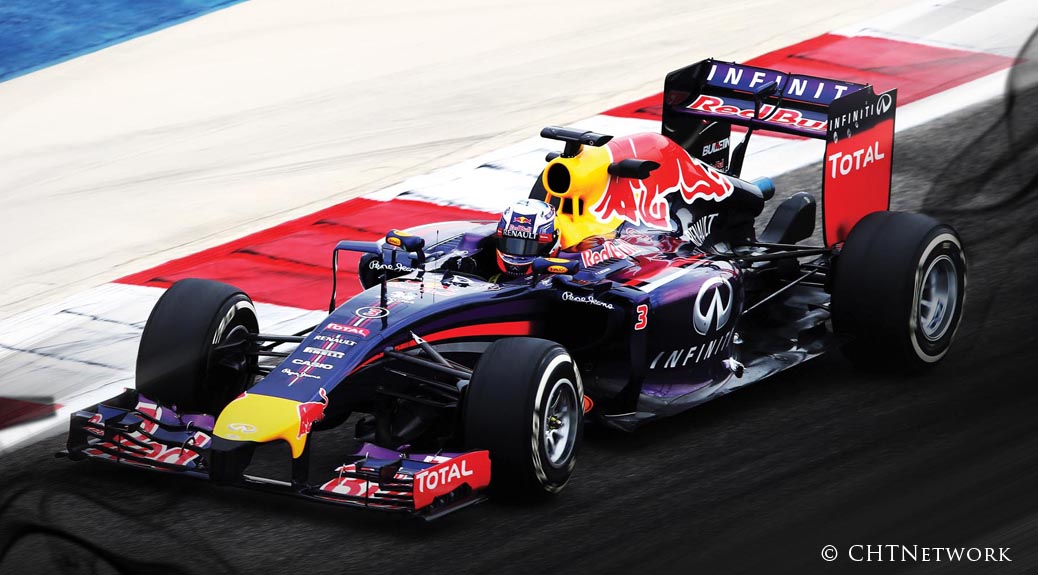
New rules beckoned the new season with a storm, sending all teams plunging into the unknown with a fresh challenge: reduce fuel consumption by almost 40 percent without concessions on speed and power. What sounded like an impossible feat was made reality, and Infiniti Red Bull Racing can lay claim to that with the latest Red Bull RB10. Born of form and function, the trusty steed brought Sebastian Vettel to the podium at Sepang with a third-place win. The man behind the steering wheel has nothing but accolades for the lean mean machine.

‘It’s good to see that the car is quick,’ Sebastian acknowledged, ‘The guys are pushing back in the factory – it’s been a massive job from them.’ And no wonder, for every inch of Infiniti Red Bull’s RB10 is a technological breakthrough in itself. Like a heart is to the human body, at its core is the engine which treads a delicate balance between being lightweight, compact yet viciously strong. Infiniti sponsors the vital organ that mobilizes the mean machine: the new electrified V6 turbo that takes the cake for being the most stressed component of the car. Comprising of up to six separate elements, it is so complex in itself that engineers of Infiniti Red Bull don’t call it an engine but a power unit instead.

The sleek combustion engine of the V6 is paired with Energy Recovery Systems (ERS) that bump up the mileage. The ERS absorb energy lost through heat and braking, and translate that energy into driving the turbo even after braking. This is a crucial necessity that drastically downsizes fuel  consumption to comply with race regulations. Yet, in no way does this feature detract from the power and speed of Infiniti Red Bull’s RB10. The power unit is more than capable of pumping out 750 hp per litre of fuel, which could rip the skin off your face if you are flying at full speed without a visor! With that much horsepower, the V6 is righteously as loud as a stampede of galloping horses as it tears up the track with a mighty roar.

However, Infiniti Red Bull cannot afford to rest on their laurels after a podium win because it’s always a game of playing catch-up with the Goliaths. ‘We knew that we had some ground to catch up to the Mercedes, so to finish as close as Sebastian did today was a really positive performance and, while we know we’ve got a lot of work to do, we can begin to realize the scale of our challenge,’ said Christian Horner, Team Principal of Infiniti Red Bull Racing. Vettel, too, shared similar sentiments with him, saying, ‘We still have a lot of work to do with the car, but it was encouraging to see that our pace was better than expected.’ Nevertheless, Horner and the Infiniti Red Bull Racing Team agree that the RB10’s win at the Malaysian Grand Prix was ‘an incredible performance.’

A Belle and Her Dreams

It is a story right out of a fairy tale; a girl dreams of making it big, chases her dreams and builds a fantasyland that makes other girls’ dreams come true! In a journey of self-realisation and exploration, one Penang-lass makes it to the big league with her large dreams and bold ideas. For this issue of EZ, we talked to Anne Lee, the bridal industry maverick and fairy godmother to a host of brides and brides-to-be.

When Malaysian king of badminton and world champion Datuk Lee Chong Wei decided to tie the knot with his sweetheart, former Malaysian badminton singles player, Datin Wong Mew Choo, only the best would do for the special occasion. He and his now-wife turned to Anovia Bridal, more specifically Anne to capture and immortalise the couple’s love.

To Anne, this celebrity wedding was the most outstanding one that she has been involved in and goes down as one of her most memorable projects. ‘There are a lot of celebrity weddings, but there’s only one Datuk Lee Chong Wei, and I’m proud to have had the opportunity and ability to handle his wedding,’ said Anne when met at her latest bridal boutique, Obsidian in Penang.

‘He is one of the world’s top badminton players and he makes Malaysia proud. He even asked to visit Anovia and have a look at the chapel. That made me feel very proud because before that, he already had his wedding photos taken at Sepang. He was training there, and therefore he couldn’t come to my place in Penang. But at the very last minute, Datuk Lee suddenly said that he wanted to come to Penang. ‘I want to go to Penang to take photos, your shop is very nice,’ he said.’

‘There are a lot of celebrity weddings, but there’s only one Datuk Lee Chong Wei, and I’m proud to have the opportunity and ability to handle his wedding.’

– Anne Lee, Managing Director of Anovia Bridal and Obsidian Production Studio

Long before Anne’s Anovia Bridal captured the attention of Malaysia’s golden boy, the bridal house was already generating positive buzz not only within Malaysia, but also overseas. Housed in a sprawling heritage mansion with an immaculate garden adorned with angelic sculptures, Anovia Bridal has a celestial wedding chapel built on its grounds where love-struck couples can pledge their love and seal their marriage.

The idea for Anovia Bridal came at a time when Anne had decided to take a break from the bridal industry, which she was involved in for almost two decades as a wedding gown designer, a sales person, a bridal house supervisor and then as a bridal house manager. Knowing the ins-and-outs of the industry and having worked with top bridal houses in Singapore, Kuala Lumpur and Penang had prepared her to build and run her own business in the bridal industry.

Invited by her friend to view a property, which used to house the famous Penang establishment, Bagan Bar, Anne was reluctant at first. This would however change the moment she entered the mansion. ‘When I reached Bagan, I don’t know why but I immediately felt a connection to the place. I could visualize so many changes to the place; this is where I could have my reception, and there would be the gown department, and I kept talking and talking about my ideas,’ recalled Anne, saying that it was almost akin to a ‘love at first sight’ with the mansion.

That deliberate maneuver by her friend was successful in reigniting within Anne the passion for the bridal industry. ‘From then on, my dream started once more. I wanted this, I wanted that, I wanted a chapel; I didn’t want this tree… I talked a lot with the designers to create and realize my own dream bridal house. When I first entered this area, the premises were derelict and unkempt. It was like a jungle, with trees here and there. But it had such a big compound that I could make a dream wedding house of my own,’ she said.

Any visitors to Anovia would feel like they are entering a surreal world, one that is magical and serene. The concept of this bridal house is very clear and tactical, and it is all credited to Anne’s vision. ‘Last time, my dreams and ideas were restricted by my superiors. But now that I had a place of my own, I could let my creativity run loose. I could have what I wanted at Anovia, like the statue, decorations, everything which was from my heart. I created a feeling that was welcoming, and with every step you take in Anovia, a story unfolds in your mind. We can feel it inside, in ourselves. That’s what I visualized, that every step is a moment of its own with a different scenery and perspective playing out in the mind of every visitor,’ explained Anne on her concept.

Having established Anovia Bridal in 2011 and receiving rave reviews and accolades for her celestial bridal concept, Anne has unveiled another exciting concept this year. Obsidian, which is right next door to Anovia Bridal, is like the hip, younger sister complete with its exposed brick walls, obsidian black ceilings and glam wedding gowns.

‘Obsidian’s concept is completely different from Anovia’s. It is urban, contemporary and bold – a different way to present a wedding. It appeals more to the young generation. Another thing is I think that in the whole of Malaysia, you’ve never seen a bridal house with a black or grey ceiling. It’s a very strong colour, and it’s such a bold concept that I had to spend a few months mulling it over,’ said Anne.

Introducing such a novel concept to an already saturated industry could be daunting, something that was certainly not lost on Anne. She had to ensure that the concept was not just a superficial one that was contemporary in its aesthetics but one that was daring to create new trends within the bridal industry. ‘One of the main products we offer here in Obsidian is short film productions. Out of the whole of Malaysia, this is the only bridal house with its own screening theatre. We create short bridal videos, and hold previews as well as screenings for the customers to present the finished product to their family and friends,’ said Anne.

‘In my opinion, photos capture memories without sound and movement. Many years after the photos are taken, they still evoke nostalgia but we can only make simple statements while looking at them. However, videos and short films are different. We create short bridal films because a marriage doesn’t concern just two people; it involves the joining of two families and their worlds. Only a short film can capture the worlds of the bride and the groom. So, one day, when the customer watches the short film of their wedding, he or she can listen to the voices of loved ones and relive the moment.’

Another key aspect of Obsidian’s short film concept is its technical and creative crew, which Anne assures are all professionals – both from the bridal industry and international film industry. ‘When a customer signs up for the short film package with us, we create a story for them. We prepare a script, a director, art director, producer … basically everything for the customer. Obsidian has invested in an overseas movie crew, and so we have a team of specialists whose expertise lies in making short-film movies,’ she said, ‘You can make a short film with your girlfriend, or a short movie with your friends. That means this service is not restricted to just newlyweds or engaged couples. This is Obsidian’s new challenge for the market. This is our new plan for the millennium.’

With Anne realizing her own dreams and ideas, what she has done is give this generation a channel to make their own dreams come true and to capture it for all eternity.

When East Meets West

In 2011, a new art event took place that would, over the next four years, change the position of Singapore within the Asia Pacific art industry. The very first edition Art Stage Singapore was held at Marina Bay Sands and each year since, the event has attracted worldwide attention. At the 2014 edition of the art fair, the team from EZ had the privilege to sit down for a chat with the man behind Art Stage Singapore, Lorenzo Rudolf. We discussed how the art fair has grown and its relation to the Southeast Asian and global art market in general.

Lorenzo Rudolf is a prominent figure in the art world. Long before he headed east and brought a much needed breath of fresh air and vigor to the Southeast Asian art world, Rudolf was at the helm of the world’s most recognised and lauded art fair for the modern and contemporary – Art Basel. From 1991 to 2000, he led Art Basel as its director.

This Bern, Switzerland native has always been surrounded by art, not surprisingly. ‘It started all in the house of my parents who were art lovers and culture lovers. I grew up in a place at the time which was probably one of the most interesting moments in the history of contemporary art,’ said Rudolf during the interview on the last day of Art Stage Singapore 2014.

‘Exactly at this time the Kunsthalle Bern was directed by a guy who was at his time considered crazy but he was the one who really opened the doors for contemporary art as the conceptual thing with his very famous exhibition, When Attitudes Become Form. I was once standing in front of his museum in Bern and saw this museum was packed; it was the first time I crossed a packed building,’ he said. The ‘crazy’ curator was none other than the controversial Harald Szeemann, said to be the most important curator of the post-World War II period.

‘So I was probably also lucky to grow up at the right time, at the right place. In that context I made my career start as an artist myself and then realizing that there were better artists than me, and coming to the point, maybe I can bring together my professional background with my passion to organize events – that’s the way how we’re doing it, and I became director of Art Basel, and from there, step by step it continued,’ he said.

After his long tenure with Art Basel, Rudolf traveled around the world setting up various other fairs, namely the Frankfurt Book Fair and the International Fine Arts Exposition in Palm Beach. In 2007, he headed to China to launch the ShContemporary art fair in Shanghai. ‘The first country in Asia which really became important in the international arts was China, and that had a lot to do also with Swiss, maybe. The first big gallery in China, it was a Swiss who opened it and is still today the biggest gallery,’ explained Rudolf on the Swiss-China art connection. Incidentally, it was also the great Harald Szeemann who would be instrumental in bringing Chinese art to the international art world.

However, Rudolf’s fascination with Asian art had started long before his move to the East with the first piece of art work from Asia that he had collected during his time at Art Basel. ‘The first few pieces I bought were in the early 90s, which were brought over to Europe through these people,’ he said. It would seem coincidental that the bridging of Southeast Asian art and the global art world would be paved by yet another Swiss.

As he became involved with Asian art during his stint at SH Contemporary, Rudolf’s interest for it deepened. It was his first big show in Asia and China at that time was experiencing a huge boom, quite rightly an exciting time of growth for the art world. Inspired by the buzz around him, Rudolf felt the urge to do something in Asia, particularly Southeast Asia. ‘I fell more and more in love with this region because I think Southeast Asia has incredible creativity, and it’s not only a creativity which is trying to fulfill certain Western criteria of contemporary art, but has its own character and identity,’ he said. And that was how the seed for Art Stage Singapore was planted.

‘That’s also the reason why I decided to come to Singapore and do this show here. The show, which is a platform for the entire Southeast Asia, brings (the countries) together and in exchange, at the same time, opening a window to the West,’ he said about the concept behind Art Stage Singapore. 2014 marked the fourth edition of Rudolf’s grand visionary plan of a world-class art fair based in this oft-overlooked part of the world, and the mark Art Stage Singapore has made on the overall art market of this region is not just highly visible, but also profound.

‘I think today we are at a situation where we have a momentum all over the world for Southeast Asia. There was never a curiosity and interest in Southeast Asian art as today; that has surely to do also with the phenomenon here. I’m glad we can help Southeast Asia to go out, to become a part of this global art world, to integrate Southeast Asia in this global context. That’s why, at the end, I’m happy that we can contribute,’ he said.

‘I think today we are at a situation where we have a momentum all over the world for Southeast Asia. There was never a curiosity and interest in Southeast Asian art as today …’

Southeast Asia is comprised of diverse art scenes; each of the nations in the region has their own distinct art scenes that have their own unique microcosms. To bring them together as how Rudolf has done with the Southeast Asia Platform at the 2014 edition of Art Stage Singapore is quite a novel concept, to say the least. The discourse between the different member countries makes for a rather fascinating study. ‘I think what is important in the Southeast Asian context is when its different countries and art scenes begin to interact with each other – not only the Indonesians among the Indonesians, Malaysians with Malaysians, Thais amongst Thais. I think it is important to have this exchange,’ Rudolf explained.

‘Contemporary art is a global language; it is an expression which has to be understood everywhere. A good art piece done by a Malaysian artist is understood in New York as well as in Jakarta. A good art piece done by an Italian artist is understood in Singapore as well as in Tokyo. That’s what you have to create here. I think for that, this place here is ideal, because Southeast Asia is quite a big region. There are a lot of interesting artists, but not a lot of infrastructure. Here we have the infrastructure. Here we can build up the bridge to the West, to the world, to everybody,’ he said, making a point for the suitability of Singapore as a hub for the region, ‘And that at the end is what we do.’

This year, to coincide with Art Stage Singapore, the Singapore Art Week was held with numerous art-related events strewn all across the island nation. There were also a number of auctions held, capitalizing on the congregation of the movers-and-shakers of the art world in Singapore for the week. When asked his take on the cluttering of so many art events at the same time, Rudolf commented, ‘Every medal has two sides, I think. On the one side, it’s good to have a lot of things around and not only one event because it attracts a lot of people. On the other side, it’s clear the more you have things around that people spend money on, the more it spreads left and right.’

‘Contemporary art is a global language; it is an expression which has to be understood everywhere. A good art piece done by a Malaysian artist is understood in New York as well as in Jakarta.’

However, seeing that collectors are a discerning bunch in general, and some might be collecting art for the sake of investment, the presence of many art auctions and sales also mean that they have a wider selection to choose from. ‘They concentrate their purchases where they really want, where they find the best,’ said Rudolf, adding that this translates to the different players in the art scene trying to do their best to outdo the other. ‘The more you have around, you always have to try to be the best and then you can be sure people come here to sell and buy.’

‘It’s proof that Southeast Asia and Singapore is moving, it’s developing. If that was not the case also, nothing would happen. So in other words, all in all, I think it’s great but it has to be (coordinated) a bit. Only then can we have a round and sound result as something without any concept behind it would help nobody’, he said on the activities surrounding Art Stage Singapore 2014, ‘If really a lot of events are complementing each other to create something new, great! It’s fine.’ Seeing the success of Art Stage Singapore 2014 and the various art-related activities that Rudolf’s brainchild has inspired, it all bodes good news for the development of the Southeast Asian art world.

A Mandate for Art

For many years, Dato’ Mahadzir Lokman spoke to the people of Malaysia from their television sets. As a television presenter and host of numerous Malaysian events, his deep and booming voice became accompanied some of the nation’s most high-profile events including the successful 1998 Commonwealth Games, the launching of Malaysia’s space mission in Russia and Kazakhstan, and the annual Merdeka Parades.

Affectionately known as Dale, this multi-talented impresario spent the last few years acting as an ambassador of sorts, promoting Malaysia on the international platform such as the Malaysia Week celebrations in London and the World’s Fair in Seville. However, 2013/2014 sees Dale take on a different role as the ambassador of Malaysian art through his appointment as the Chairman of the National Visual Arts Development Board (NVADP) and the National Visual Arts Gallery Malaysia (NVAG).

The National Visual Arts Gallery, formerly known as the National Art Gallery was established in 1958. It was established to promote awareness and appreciation for the arts among Malaysians. The Gallery holds exhibits of local and international artists as well as organizes seminars, workshops, art competitions and other art-related activities. In its permanent collection, the Gallery holds over 2,500 artworks.

‘I was appointed on the 1st of November 2013, and the Minister of Tourism and Culture, the Honourable Dato’ Seri Mohamed Nazri Bin Abdul Aziz, gave me the mandate of heading this 55-year-old establishment, the former National Art Gallery. I thank him for his trust in me, to head this prestigious organisation and also to upkeep and the preservation of our rich cultural heritage and national treasure. My job is to maintain these mandates and so here I am, heading this organization,’ said the personable Dale when interviewed by EZ.

Dale, the son of the late Dato’ Lokman Musa, former Malaysian ambassador to France, has always had a penchant for art even though he confesses to not being an artist or a collector, for that matter. ‘Art was something that I appreciated very much, and with all my travels when I was small,’ said Dale, adding that his stint in France gave him ‘a real, big exposure to all the wonderful, magnificent art galleries.’

In retrospect, Dale confesses to not ever for once thinking he would one day end up holding a prominent role in the Malaysian art scene. Not even through his passion for music, which he has not pursued professionally. Dale, who has at times serenaded his audience with his singing, is an avid classical music lover. ‘I play the cello, the piano and the trombone, and I was not at all forced by my parents as it was my choice,’ he said on his musical inclinations.

Moreover, during his undergraduate days in the US, this International Business Administration graduate from Ohio University in Athens, Ohio, had a formal introduction to the fine arts through the elective course he took. ‘In university, being an American graduate, we had little activities so I did a lot of art history and comparative art courses,’ he said. He considers his appointment as the chairman of NVAD a blessing, adding that he wants ‘to do well and visit more art museums and galleries around the world and improve our art industry because now, art is not just art, but art economy and art tourism.’

Just as every project that he has attached his name to, the responsibility of leading NVADB is something that he takes seriously and he hopes to bring the board as well as the overall Malaysian art scene to another level. Over the past 55 years since the establishment of NVADB, Malaysian art has made some important strides. ‘We have our names including Datuk Syed Ahmad Jamal, Abdul Latiff Mohidin, Datuk Ibrahim Hussein and many more. But it’s not as well-known,’ said Dale when asked to comment on the state of Malaysian art in general, ‘I don’t understand why our artists never manage to be in the fold of many other international artists.’

However, he does make concession for the latest developments on the local art front, especially in terms of government support. ‘Art is very lucrative, but I think now since the advent of 1Malaysia Contemporary Art Tourism, that art, especially in these last ten years to be exact, has become very ‘lucrative’ because art was supposed to be elitist at one time but now, art can be appreciated by anyone in the social structure.’

Expounding on the economics of art in terms of its value, this head of the nation’s foremost art institution thinks the recent developments in the local art scene is healthy. One development in particular bodes good news for the Malaysian art scene that is the setting up of auction houses in the country. In the last four years, four auction houses have been established here, namely Henry Butcher Art Auctioneer, KL Lifestyle Art Space Art Auction, Masterpiece Auction and The Edge Auction.

‘The presence of auction houses is good for Malaysia, for the region and for the local artists. I think Malaysian artists can go very far because their work is now being recognized with the advent of all the auction houses now as compared to before,’ said Dale.

In the past, art in Malaysia was considered as the anak yatim, or orphan, not receiving much support from outside the art circle and been relegated to the lower rungs of the government’s priorities. Yet, the tide has changed with the active participation of the government in promoting art on a larger platform. ‘This anak yatim will completely go forward and be accepted in the main line in the family. He cannot be tersingkir anymore. He cannot be left alone, and live his ‘own little life’ in the corner, and be cocooned because art now is not like art before,’ explained Dale, adding that this is all the more true now since Malaysian art has shown the potential of being very lucrative.

‘Art in Malaysia has to go for a complete turnaround. It was once upon a time something that was very strong, (Malaysia was) a hub for Southeast Asia. Now maybe we have to lead in our own way,’ said Dale. Indeed, at one point in time, Malaysian art enjoyed prominence in the region, but over time, it fizzled down. Neighbouring countries, especially Indonesia, emerged as the new leaders in Southeast Asian art, leading many to claim that Malaysia is a jaguh kampong when it comes to art.

In regards to this matter, Dale said ‘That was maybe so, but during that time we never had to push. The Ministry of Culture then was subtly going away with art as it was very conservative then. But now, I think, with the present ministerial support, we hope that his strong interest in art and also my strong interest in art would see a complete turnaround. We have to work. There’s no such thing as it’s too late to achieve what we have not achieved until now, which is just 55 years of the establishment of the National Art Gallery.’

The way forward, he added, is to ‘have continued dialogues with the local artists and hear their ideas. Either we accept it or we could compromise and go towards the middle of the road and try to improve. We cannot be selfish in our approach of appreciating art and also our approach to make sure that the art will get developed as it should be at 55 years.’

One way, he said, to create a conducive environment for the propagation of the national arts is by getting the people involved. ‘I have asked the National Visual Arts Gallery people to start formulating symposiums, bookshops and also conferences to involve all the artists from Southeast Asia, to make sure that our voices are being heard as compared to all the other artists from the world. If we do not have this unity-in-diversity approach to the whole thing, we would always be left behind and Malaysia will be always in tertiary or secondary compared to the other ASEAN brothers.’

To get to that level, the entire artistic community of Malaysia needs to get on board with the agenda to advance Malaysian art. ‘I want the art industry to grow, and I need help from a lot of people, from all the artist groups in the country present in the country,’ emphasized Dale. Concerted effort is vital for the growth or anything, more so a national art agenda, and the artistic community in Malaysia are quite fragmented. This might pose a threat should NVADB want to work towards increasing the Malaysian art profile internationally and also for Malaysian art to be a strong and have an identity of its own. So how can a united artistic community working for towards a common goal be cultivated?

‘We have to do a deep study that is why dialogues, symposiums and workshops are a must. It’s a need for the young breeds. We have a lot of artists, developing now from so many schools, from the art schools, from the colleges coming up – so many artists but what kind of artists that you like them to be? Are they creators or are they doing art for the money? Or are they doing art themselves and beautify the walls? Are they just graffiti artists? So, we need different kinds of dialogues to understand the whole thing, and how to improve our system. We have 55 years in this business and yet, we are not at par with the people practicing art around the world,’ he explained.

Meanwhile, for the immediate future, Dale said that it is important to bridge the gap between the people and NVAG, mainly to cultivate the interest for the arts. ‘For NVAG, my aim is to increase the accessibility of the Gallery and also to encourage more visitors as far as we can,’ he said. As for the long term, Dale said he hopes ‘to encourage more rapport and cooperation with other international art galleries around the world – for them to have their shows here.’

With the success of the 1Malaysia Contemporary Tourism Festival and the rise of the local art and auction markets, the future of Malaysian art is looking bright. And hearing Dale’s plans for NVADB and NVAG to systematically strengthen the local art community and to raise the standards of Malaysian art is heartening. His closing remarks to EZ captured his zeal for the mandate that has been bestowed upon him; ‘We hope to do a fantastic biennale, triennials organised properly in Malaysia, and I hope we can all fly together to achieve greater heights for everybody. Not just for art lovers, for ‘lovers’ of the Gallery and lovers of anything to do with it because in art, there is beauty and beauty is art.’

A MATTER OF PRECISION

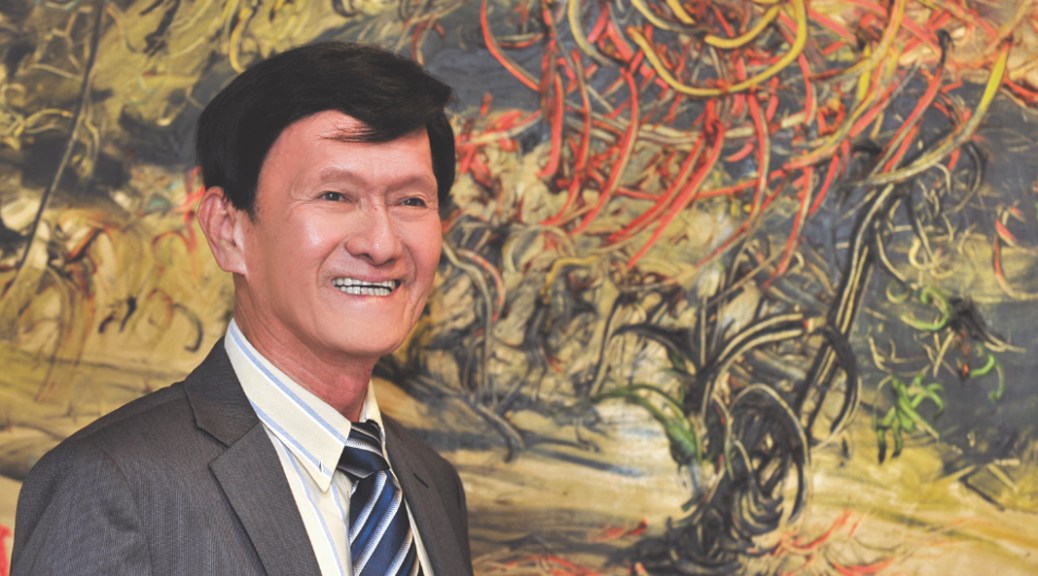
Over 30 years ago in the idyllic Penang town of Air Itam, a Chinese physician who loved to tinker with his toolbox came up with a brilliant idea. With a passion for mechanical inventions and a fascination with machinery, the late Dato’ Teh Ah Ba did the unconventional; he opened a workshop, Eng Hardware Electrical, behind his clinic in 1974. The workshop produced jigs and fixtures. Today, that workshop has grown to become of Malaysia’s leading homegrown producer of precision tooling for the semiconductor industry – the ENGTEK Group.

A journey that is as remarkable as it is inspiring; the evolution of Eng Hardware Electrical to ENGTEK Group is one of calculated precision. The late 1980’s saw the company opening a 40,000 sq ft plant in the Bayan Lepas Industrial Zone and venturing into actuator production for the hard disk drive industry. It was also during this time that ENGTEK’s investment holding company, Eng Teknologi Holdings Bhd (ETHB), was set up.

In 1993, ETHB debuted on the Bursa Malaysia Second Board. Since then, ENGTEK has set spread its reach to outside of Malaysia, setting up plants in the Philippines and Thailand, as well as forging strategic alliances with Singapore’s Altum Precision, making it the Group’s first regional acquisition. ENGTEK celebrated its 30th anniversary in 2004 and is today the leading manufacturer and supplier of electrical components in South East Asia.

Despite its rapid expansion, ENGTEK has remained a family business, run by the core members of the late Dato’ Teh’s family. At the helm of the group is Dato’ Teh Yong Khoon (YK Teh), the late Dato’ Teh’s son, who is the CEO of ENGTEK. In an interview with EZ, YK Teh said that he growing up under his father’s tutelage prepared him to lead the company in the direction that his father would have been proud of. ‘I would say that I have enjoyed the life growing up with him. I really respect him in many, many ways and he brought me up as a good technical man. It also gave me a lot of opportunity to learn together from him,’ said YK Teh.

YK Teh’s proclivity towards the engineering and mechanical field was clearly one that was in part cultivated from young and the other matched by an interest that was sparked by being exposed to his father’s business. ‘I have always been very involved in the technical aspect of the business, rather than corporate planning or anything else – it is the technical part like research into process improvement and research in new product development to fulfill the customer’s needs. It always triggers me, you know, like a really huge hobby, trying to perfect or improve a product,’ he said.

ENGTEK, which was transferred to the Main Board of Bursa Malaysia Securities Berhad in 1999, recently underwent the process of privatization. The move to privatize, said YK Teh, is one of the best decisions the Group has made thus far. ‘Having it listed, I guess we had the ego of trying to expand, and then going into listed status 20 years ago which is in 1993. We did a good job, I must say, for the last 20 years. We did not have any funds or sourcing from the listed market, so in actual fact we’ve been putting in quite of a lot of dividends public after the listing process.’

‘At the same time, the last thing that we do see here is that we are in an industry that needs a huge transformation. We do believe that we need a change and the change could be dangerous or risky for our shareholders. So we see which change is best and do it ourselves. If it’s going to be positive, we can have the company listed again in the future. If it’s negative, then we’ll shoulder all the risk. Now, will this be better for the family? I must say that it will definitely be better for the family because we are all committed for this change that we want. So long-term wise, I think it is still very good for us to go in and to take the company private, which has already been one year. We are setting the footprint on going forward into other industries which are still focused in precision engineering,’ said YK Teh.

ENGTEK’s success in not only growing to become a multinational but also to withstand the downturn in Penang’s electronic sector and thrive is remarkable. Some may even say that Penang’s electronic industry is a sunset industry. To this, YK Teh said, ‘Well if you take Penang as a sunset industry for electronic sectors, I won’t say that it is 100 percent true statement. If you look at it in terms of labour cost or the ‘Made in China’ or the greater China side of it or if you talk about Thailand, Malaysia has still been one of the best in terms of engineering and the talent supply versus others, although we cannot be like same as China, because of the huge gap between our and their labour force.’

Penang, he said, has continued to support a sizable electronic industry with some of the businesses growing bigger and some graduating from manufacturing low-cost products to developing high value products. There are electronic manufacturing services companies in Penang that manufacture components for diverse high-tech fields such as aerospace, compute  ‘They’re getting products that are much higher value, products that need a lot more talent as compared to before, and I think that you can see that there are a lot more engineers that are involved at this particular point. So, about the electronics industry actually being a sunset industry and going away, I don’t believe so,’ commented YK Teh.

For ENGTEK to have weathered the storm and expand its business beyond the borders of Malaysia, the level of commitment from the leadership of the company to the unity of the management had been strong. This must have been particularly tricky seeing that YK Teh was dealing with family members, which can be stressful. There is even a saying in this part of the world that family businesses normally cannot survive past the second or third generation, and in response to this, he shared, ‘I think it is mainly dependent on the support from other family members and their involvements, be it in terms of conflicts or not, whether are they really supportive. So if the family is supportive, then I would say that it is not hard to run the company at all.’

With ENGTEK, he said the company does hire professionals to fill certain posts seeing that the Teh family is not big enough to fill all the seats within the company. This practice, he said, is prevalent in many other Chinese family businesses in this region. ‘I don’t think they will go with the tradition where every member of the family has to come to work in the company, or the son or whomever has to be at the helmship of the CEO, or the No. 1 post,’ he added.

Being entrusted with the responsibility of continuing his father’s legacy, we asked YK Teh if being in such a position was hard. ‘No, not hard at all,’ he answered, adding that his family is very supportive of one another and him. Besides the support system provided by his family, YK Teh said that having a right balance in life and time management was key to stability. ‘You have to have the time; you got to have your own time to do activities other than work. To me, time is how you decide, how you allocate. So if you just work, I would say, even if you work 24 hours, seven days a week, it will still be the same as when you work 8-to-5, go home, enjoy life and then come back. In fact, you will be even more effective when you take a break. Activities with family and activities by yourself, I believe, there always needs to be a balance in terms of life and not work alone.’

But then again, being a CEO of a thriving group such as ENGTEK is bound to have a toll, which YK Teh agreed. ‘You are still at the higher end in terms of stress as compared to others,’ he said, ‘But that doesn’t mean that you can totally de-stress.’ De-stressing, for YK Teh involves personal time and time with family and friends. An avid golfer, he enjoys playing golf with his golfing buddies. As for family time, he is just like every other Malaysian who loves food. ‘Going on trips with my family, it’s always a good thing to do for family bonding. One of the things to like to do together is eat. Sometimes we take trips, ‘makan’ trips,’ he said, with a twinkle in his eyes.

Mandarin Oriental Hong Kong Turns 50

Once hailed as ‘one of the eleven great hotels in the world’, Mandarin Oriental, Hong Kong evokes the grandeur and class of an era long past. Today, the iconic hotel is a sterling example of the world-renowned Oriental heritage and hospitality and it stands at the epitome of contemporary luxury.

Interesting facts about Mandarin Oriental, Hong Kong

• It was the very first hotel in Asia to have a bath in every guestroom

• It was the tallest building in Hong Kong upon its completion in 1963

• The hotel almost always makes an appearance in international best hotels lists

Celebrating its 50th anniversary in October 2013, Mandarin Oriental, Hong Kong saw the likes of international superstars, dignitaries and society guests come together to toast the grand dame. Among the VIPs at the glamorous gala were Dame Helen Mirren, Maggie Cheung, Bryan Ferry, Vivienne Tam, and Karen Mok.

‘This iconic hotel has long been in the heart and hearts of the Hong Kong people, and we are delighted that so many guests could join us to celebrate this momentous occasion,’ said Jonas Schuermann, Mandarin Oriental, Hong Kong’s General Manager and Area Vice President of Operations.