Category Archives: Mind Philosophy

Shining the spotlight on the creative realm of the sublimely artistic and bringing the latest and breaking news from the art world

ART TAIPEI

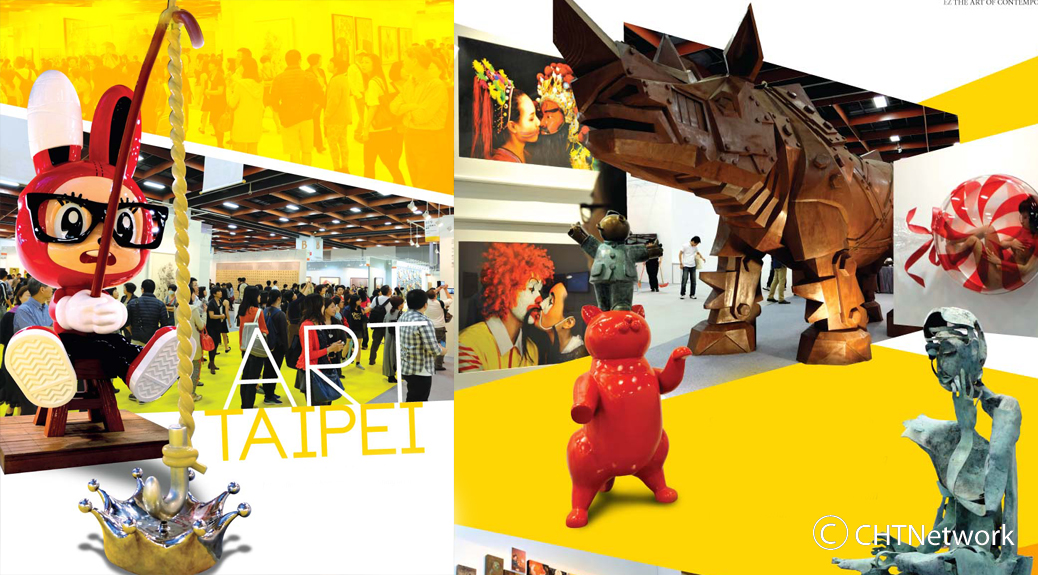
Art Taipei, formerly known as Taipei Art Fair International, has been the longest running art fair in Asia for the past 21 years. This year, Art Taipei 2014 was a success, in that, 145 galleries from 115 countries and more than 500 artists with over 3,000 quality works participated in this momentous art event.

Some of the world’s names in art such as Picasso, Dali, Chagall, Zao Wou-ki, Yayoi Kusama, Ai Wei-Wei, Liu Kuo-sung and many more were present along with other up-and-coming artists from around the world.

MALAYSIA in Taipei

Malaysian art received an encouraging reception at the Art Taipei 2014. Meanwhile, Khairudin Zainul’s works represented by G13 were sold out, thanks to Richard Koh’s group who never disappoints. Also, Ch’ng Huck Theng’s ‘Dragon l’ bronze sculpture was sold by Taiwan representing gallery, ArtDoor.

PICTURES to Pills

Japanese multinational photography and imaging company Fujifilm develops drug to fight Ebola

World-renowned Japanese photography and imaging company Fujifilm, made headlines when they announced their latest discovery in August this year. Many would have expected it to be the unveiling of their latest high-tech camera or photography equipment but on the contrary, the discovery was a new drug, Favipiravir, to aid in combating the deadly Ebola virus.

Toyama Chemicals, a subsidiary company of Fujifilm, is credited with making this discovery. Takao Aoki, a Fujifilm representative stated that since Ebola and influenza viruses are similar, theoretically the same effects could be expected on Ebola. The Japanese government has approved the drug to be used against Ebola but the efficacy of the drug is yet to be tested on either monkeys or humans. Favipiravir is currently in clinical test in United States with the Food and Drug Administration (FDA) and discussion on its usage on Ebola patients is still on going.

One might wonder on the reasons for Fujifilm to venture into a totally different field but the flexibility of the highly reputable Japanese company is set to benefit them in a number of ways. It is only a matter of time before Fujifilm starts to milk profits from its diversification. Since the announcement, their shares went up to 8.83% and with the majority of the Japanese population aged 50 and above, the pharmaceutical sector is expected to see continued growth.

Instead of competing within one’s market, Fujifilm took the more challenging route of developing new products and businesses. Mr Shigetaka Komori, CEO of Fujifilm commented on their expansion, saying, “We have more pockets and drawers in our company”. Fujifilm’s diversified business now carries a range of products from different markets such as anti aging cream, medicine, dietary supplies, cosmetics, radiography film and equipment as well as mammography appliances.

Many other multinationals have also started to be proactive by expanding into different markets. Sony, which is often associated with electronic goods have begun to cater to the demands of medical science with their new cell analysis device used in cancer and stem cell research. Similarly, Panasonic, one of the largest Japanese electronic producers, has also tried its hand at medical machinery with its brainchild, a robot called HOSPI. That transports medicine from one place to another within the hospital. Taking this a step further, Japanese multinational and engineering company, Toshiba opened their own hospital in central Tokyo equipped with its own brand of machinery and equipments.

SOLD OUT LITTLE PRINCESS A BIG HIT AT ‘FOUL’ EXHIBITION

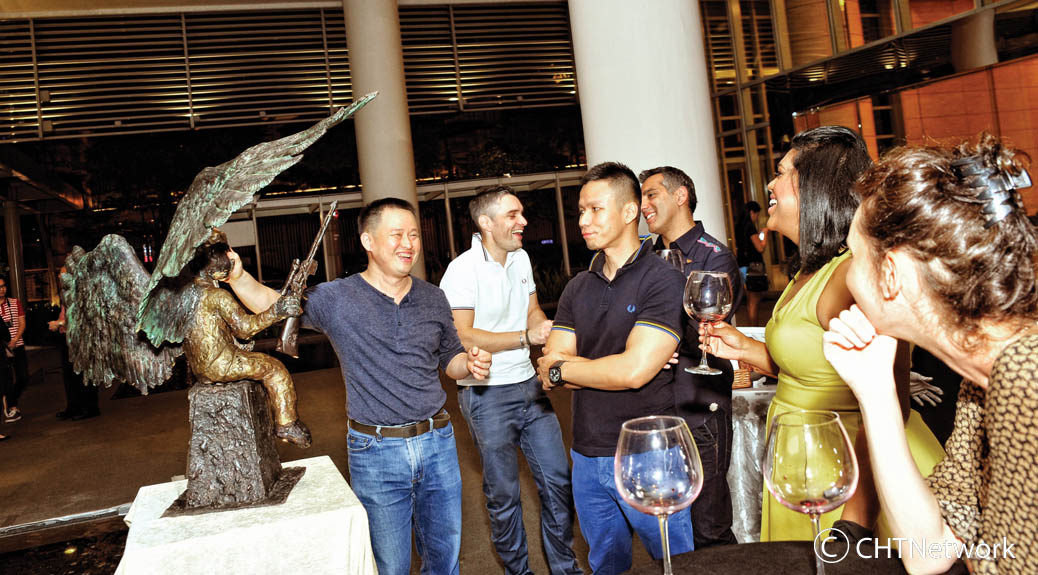
It was another record-breaking evening at PINKGUY as the limited 8 pieces ‘Little Princess’ sculpture by Ch’ng Huck Theng, sold out during the opening night. 

Every parent knows the bittersweet emotion that is part and parcel of raising children and it is no different with artist Ch’ng Huck Theng whose Little Princess sculpture, a personal tribute to his own daughter, struck a sentimental chord with guests and was sold out within hours at the opening soiree.

The successful opening was officiated by Dato’ Mahadzir Lokman the Chairman of the National Visual Arts Development Board and attended by a select guest list of art collectors, experts and friends.

The bronze figure depicting a child-woman standing erect with an almost regal demeanor marks the artist’s own journey of fatherhood from the birth of his little princess to watching her grow up into a confident and independent young lady. No doubt it is a journey that many of the attending guests could relate with, making them eager to own a work of art that best epitomizes this personal emotion.

The event which took place at PINKGUY Gallery on Saturday, 23rd August 2014 was the first solo bronze exhibition by Ch’ng Huck Theng. Presenting 15 bronze works which were displayed over the water feature which graces the lobby of Marc Residences, “FOUL” introduced a new perspective to the concept of identity in which the question of race, religion, nationality and ethnicity is deliberately left out.

Those attending the event were also privileged to witness the unveiling of Ch’ng’s latest work ‘Princess Liberty’ in which the bronze figure of a woman riding a horse raises the question of whether there is freedom in anonymity. Other pieces that were bought that evening include ‘Anak Malaysia’ a set of three figures representing the three main races of Malaysia, and ‘Checkmate’, the artist’s interpretation of a chess board.

Tracing the legacy of batik sarong

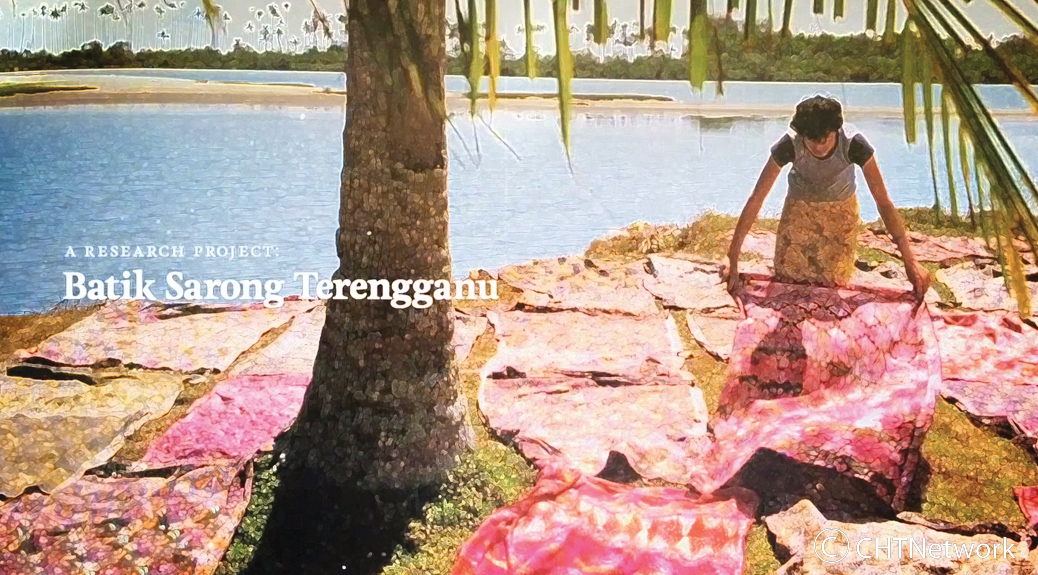
Batik is one of the most popular of Malaysian crafts, yet so much can still be discovered about its history and development. Adline A. Ghani shares about a unique research project spearheaded by none other than Raja Datin Paduka Fuziah Raja Tun Uda, fondly known as Mak Engku, a woman who has dedicated her life to the development and promotion of Malaysian arts and crafts. 

Images Courtesy of the Batik Terengganu research team

Throughout her illustrious career, which began in the 1960s, Raja Fuziah has held several esteemed titles, including the first Director General of the Malaysian Handicraft Development Corporation (MHDC), President of the World Craft Council (WCC) Asia Pacific Region (which she currently serves as a board member) and Deputy Director General of the Research Centre for Islamic History, Art and Culture in Istanbul (IRCICA).

Though she must have been busy raising a family, while breaking new ground and blazing trails for women in the industry, Raja Fuziah also took the time to organise and curate many exhibitions, publish numerous essays and lend her support and expertise to the local and international arts and crafts community. It came as no surprise, therefore, that she was chosen to receive the prestigious National Art Award 2008 for the Promotion of the Arts (Individual Category) by the Malaysian government.

Having published her book Batik Malaysia Design and Innovation 1960s – 1990s two years ago, Raja Fuziah is not quite ready to rest on her laurels. Instead, she has set out to delve further into Malaysian batik with her latest endeavour, Batik Sarong Terengganu – A Research Project.

The Project

The Batik Sarong Terengganu research project aims to compile and provide a comprehensive database on the batik sarong of Terengganu. It will chart the history and origins of batik sarong, how it was made and traded, as well as who were involved in developing the industry, how they were involved and what is happening to the batik sarong industry today.

The culmination of this project will be marked by the publication of a book entitled Batik Sarong Malaysia: Heritage of Today for Tomorrow, authored by Raja Fuziah, which is meant to serve as a reference for future generations of art researchers and enthusiasts.

Due to the scale of the project, Raja Fuziah is assisted by Erna Dyanty Mad Daluis, who has worked in the art industry for more than a decade. Erna, who also holds a Master’s In Art Management, serves the project as a coordinator and assistant researcher. In addition, she has helped the project tap into the power of social media, using platforms such as Facebook, Tumblr and YouTube to spread the word and raise the funds necessary for them to embark on research and documentation, as well as publish their findings.

The full cost required for the project is RM100,00.00, which will also be utilised to develop a batik archive, support their innovation and creative platform programme, as well as organise an exhibition and educational programmes.

The aim, as always, is to bring attention to the urgency of preserving Malaysian batik sarong. The exhibition and hands-on workshops, which will be held in Kuala Lumpur, are planned for December 2014. With enough funds, it would be possible for the team to transfer the knowledge into a digital format and have it available online for everyone around the world.

The Innovation and Creative Platform

With the knowledge and insight gained through this research project, Raja Fuziah envisions the establishment of the Innovative and Creative Platform, which seeks to merge the skills of traditional batik craftsmen and young Malaysian designers.  This merger is hoped to promote the transfer and sharing of knowledge between these two skills sets, in an effort to preserve our cultural heritage and the Easy Coast’s cottage industry.

The product of this merger will be materialised in limited-edition batik sarongs, which will also be turned into items like pouches and bags. As such, the Batik Sarong Terengganu Research Project is collaborating with local creative brand timitimitonga, also known as TiMi. Created by young Malaysian talent, Fariza Azlina Isahak, TiMi produces beautifully-handcrafted batik totes made out of limited-edition batik prints.

As Raja Fuziah and Erna embark on their batik adventure, they urge fellow Malaysians, cultural heritage advocates and anyone who has a love for art to join them in preserving something now for our future. As Erna eloquently states, “Everyone can be part of an innovative and creative project that serves to preserve a national cultural heritage.”

TIES THAT BIND THROUGH ART

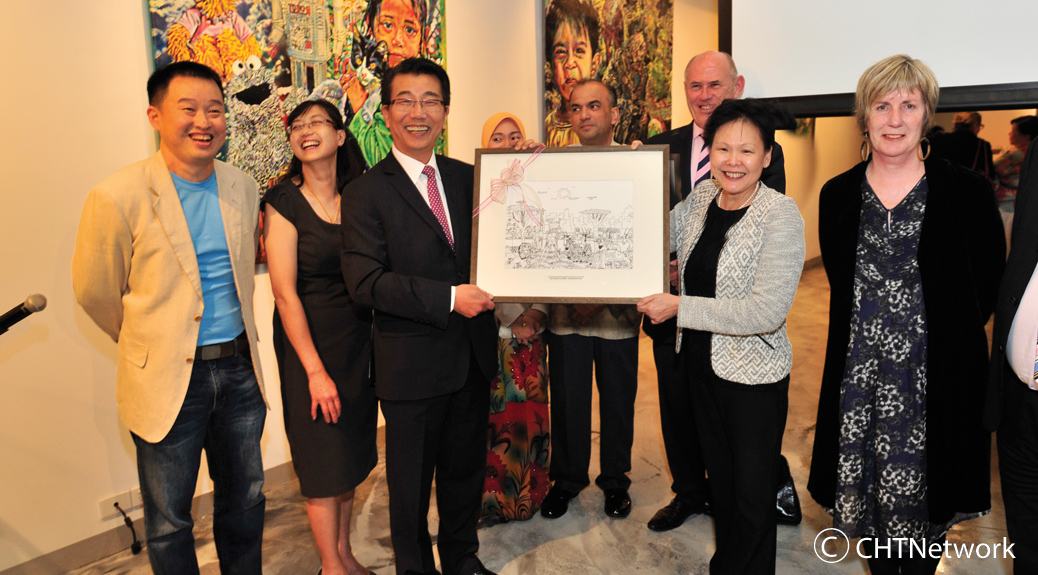
More than 250 art lovers and collectors attended the official opening of the second edition of “ARTS KL – Melbourne”. The event which was officiated by Malaysian-born Melbourne City Councillor Ken Ong and MATRADE Chief Executive Officer Datuk Dr Wong Lai Sum took place at the newly opened gallery, SpACE @ Collins, 278 Collins Street on 6th October.

In an effort to widen the base of exports, MATRADE is now also focusing on the promotion of soft exports, which includes design and arts as a means of boosting trade between the two countries.

During her opening speech, Wong said it was heartening to witness a thriving art scene in Malaysia and it was encouraging to see Malaysian art appreciated overseas. “The exposure of our art last year has resulted in widespread awareness, generating greater demand for works by contemporary artists from Malaysia,” she said. “Many of our artists have been invited to take part in international art exhibitions and art auctions.”

Joe Perri, President of the Australia Malaysia Business Council Victoria also noted that art and culture were equally important contributors to economic wellbeing. “It is definitely an export opportunity and a contributor to Malaysian GDP and overseas bilateral trade success.”

Featuring works by the late Ho Khay Beng and Khaw Sia, Fendy Zakri, Haffendi Anuar, Hasanul Isyraf Idris, Ismail Awi, Khairul Arshad, Lim Anuar, Raja Norzlipah Raja Ahmad, Rozana Mohamed, Yeoh Choo Kuan, Zaim Durulaman, photographer Layzhoz Yeap and 11-year-old Delwin Cheah the artworks were carefully selected based on market suitability. As part of MATRADE’s “business with a heart” initiative, the exhibition also carried the works of the handicap which received good response.

Asian contemporary artist Ch’ng Huck Theng who resumed his curatorial duties for the second year running pointed out the importance of the public being able to relate to the art by understanding its origins rather than merely admiring techniques and finished pieces.

Fair Game? Freedom?

Resize_Bersih3_NileBowie1When Malaysia’s independence was declared in 1957, there was no rift among those from different colors, races and religion. It was a pure and sincere show of unity when our forefathers fought together in order to have a place that they could call home. It was then Malaysia for Malaysians. Cooperation was flawless.
Today so often after many years of stability, the notion of people come and go does not really apply to most Malaysian leaders, be in the politics, associations or private companies.

They are very reluctant to abdicate their positions. Many even build a family dynasty within these organizations where the children so to speak are groomed to be the crown prince and princess who will take over the throne when the time comes.

The best take in this fairy tale is that the leaders built these empires through the legacies of fighting for the benefits of the people who wished for a better future. This is how heroes were created in the olden days but in today’s modern world, heroes become leaders through a democratic election process.

Although the United Nations consistently persuades all countries to conduct a fair and free democratic election process, most election procedures are said to be free and fair but the baggage usually comes with many unpublished accounts where the losers would have strong objections of the system not being fair and not being free.

The last two Malaysia elections saw the emergence of an opposition party, Pakatan Rakyat loosely formed together by three main parties with the Democratic Action Party (DAP) seen to anchor the voice of the Chinese community whereas Parti Islam SeMalaysia (PAS) is on the other extreme, safe guarding and preaching Muslims’ sacred rights of religion and teachings.

Sandwiched in the middle is none other than the Parti Keadilan Rakyat (PKR) led by the infamous former Deputy Prime Minister, Dato’ Seri Anwar Ibrahim who was removed from office following sodomy charges.

Although not actually having the same principles on how to run a country, these three amigos do have a common enemy that is the current ruling coalition party, Barisan Nasional (BN) comprising several component parties.

BN has been around running the country for ages and is made up of a pie majority of UMNOs and the leftover remaining small pieces are shared among the Chinese, Indian and East Malaysian parties.

The acute frustration is that BN won the last election but the opposition party, PKR won the popular vote. Hence the Malaysian society that was once united 50 odd years ago now stands in a limbo of what I like to call a hot tub politics – meaning even though everyone loves being in a hot tub after a hard day’s work, not everyone is agreeable with the temperature. The best is to be the one controlling the taps. What’s new?

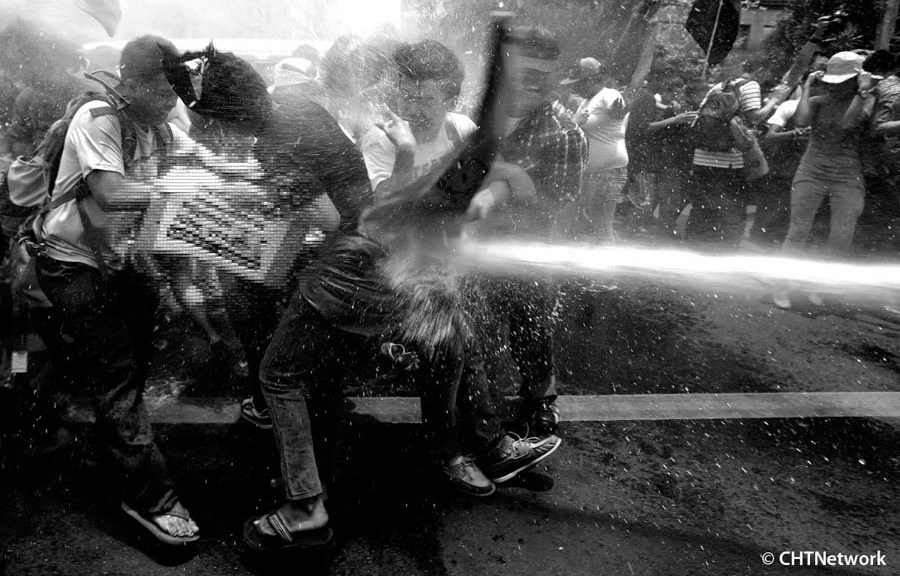
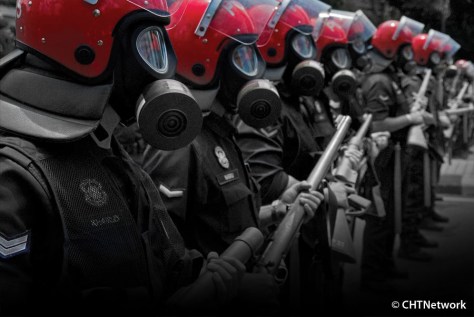
Our neighboring country Thailand has been in this hot tub politics for the past 15 years when the ruling party once led by Thaksin Shinawatra won every election, until the opposition party just took to the streets and staged mass protests that sometimes turned violent just to cripple the economy hence toppling the government.

The last demand the opposition wanted was to have an appointed government rather than an elected one simply because they cannot win but they still want to take charge. They have no doubt succeeded in destroying the economy and deterring any foreign investments but ultimately both sides were losers when the army flexed their muscles, abolished the government and took control of the country in the name of stability.

Some may say that this coup is unconstitutional but I personally have the opinion that this is best scenario the Thais have before the whole country falls into an uncontrollable and undesired unrest like that which happened or is currently happening in countries such as Syria and Egypt. Then what?

Malaysians have been pretty much controlled when it comes to violence, probably because we have been through May 13 and it was a black page in our history. Today, Malaysia has removed its controversial Internal Security Act (ISA) and demonstrations are allowed. It definitely seems that the country is slowly changing and heading to what many deem as a more democratic nation where the people have the freedom to voice out. Is this a good or bad move? Are Malaysians ready for such liberty?

I guess the main worry here is that the majority, especially the younger generations, are happy to be able to have their voice heard but what if a peaceful demonstration turns into an ugly riot? There is no doubt that all of us want a better life and most will not be satisfied with what we have today but look forward to having more tomorrow. Then some will point the finger to the powerful and rich claiming that they are not playing a fair game or to put it bluntly – corrupted or dirty.

It is always so simple to criticize others and not blame ourselves for what we are today. It is always other people’s faults and we are usually always right. Sad to say that most will only become aware of how lucky we are when the situation turns bad and the sufferings eat into their own lives and families. Only then there will be regrets as many are just mere blind followers joining in the fun of it.

Somehow it makes these people feel ‘great’ as they are doing something good for the nation although they usually know near to nothing about the cause. But there is no doubt that they act as if they know everything. At the end, the winners will only be the few smart ones leading the pack if they succeed in their so called ‘revolution’. If they fail, then the winners will be those in power as they would have crushed the uprising.

Like it or not, the losers are always the people. Worst of all is that we are the ones choosing and somehow, sometimes, some of the chosen ones just are not what we expected. Tough! That’s life!

Rome: 10 things not to miss (PART 2)

06 Pantheon

Originally Rome’s famous ‘Temple of All Gods’, the Pantheon was twice destroyed, twice rebuilt and now stands as the most complete structure in this ancient city. This wonderful example of 2nd Century Roman architecture boasts mathematical genius and simple geometric calculation that would impress todays’ modern architects. The Patheon contains the tombs of several Italian kings and Raphael, the famous Renaissance painter. This must-see site is actually not far from Piazza Navona and the Trevi Fountain.

07 Luxury Paradise

Tired of old architecture and wanting to indulge yourself with some luxury items? The few streets leading to Piazza di Spagna are where all luxury stores exist side-by-side. Italian and international brands such as Prada, Gucci, LV, Jimmy Choo, Tiffany, Versace and other big brands can be found here. The term ‘shop till you drop’ does not apply here as if you are not careful, you can end up ‘shopping till your wallet drops’! If you want to take a break from the expensive shopping experience, then the Spanish Steps is a good place for people-watching.

08 National Museum of Rome

Unlike museums in most countries, the National Museum of Rome is not situated in one location, but is made up of a set of museums located all over the city. There is actually a combo ticket that you can purchase and it is valid for a few days, enabling you to visit all its museums. These include the Baths of Diocletian, the Palazzo Altemps, the Palazzo Massimo alle Terme, and the Crypta Balbi, all for just one price! Although items exhibited are among the world’s most important archaeological collections, but these artefacts may sometimes be too much to absorb especially for those who did not pay attention in their history lessons during schooling days.

09 The Vatican City

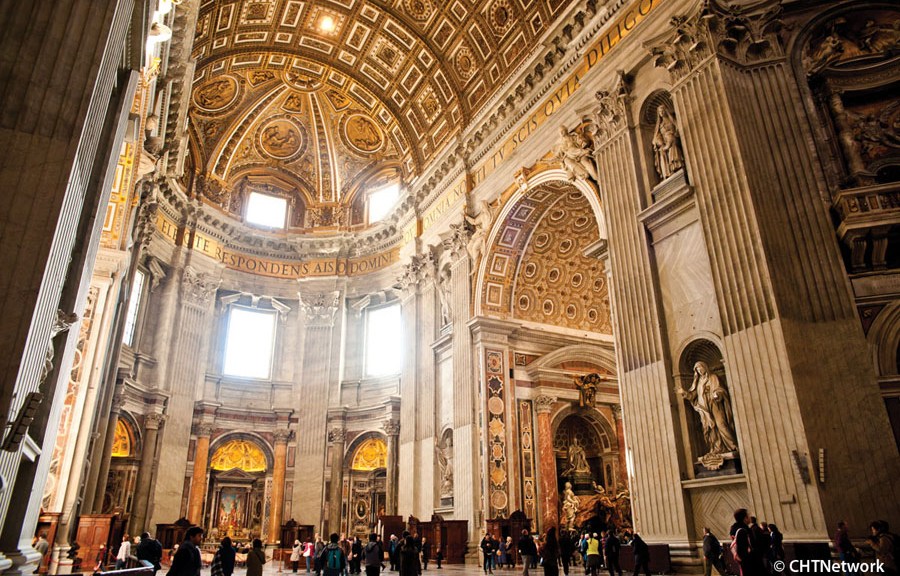
With an area of approximately 110 acres and a population of less than 1000, Vatican City is the smallest international state in the world. The easiest way to this magnificent mega structure is to take Metro Line A, stop at Ottaviano San Pietro Musei Vaticani and then walk a few blocks. It is highly recommended to pre-purchase a ‘skip the line’ ticket, better yet, with a guide. This is because entry lines into the Vatican City are painfully long and one will just be wondering around aimlessly, especially if it is their first time. Having a guide will not only save the queuing time and make your tour interesting, but it also provides the opportunity to visit other cultural sites including Vatican Museum, the Sistine Chapel and St Peter’s Basilica. Remember to send postcards with Vatican City stamps to your friends and loved ones at the end of your visit.

_DSC3284_F10 Pizzas Pastas & Coffee

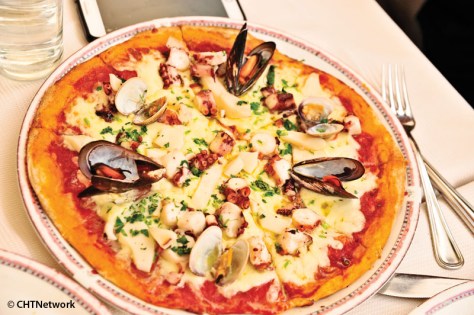
You can find pizza on just every corner in the city. One must have a bite of those hot freshly baked pizzas with golden crust and a touch of char on the edges. Other than that, pasta is the most important cuisine in Rome and to cap it off, you must relax and have a sip of Italian coffee to complete your Roman trip.   

10 Dark Secrets of Romeo & Juliet

The tale of two star-crossed lovers of English literature isn’t just a tragic romance revolving around forbidden young love. Here to let you in on the dark secrets of Romeo and Juliet, EZ brings to you the most bizarre anecdotes behind one of Shakespeare’s most famous plays. So pay close attention! Read between the lines and you’ll find many hidden aspects to the play, some outrageous and some just plain weird.

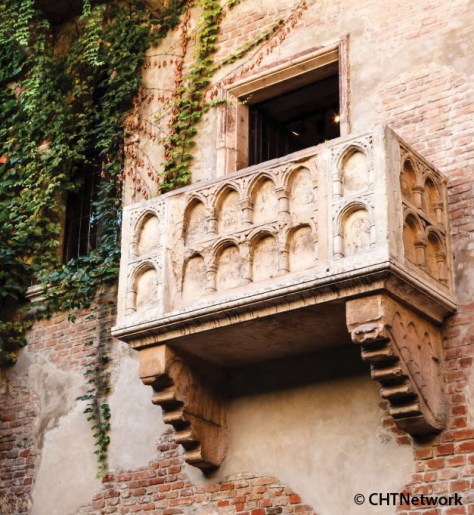
Juliets-balcony-Verona-Italy-1024x6821. Borrowed names

Shakespeare, who has been credited as the inventor of many English words and being very innovative in delivering insults was apparently not that good a name-giver. Oh, yes. He borrowed (or stole, depending on whom you ask) names from other famous tomes. Dante’s Divine Comedy is the most direct inspiration for the names of the rival families ‘Montague’ and ‘Capulet’ as they appeared side-by-side in his work. And the star-struck lovers? Luigi da Porto coined the names ‘Giulietta’ and ‘Romeo’ in his novel, which was published 65 years before Shakespeare’s play.

2. Which version do  you know?

There were not one, but three different editions of Romeo and Juliet! Now don’t go splitting hairs with production directors yet. The first edition, published in 1595 is considered a ‘bad quarto’ for errors and writing errors. Four years later, the second edition was published. This edition is the most used version of Shakespeare’s prominent play, even more popular than the third edition (1623).

3. Rage on Romeo

Psychoanalytical literary critics see Romeo’s nature as aggressive, displays ‘ill-controlled, partially disguised aggression’. You can’t disagree with that when most of the hero’s misfortunes stemmed from his spontaneity and violent reactions; killing Tybalt, eloping and committing a double-suicide with a girl he barely knew, all within a week.

4. Some critics hated the play

Back in the 17th century, prominent writers, critics and philosophers grovelled about the play and some even called it a failure for not ‘following classical rules’ of drama. Samuel Pepys, British Member of Parliament, said that ‘it is a play of itself the worst that I ever heard in my life.’

5. Bring on the sexual jokes

Page after page of the play is filled with sexual jokes. Crude euphemisms, innuendoes and double-entendres are scattered throughout the play, thanks to characters like Mercutio and Sampson. You might want to swear children off Romeo and Juliet until the inevitable.

6. Hi, we just met. Marry me?

Would you marry a person you just met? It happens in this play, as Juliet asked Romeo to prove that his love for her was honourable. So they married in less than 24 hours after they met.

7. Roller-coaster romance

Take a step back, and another look at the story of Romeo and Juliet. You’ll find that all the events in the entire play covers a short span of four to six days. Romeo and Juliet got married the day after they met and consummated their marriage before killing themselves. Well, that escalated quickly, didn’t it?

8. Pedo much?

Yes, you expected young love as the central theme for Romeo and Juliet. But for a girl to meet a boy, get married and have sex at only 13? Some girls have only barely started puberty at that age. In this day and age, Romeo would be guilty of statutory rape.

9. Romeo was bi…sexual

Would a male buddy make passing mentions about your libido? Some readings of the play have found Mercutio, Romeo’s best friend, to have a homoerotic desire for him as the borders of friendship blend into sexual love. In other words, Romeo was gay for Mercutio.

10. Just another Shakespearean theft

The beginnings of the storyline can be traced to the 1476 Italian story titled ‘Mariotto and Gianozza’ by Masuccio Salernitano. It was then adapted by another Italian a century later, then translated into French before making its way into English as a narrative poem and finally, into a play by Shakespeare. Just like how he ‘borrowed’ names, Shakespeare ‘borrowed’ the greatest love story of literature. How’s that for originality?


Next time you run out of things to say at a party, lighten up the mood by flaunting your literary side like a true Shakespearean with these niblets of trivia.

Art Basel Impresses Hong Kong

Galleries_PekinFineArts_17May2014_03121Art Basel Hong Kong’s second edition opened in dramatic fashion as Berlin-based artist Carsten Nicolai’s latest audio-visual installation ‘α (alpha) pulse’ lit up the Hong Kong skyline, setting the stage for a spectacular weekend of art for everyone.
Pulsating light patterns were projected in synchronised frequency across the entire facade of Hong Kong’s iconic 490-meter high International Commerce Centre (ICC) which also happens to be the world’s 7th highest building. Like a lighthouse the tower radiated prismatic pulses into the city, much to the awe of the island’s residents and visitors.

Visible from numerous locations across Hong Kong, the installation, which appeared each night of the fair, was also available on an accompanying mobile phone application, adding another layer of accessibility for art enthusiasts as well as the public.

The high-profile annual event which took place from May 15 – 17 at the Hong Kong Convention and Exhibition Centre (HKCEC) featured 245 premier galleries from 39 countries and territories. Among the renowned galleries that took part were Anna Schwartz Gallery, Pearl Lam Galleries, Lehmann Maupin and ShanghART.  With over 50 percent of the participating galleries having exhibition spaces in Asia and the Asia-Pacific region, Art Basel cemented its deep commitment to and success with the art community in the East.

Attracting over 65,000 visitors, the quality of the artworks brought in and the high level of presentation drew many new and returning collectors from around the world as well as curators, patrons and trustees from leading museums and institutions such as Paris’s Louvre,  Sydney’s Museum of Contemporary Art Australia, and  Washington’s Smithsonian American Art Museum.

‘We are extremely happy with how the show has gone. We have met and made sales to new clients including great connections to visitors in China, Taiwan, Hong Kong, Singapore and the Philippines. The show is as active and the same level of quality as any European or American fair,’ enthused Nicholas Nahab, Sales Director of Marian Goodman Gallery (Paris, New York).

Not exclusive to connoisseurs, Art Basel Hong Kong was also supported by a strong public programme including the Asian debut of Art Basel’s popular film sector. This 3-day programme saw the screening of 49 films by 41 artists, represented by participating galleries. Highlights of the program included works by international artists such as Takashi Ishida, Dinh Q. Le and Hong Kong artists Kwan Sheung Chi and Christopher Doyle.

Bien Venice!

_DSC0087Widely acknowledged as the ultimate exhibition in the field of contemporary arts for over a century, the Venice Biennale has established itself as one of the most prestigious cultural institutions in the world.

The two major summer festivals that alternate annually for Venice are undoubtedly the Art Biennale and the Architecture Biennale. Both Biennales are universally recognised as the most important art festivals in the world. This year, the highlight is on the architects and there are representatives from 40 countries participating in this prestigious event.

With the Biennale exhibitions mainly held at the Giardini and Arsenale, this year’s event is helmed by renowned Dutch architect Rem Koolhaas, with the theme Fundamentals. The theme was chosen by curator Koolhass with the intention to further study how architecture is exhibited around the world and what happened within this century through modernity, continuous political changes, technological developments and such.

‘After several architecture Biennales dedicated to the celebration of the contemporary, Fundamentals will look at histories, attempt to reconstruct how architecture finds itself in its current situation, and speculate on its future,’ states the festival director.

This was also an occasion to revisit and recompose knowledge that may have been forgotten or that have not been discovered to enhance new ideas and generate fresh understanding for sustainability.

Although it is an Architecture Biennale this year, many national pavilions have been erected to showcase collaborating artists and their presentations. This includes digital art, sculptures, photography and installations. This teamwork was further endorsed by the Jury of this year’s Architecture Biennale when both the Korean and Chilean participants won the Golden and Silver Lions for Best National Participations. Both participating architects were working with artists in collaboration.

As this is one of the most important exhibition in the arts world and with this year’s title of Fundamentals, many participants tried very hard to express but it is sometimes hard for the general public to completely comprehend the actual message the participants are trying to relay due to difference of political, culture and education backgrounds.

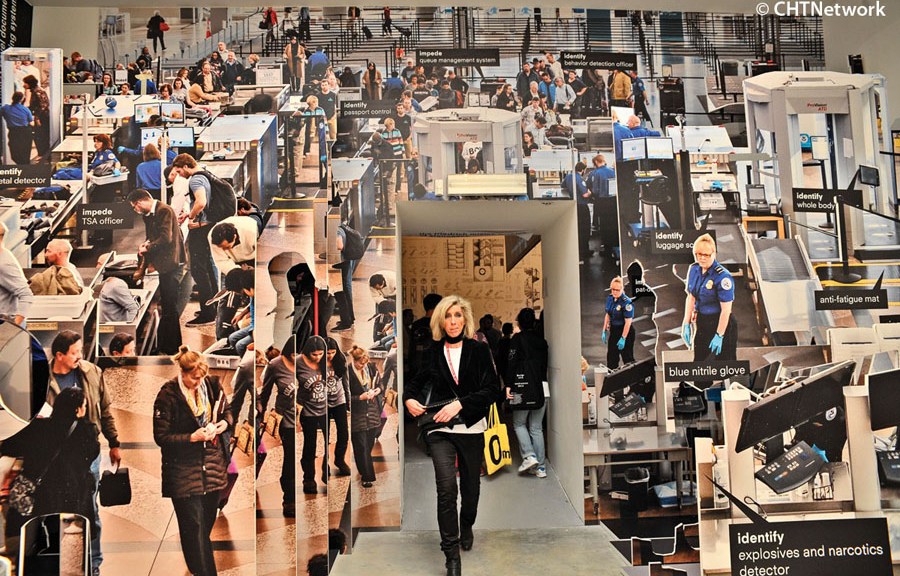
Bringing together and connecting the significant events in the architecture world for the past 100 years, the United States was smart enough just to present a simple yet convincing showcase of its architectural production abroad and achievements for the past years with its theme of OfficeUS.

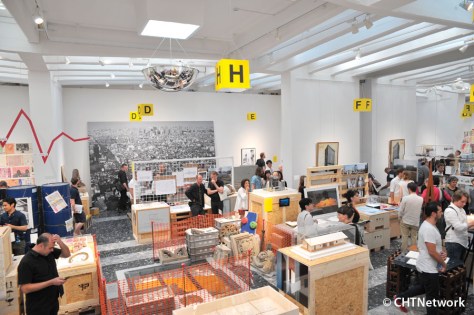
The Russians were slightly crowded in their pavilion choosing a booth space exhibition style that tried to squeeze in the participants. On the other hand, the Japanese’s theme of A Storehouse of Contemporary Architecture hit spot on as it made one feel just like walking into a store with the intention to tell the story of unparalleled architectural development by a country that underwent drastic modernization to catch with the Western world.

However, China’s Mountains Beyond Mountains intention of capturing modernity by looking into the framework of its architecture, demands in depth exploration to further understand.

The Malaysian Pavilion with its theme of Sufficiency captured some attention when this small, multiracial country from the East showcased their architectural talents on hanging collapsible cages curated by Dr Lim Teng Ngiom. There were 21 architects and three collaborative artists involved in this year’s exhibition.

Biennale Curator Koolhaas, along with the Harvard Graduate School of Design and many other contributors, had worked on a two-year project, The Elements of Architecture. The project presented at the Biennale explores the fundamentals of our buildings by any architect, anywhere, any time. It is one of the must-see exhibits that is exciting yet interesting.   

This year’s Architecture Biennale will be open from 7 June to 23 November. The trip is highly recommended for those who are somehow related to this field, and for those not involved in the arts, it will be a valuable learning experience in addition to visiting the charms of Venice.