

by Dr. Yeo Geok Ping – Consultant Nephrologist & Physician
When people hear the word “dialysis,” most imagine patients travelling to a dialysis centre several times a week to receive treatment using a machine. While this form of treatment, known as haemodialysis, is familiar to many, there is another effective option available for patients with kidney failure: peritoneal dialysis (PD).
What Do the Kidneys Do?
The kidneys are the body’s natural filtration system. Every day, they work continuously to remove waste products, toxins, and excess fluid from the blood. They also help maintain the balance of important minerals and salts in the body, such as sodium and potassium.
When the kidneys stop working properly, harmful waste and fluid begin to build up in the body. This can cause symptoms such as swelling, tiredness, shortness of breath, nausea, and loss of appetite.
When kidney function becomes severely reduced, dialysis may be needed to help take over part of the kidneys’ function.
What Is Peritoneal Dialysis?
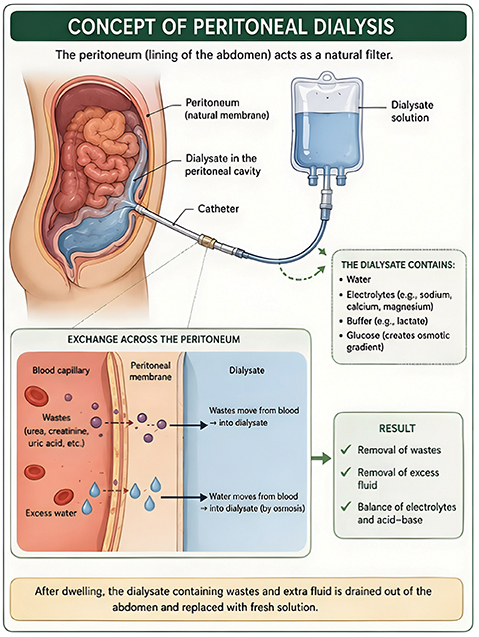
Peritoneal dialysis is a treatment that helps clean the blood using the body’s own abdominal lining. Inside the abdomen is a thin lining called the peritoneum. This lining contains many tiny blood vessels and acts like a natural filter.
During peritoneal dialysis, a special cleansing fluid is placed into the abdomen through a soft tube called a catheter. As the fluid remains in the abdomen, waste products and excess fluid move from the blood vessels into the dialysis fluid through the peritoneum. After some time, the used fluid—which now contains waste and excess fluid—is drained out and replaced with fresh fluid. This cycle helps remove harmful substances from the body.
A simple way to imagine this is to think of the abdomen as a natural cleaning chamber, where unwanted waste is collected and removed.
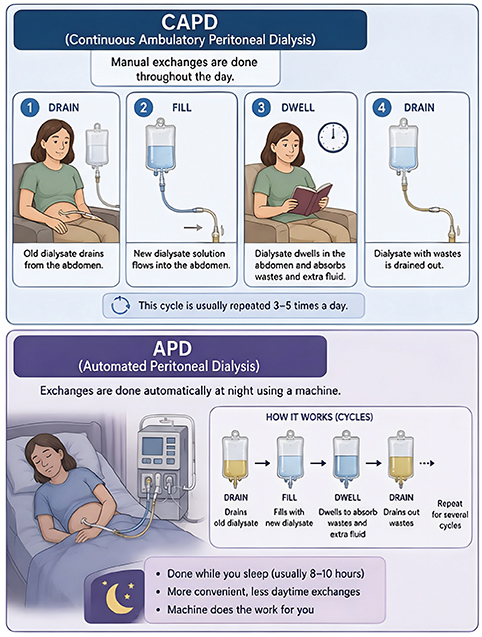
There are two main methods of peritoneal dialysis. The first is Continuous Ambulatory Peritoneal Dialysis (CAPD), where patients manually change the dialysis fluid several times throughout the day. The second is Automated Peritoneal Dialysis (APD), which uses a small machine to perform the fluid exchanges automatically, usually while the patient sleeps at night. Both methods are effective. The choice between them depends on an individual’s medical condition, lifestyle, and personal preferences.
Benefits of Peritoneal Dialysis
One major advantage of peritoneal dialysis is flexibility. Because treatment can be performed at home, patients often spend less time travelling to healthcare facilities. This allows many people to continue with daily routines such as working, studying, spending time with family, and travelling.
Peritoneal dialysis may also offer greater independence, as many patients are able to manage their treatment with proper training and support from healthcare professionals. Another benefit is that the dialysis process is more continuous and gentle, which may be better tolerated by some patients.
Is Peritoneal Dialysis Suitable for Everyone?
Peritoneal dialysis may not be suitable for every patient. Factors such as medical condition, lifestyle, home environment, and personal preferences all play important roles in determining the most appropriate treatment. The best choice is one that aligns with both the patient’s medical needs and personal circumstances after discussion with their nephrologist.
Bringing Dialysis Home
Kidney failure is a life-changing diagnosis, but patients today have more treatment options than ever before.
Peritoneal dialysis offers an effective home-based treatment that can provide flexibility, independence, and a good quality of life for suitable patients. With the right support and education, patients can choose a treatment approach that not only supports their health but also fits their lifestyle and daily needs.

