


Lim Choon Lean
Chief Executive Officer of Dajiang Publishing House
Here’s our tête-à-tête with Lim Choon Lean – a personal, thoughtful perspective on her journey from journalism to publishing, and her aspirations for the future as the new CEO of Dajiang Culture.
“After 26 years with Guang Ming Daily, making the leap from journalism to publishing was no small decision.”
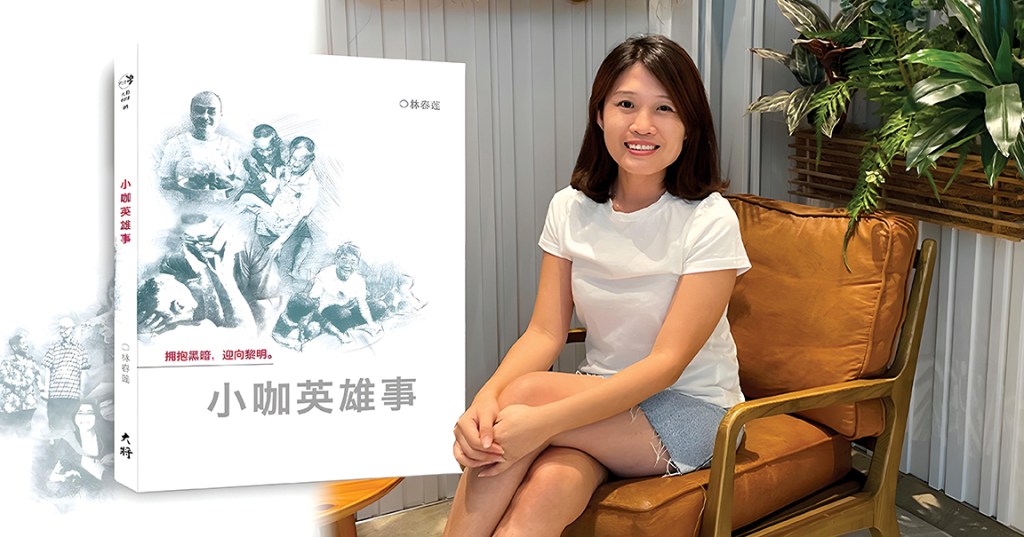
Image by Li Shuyi
This past March, I stepped away from my role there, taking on a new challenge as the CEO of Dajiang Publishing House. Switching careers in mid-life yet staying close to writing has been a blessing. My love for words remained constant. Despite the challenges that come with publishing in the digital age, I believe in the enduring power of the written word and am ready to explore new horizons alongside my team.
The Changing Landscape of Publishing
Today, the publishing industry faces the rise of personal digital devices and an increasingly digital audience. Yet, I see unique strengths in print publishing. Through reading, one can develop a thorough, structured understanding—something that digital media cannot provide nor replace. Books nurture thoughtfulness and reflection, which is why I believe there’s still space for traditional publishing in the modern era. However, publishers need to evolve, embracing new formats and methods while recognising that our work is more than “putting out books”—it’s about being a vital channel of knowledge and culture. We should adapt, but without compromising the essence of what makes reading so enriching.
Take, for instance, how society’s pace has shifted after the pandemic. People have begun to pick up books again, taking time to reconnect with stories and ideas. For publishing to thrive, we must embrace this shift by pushing the boundaries, recognising market changes, and focusing on content innovation, channel transformation, and system reform. I believe the challenges posed by new technology and the rise of integrated media will bring even more business opportunities and broader growth potential for traditional publishing.
Lessons from Journalism and a New Perspective
Reflecting on my time as a journalist, there were many moments that deepened my understanding of storytelling. Journalism demanded quick, sensitive responses to the world around me, and that responsiveness is invaluable in publishing too. Both fields require a sharp instinct for what people want to read, an openness to change, and a willingness to take risks.
As a journalist, I was accustomed to working at a fast pace, where every story must be delivered with accuracy and urgency. In publishing, I’m learning the value of slowing down. Books aren’t just produced—they’re crafted. This slower, more immersive approach allows the stories to take root, drawing on human experiences and relationships to create literature that resonates.
A Writer’s First Steps and the Challenge of the Spotlight
Publishing my first book, Little Heroes, five years ago was a transformative experience. Writing it was a journey into a new world, where my characters came to life and shared their stories with readers. I also found myself stepping out from behind the scenes, as a writer in the spotlight. Media interviews, book fairs, school events, and learning how to engage an audience—all of this was new, and it taught me as much as any article I had ever written.
New Challenges in Publishing
Both fields offer unique perspectives and fulfill a deeply satisfying role. Many people say I’m bold to jump from one “sunset industry” to another. But for me, in times of uncertainty, seeing our work through others’ eyes reminds me of how valuable it is. When there’s no stage, create your own. Ink on paper is beautiful, and I firmly believe that the power of words can never be replaced. In this industry, gifted editors with sharp insights are rare, as are strategic publishing leaders. It takes true passion to endure through the years, and I believe publishing is a lifelong endeavour.

Switching careers from journalism to writing, and now to managing a publishing business, has not been without challenges. My biggest hurdle has been learning to pause, to consider each decision carefully. As a journalist, I was used to having facts at the core of my work, and speed was essential. Publishing, however, requires patience; literature takes time and thought, evolving out of genuine human experiences.
As someone with a background in journalism, I’ve found that this new journey is enriched by a strong network and a keen instinct for quality content. One area that has stretched me, though, is managing people. Every choice I make affects the entire team, and building an effective, forward-looking publishing team is crucial in today’s rapidly changing world. Our industry must attract talented, driven individuals who can not only navigate the digital age but thrive within it.
Creating a New Chapter for Dajiang Culture
Upon taking over, I rebranded Dajiang Publishing House as Dajiang Culture, aiming to expand beyond traditional publishing into new experiences, including a book café concept. We’re also organising events and collaborating with schools, introducing younger generations to the joy of reading. I hope this new direction will bring readers closer to the stories they love, allowing them to see books as an essential part of life.
Looking Ahead
Over the next five years, I envision Dajiang as a dynamic player in the age of digital transformation. Artificial intelligence is changing every industry, and for publishing, this could be revolutionary. I see opportunities to integrate AI into cultural expression, using digital and intelligent technologies to enhance our content and broaden our reach. We hope to attract individuals skilled in both AI and the art of publishing to help us explore these frontiers.
Ultimately, my dream is for our books to be sincere and heartfelt, capturing moments of great social and cultural significance. I hope that our work will preserve a record of society’s changes and creative achievements, leaving a legacy for generations to come. Because in the end, while the tools may change, the love of words and their impact on the human spirit is irreplaceable.
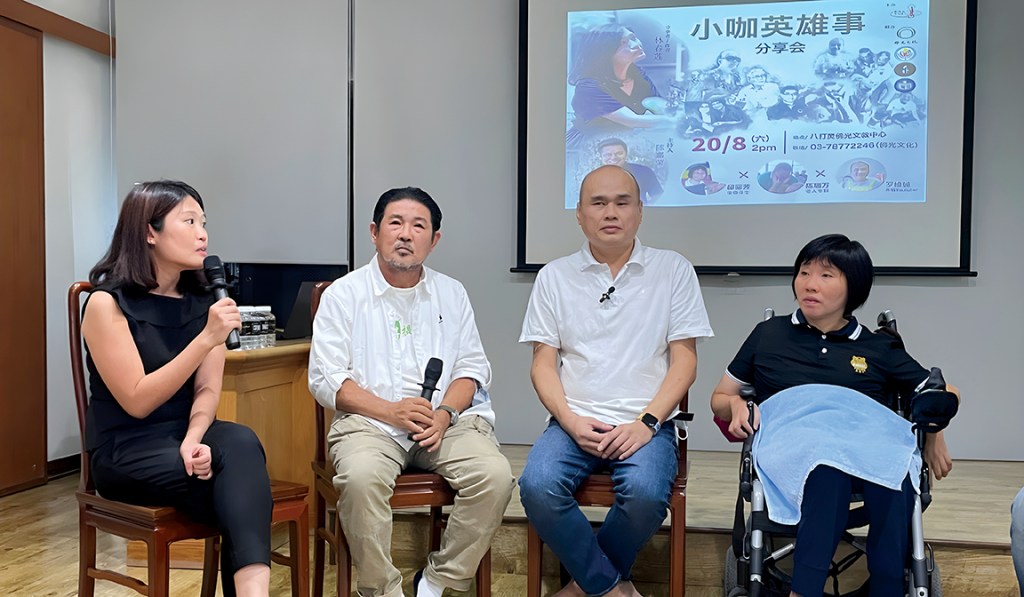
At a sharing session held at the Fo Guang Cultural and Educational Center of Malaysia on Saturday, August 20, Lin Chunlian (from left) brought the protagonists of the story in her book “Little Heroes” to share their experiences of going through the dark chapters of their lives. They are Chen Ruiwan, the director of Bodhi Xinyuan Nursing Home, Luo Weiqiang, a blind YouTuber, and Qiu Lifang, a paralysed person with a master’s degree. Image by Li Shuyi
 EZ MALAYSIA.NEWS