

Your child hardly speaks like other children their age do. Does that automatically mean that your child has autism? Not necessarily. Even though speech delays and language delays often go hand in hand with autism, there are key differences between communication delays caused by autism and other types of speech-language disorders.
SPEECH DELAY VS LANGUAGE DELAY
While speech and language delays are often confused and used interchangeably, there are distinguishing characteristics.
Speech delay: A disorder which affects ‘how’ children verbalise, articulate and control the sounds that are used in words. The children may be following typical speech patterns, but at a slower rate than their peers. Three major types of speech disorder include articulation, fluency, and voice disorders.
Language delay: A disorder which affects ‘what’ the children say. In other words, they are able to pronounce words well, but fail to form them effectively for others to understand. In addition, a receptive language delay can affect how children process information, be it verbal, nonverbal or written.
Autism is not the only cause to speech and language delays. Other causes, including hearing loss, deprivation of time talking with adults, bilingual environment, and etc. could also lead to the delays.
AUTISM
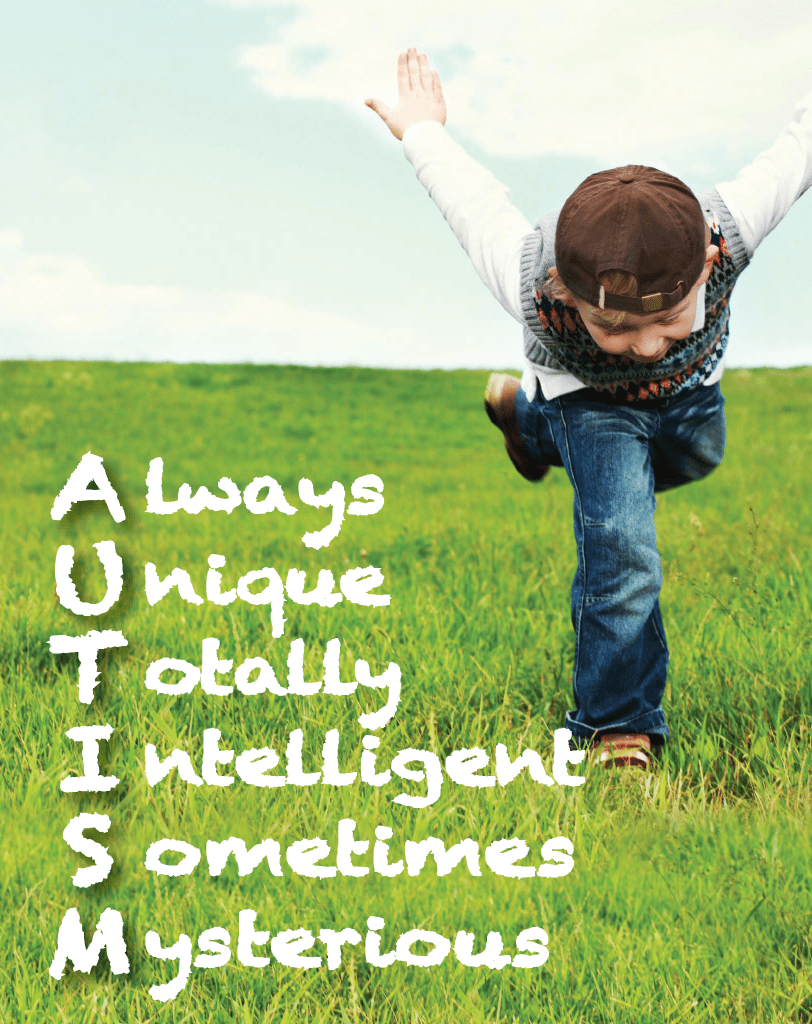
Autism is also often called Autism Spectrum Disorder (ASD). It is a neurological and developmental disorder that causes significant social, communication and behavioural challenges. Children with ASD may have trouble understanding the world around them. Since autism is a spectrum disorder, the learning, thinking, and problem-solving abilities of children with ASD can range from highly skilled to severely challenged.
Concerning how ASD can be diagnosed, the leading medical reference is the Diagnostic and Statistical Manual of Mental Disorders 5 (DSM-5). The core symptoms of autism are social communication challenges and restricted or repetitive behaviours. The severity of the symptoms varies among the affected children. Symptoms include avoidance of eye contact with people, not responding to name, not looking at objects when parents point. Children with ASD may not notice when other people around them appear sad or hurt. They show little interest, if any, to play with other children. Stimming, or repetitive unusual body movements or noises, is also one of the typical autistic children’s behaviours. They like to line up toys in a set order, or may get upset when there are minor changes. If parents notice any of these signs that worry them, it is advisable to seek medical attention.
Regardless of the complexity of ASD, following treatments can make a difference to the children and their families.
i. Speech and language therapy aims to help children with ASD to communicate and interact better.
ii. Occupational therapy provides assessment and intervention to maximise activities of daily living.
iii. Applied behaviour analysis encourages desired behaviours and discourages undesired behaviours in children with ASD.
iv. Parent education improves parent-child interaction and communication skills.
v. Cognitive behaviour therapy helps children to cope with anxiety and depression.
THE EARLIER, THE BETTER
Parents may spot the signs and symptoms at home, but they cannot diagnose the subject without an expert’s help. Early intervention programs are proven to be highly effective. If a child is not developing social and communication skills on par with the standards, do not hesitate to make an appointment with a professional. The journey of raising a child is tough enough, let alone a child with ASD, but who knows, you may find some extraordinary talent in them!

Dr Long Wai Lup
Paediatrician
MD (Russia), MRCPCH (UK)
Dr Long Wai Lup is a Paediatrician in Loh Guan Lye Specialists Centre. He attained his medical degree in 2009. His special care and interest towards childcare fuelled his desire to specialise in Paediatrics subsequently. He graduated from the Royal College of Paediatrics and Child Health UK (MRCPCH) in 2019.
Dr Long has special interest in treating children with:
• Developmental delay such as delay in speech-language development, motor skill and others
• Skin illness in children including: Eczema, Infection, Allergy and others
• Feeding issues from newborn to childhood
• Growth issues in newborn to childhood

 EZ MALAYSIA.NEWS